Max Verstappen defies simulations with historic charge from 21st to second at Brazilian Grand Prix

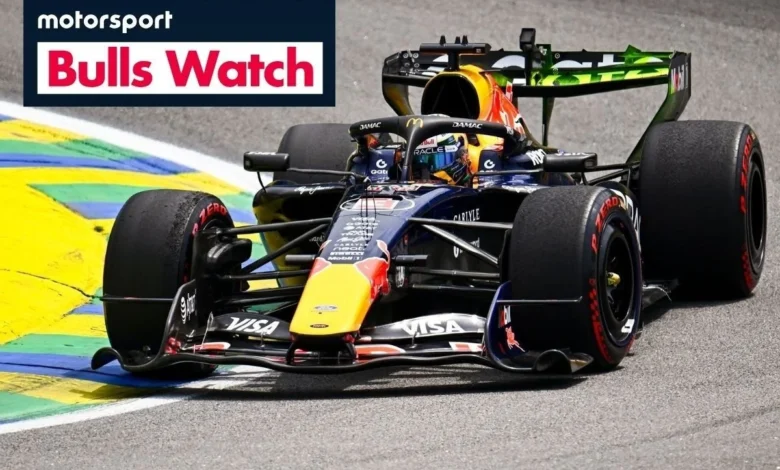
The Interlagos circuit has long been a theater of the extraordinary, yet Max Verstappen’s performance at the recent Brazilian Grand Prix defied the conventional boundaries of modern Formula 1 data analytics. Starting from the 21st position on the grid due to an unscheduled engine penalty, the Red Bull Racing pilot mounted a recovery drive that shattered the predictive models employed by his own team. Red Bull team principal Laurent Mekies confirmed in the aftermath of the race that no simulation software could have accounted for the sheer volatility and clinical precision required to reclaim 19 positions and finish on the podium.
The race weekend in São Paulo presented a unique set of challenges, particularly for the Red Bull Powertrains division. As the team navigates its maiden season as a fully independent works manufacturer—a transition necessitated by the conclusion of their partnership with Honda at the end of the 2025 season—the complexities of integrating a proprietary power unit have become a focal point of their technical narrative.
The Anatomy of an Unforeseen Comeback
Verstappen’s journey to second place was not merely a byproduct of superior car performance; it was a masterclass in opportunistic driving and tactical race management. After qualifying near the back of the grid, the Dutchman had expressed skepticism regarding his prospects, noting that the characteristics of the Interlagos track—combined with the current aero-regulations—made overtaking significantly more arduous than in previous years.
However, once the lights went out, the narrative shifted. Within the first five laps, Verstappen had already scythed through the field to secure 14 positions, a rate of progress that the team’s simulation engineers deemed statistically improbable.
"As always, I think no sim in the world will predict that you will go from P21 to P2 or that you get 14 places in five laps," Laurent Mekies explained during the post-race press conference. "There is no sim able to do that. So, he’s beating the sim on a regular basis. Of course, it’s frustrating because the pace seemed good on Friday and also on Saturday morning, and in some respects in Q1 when we let him qualify. But it’s part of the game."
The pace displayed by the RB machine throughout the weekend had been competitive, yet the engine penalty—a consequence of a minor technical issue identified on Friday—cast a shadow over the team’s weekend objectives. Mekies emphasized that while the penalty was not part of the strategic master plan, it served as a reality check regarding the growing pains of their new power unit infrastructure.
The Shift to Red Bull Powertrains
The 2026 season marked a watershed moment for the Milton Keynes-based outfit. Following the departure of Honda, the collaboration with Ford under the Red Bull Powertrains banner signaled a bold attempt to control the entire technical ecosystem of the car. This transition has been anything but seamless. The development of an internal combustion engine and hybrid energy recovery system from the ground up involves a steep learning curve that even the most well-funded teams struggle to navigate.
Mekies was quick to remind critics of this transitionary context. "It’s easy to forget it’s the first year with the power unit. The guys have been doing an extraordinary job, and we take the first penalty with Max this weekend. It was not planned; we had a small issue on Friday that forced us to do so. But that’s what it is."
The reliability of the power unit remains the primary hurdle for the team. While the performance ceiling is clearly high—as evidenced by Verstappen’s ability to slice through the field—the fragility of the components has occasionally undermined their campaign.
Chronology of the São Paulo Sprint and Race
The weekend began with high expectations, with the team showing strong pace during the practice sessions. The technical failure on Friday forced an engine change, triggering the grid penalty that relegated Verstappen to the back of the pack.
- Friday: Initial testing confirmed the car’s baseline performance, but a minor internal component failure necessitated an immediate power unit swap.
- Saturday: The focus shifted toward damage mitigation. During the qualifying segments, Verstappen showcased the raw speed of the car, though his starting position remained fixed at the rear due to the regulatory sanctions.
- Sunday: The race start saw an aggressive opening stint. Verstappen utilized the slipstream and braking zones at Interlagos to move from 21st to 7th within the first few laps.
- Mid-Race: Tire management became the primary variable. As other drivers struggled with degradation, Verstappen maintained a consistent pace, allowing him to overcut several midfield runners and close the gap to the front-runners.
- Final Laps: The late-race surge brought him into contact with the podium contenders, eventually securing second place.
The Standing Battle and Championship Implications
With Mercedes driver Kimi Antonelli having already clinched the Drivers’ Championship at the Mexican Grand Prix, the remainder of the season has shifted its focus to the fight for the runner-up position. The landscape is currently defined by a high-stakes battle between Verstappen and a trio of challengers.
As of the conclusion of the Brazilian Grand Prix, the standings are as follows:
- Kimi Antonelli (Mercedes): Champion
- Max Verstappen (Red Bull): 279 points
- George Russell (Mercedes): 262 points
- Lewis Hamilton (Mercedes): 261 points
- Charles Leclerc (Ferrari): 249 points
Verstappen’s second-place finish at Interlagos was pivotal in extending his lead over George Russell. With a 17-point cushion, the Dutch driver holds the advantage, but the density of the points gap between second and fifth suggests that any technical failure or strategic error in the final rounds could radically alter the final classification.
Technical and Strategic Implications
The reliance on simulations in modern Formula 1 has become absolute. Teams utilize supercomputers to model every possible scenario—tire wear, fuel consumption, and probability of overtakes—to dictate their race strategy. When a driver like Verstappen defies these models, it suggests a confluence of three factors: exceptional driver intuition, a vehicle platform that is more resilient than the data suggests, and the ability to operate outside the parameters of "expected" tire management.
For Red Bull, the challenge moving forward is to bridge the gap between their current performance volatility and the consistency required for a championship-winning car. While the power unit remains the biggest variable, the team’s ability to maximize points from compromised starting positions provides a significant morale boost for the engineering staff.
Furthermore, the data gathered from the Brazilian race will be instrumental in refining the 2027 development cycle. As the partnership with Ford matures, the focus will likely shift from basic reliability to the optimization of energy deployment strategies, particularly in high-altitude or high-degradation environments like Interlagos.
Conclusion
Max Verstappen’s performance in Brazil serves as a reminder that despite the increasing digitalization of the sport, the "human factor" remains the ultimate wild card. While engineers rely on simulations to minimize risk, the ability of a driver to recognize and exploit gaps that do not exist on a computer screen is what separates the elite from the merely capable.
As Red Bull continues its transition as a works team, they will look to harness this raw potential to address the underlying technical issues that caused the initial penalty. With the championship fight for second place intensifying, the remaining races will likely be decided by who can best balance the limitations of their power units with the aggressive, high-risk driving styles required to close the gap at the front of the grid. The events at Interlagos have not only provided one of the most exciting races of the season but have also underscored the enduring unpredictability of top-tier motorsport.