For over half a century, the name Alpina has been synonymous with the pinnacle of BMW refinement. Based in Buchloe, Germany, the boutique manufacturer specialized in transforming high-production BMW models into bespoke grand tourers that balanced effortless performance with unparalleled interior luxury. From the iconic B10 Bi-Turbo of the 1990s to the elegant Roadster V8, Alpina carved out a unique niche in the automotive landscape. However, the 2022 announcement that the BMW Group would fully integrate the Alpina brand into its corporate structure marked the end of an era. As the partnership evolves toward a new chapter, enthusiasts are left to wonder what might have happened had the legendary tuner turned its attention to marques outside of Bavaria.
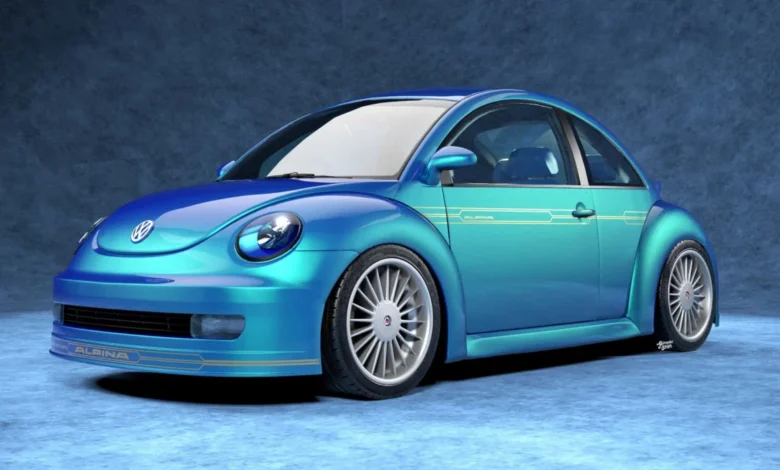
One such imaginative exploration has surfaced from the digital design studio of Abimelec Design. The artist has released a series of renderings depicting an "Alpina-fied" Volkswagen New Beetle, complete with the tuner’s signature aesthetic cues. Christened the "B1 Turbo," this conceptual project serves as a bridge between the humble, iconic silhouette of the Volkswagen Bug and the sophisticated, high-performance ethos of the Buchloe firm.
The Evolution of the Alpina Philosophy
To understand the weight of such a design exercise, one must first appreciate the history of Alpina Burkard Bovensiepen GmbH. Founded in 1965 by Burkard Bovensiepen, the company began by developing carburetors and crankshafts for the BMW 1500. By 1983, the German Federal Ministry of Transport officially recognized Alpina as an automobile manufacturer. Unlike mass-market tuners that focused primarily on aggressive aesthetics or extreme horsepower, Alpina’s engineering philosophy was rooted in "long-distance comfort."
The company’s signature visual identity—the 20-spoke alloy wheels, the subtle front air dams, and the distinctive pinstriping—became a mark of prestige on the Autobahn. Because Alpina worked in close cooperation with BMW, their vehicles were often integrated into the assembly lines, ensuring that the structural integrity of the base car was maintained while the powertrain, transmission, and cabin were significantly upgraded. The prospect of applying this meticulous design language to a Volkswagen platform creates a compelling hypothetical scenario: what if a mass-market compact car received the "Buchloe treatment"?
Inspiration: The Beetle RSi and the "Upscale" Ambition
The B1 Turbo project was not born in a vacuum. The creator, Abimelec, drew significant inspiration from the Volkswagen New Beetle RSi, a limited-edition production vehicle that remains one of the most curious artifacts in the history of the modern Beetle. Introduced at the turn of the millennium, the RSi was designed to evoke the spirit of a rally car. It featured a wide-body kit, a prominent rear spoiler, and a naturally aspirated 3.2-liter VR6 engine capable of producing 221 horsepower.
Abimelec’s interest was piqued during a visit to Mexico City, where he experienced an RSi firsthand. "I remember the main thing that stuck out to me, besides the body width, was how upscale the interior was compared to the normal Beetle," the designer noted. "It’s far closer to a BMW or a boutique manufacturer product than to a Volkswagen."
This observation serves as the foundational logic for the B1 Turbo rendering. By taking the aggressive, widened stance of the RSi and applying the understated, elegant trim of an Alpina B-series sedan, the design suggests that the Beetle platform had hidden potential for a more "executive" performance application. The rendering features the classic Alpina deep blue paint, multi-spoke wheels, and the iconic pinstripe livery, successfully translating the language of a high-end Bavarian tourer onto the rounded, playful frame of the Beetle.
Technical Specifications: The Theoretical Powertrain
While the B1 Turbo is a purely digital creation, it is grounded in mechanical plausibility. Abimelec suggests that the car would be powered by a turbocharged version of the VR6 engine, paired with an automatic transmission. This choice is historically resonant; Alpina has a long history of utilizing automatic transmissions, specifically ZF-sourced units, which are tuned for rapid yet seamless gear changes—a stark contrast to the aggressive, jerky shifts often found in performance-focused manual gearboxes.
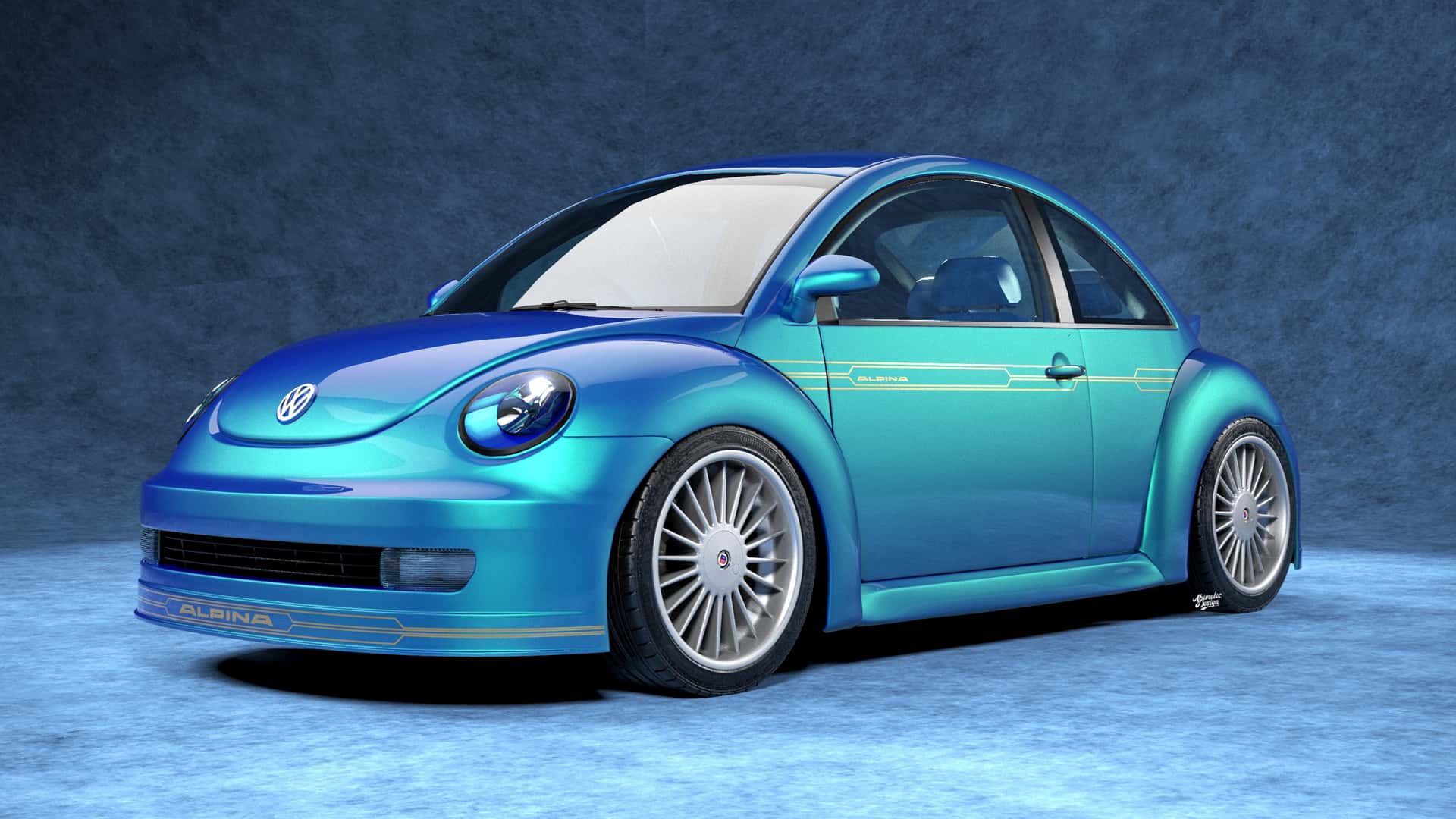
A turbocharged VR6 would elevate the Beetle from a quirky compact to a legitimate "pocket GT." Given that the original RSi was limited to 250 units, a hypothetical "Alpina B1" would likely have been positioned as a bespoke, low-volume commission. In such a configuration, the power delivery would be optimized for mid-range torque, allowing for the effortless, high-speed cruising that defines the Alpina driving experience.
The Broader Context: Why We Look Back
The fascination with these "what-if" scenarios speaks to a wider trend in automotive enthusiast circles. As the industry shifts toward electrification and standardized vehicle platforms, the distinct personalities of individual brands are becoming increasingly diluted. Alpina’s transition into the BMW Group is a logical step for the brand’s long-term survival, but it signals the end of the "indie" tuner era.
Designers like Abimelec play a crucial role in maintaining the enthusiast spirit by challenging the rigid boundaries of brand identity. Previous projects from his studio have included a Range Rover and a Porsche 911 (964) modified with the Alpina aesthetic. These renderings are not merely digital art; they are studies in design cohesion. They demonstrate that the "Alpina look"—characterized by its restraint and adherence to classical proportions—is a versatile language that can transcend the specific brand DNA of BMW.
The Reality of the Market
It is important to acknowledge that a collaboration between Alpina and Volkswagen was never a realistic prospect. The Volkswagen Beetle was discontinued in 2019, as the company pivoted its resources toward the ID. series of electric vehicles. Furthermore, Alpina’s deep-rooted technical partnership with BMW was exclusive, and its acquisition by the BMW Group effectively codified this arrangement for the foreseeable future.
However, the "B1 Turbo" highlights a gap in the current market: the lack of a "grand tourer" in the compact segment. Most modern compact cars are designed either for high-volume economy or aggressive, track-focused performance (the "Hot Hatch" segment). There are few, if any, vehicles that offer the comfort, luxury, and refined engine performance of a full-size executive sedan in a smaller, more maneuverable package. The Beetle RSi hinted at this, but its focus remained firmly on rally-inspired aggression rather than long-distance grand touring.
Implications for Future Design
The viral success of the B1 Turbo rendering serves as a data point for automotive designers. It reveals a latent consumer interest in "downsized luxury." As urban environments become more congested, the desire for smaller vehicles that do not compromise on interior quality or highway capability is likely to grow.
The project also highlights the enduring power of the Alpina aesthetic. By stripping away the need for extreme wings, carbon-fiber splitters, and loud exhaust notes, the design focuses on subtle surfacing and timeless wheel design. This "less is more" approach is increasingly relevant in an era where vehicle design is becoming characterized by complex, sometimes polarizing, aesthetic choices.
Conclusion
The Abimelec Design B1 Turbo is, and will always remain, a digital fiction. It represents a collision of two worlds that were never destined to meet: the whimsical, historical charm of the Volkswagen Beetle and the rigid, high-performance sophistication of Alpina. While the actual Beetle has exited the stage and Alpina has found a permanent home within the BMW Group, this conceptual exercise provides a momentary glimpse into a parallel timeline. It serves as a reminder that the best automotive design is not just about raw statistics or lap times; it is about the emotion, the elegance, and the "what if" scenarios that keep the passion for cars alive in the hearts of enthusiasts worldwide. For those who appreciate the intersection of high-end luxury and compact design, the B1 Turbo stands as a testament to the idea that, with enough vision, any car can be transformed into a masterpiece of engineering.