Russell Brand sentenced to 10 years and six months in prison for rape and sexual assault

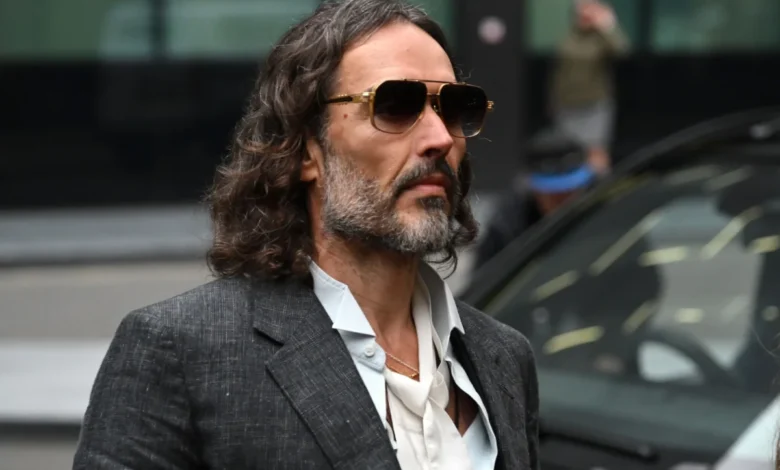
Russell Brand, the 51-year-old former comedian and actor, was sentenced to 10 years and six months in prison on November 9, 2026, following his conviction at Southwark Crown Court for the rape of a fan and the sexual assault of three other women. The sentencing marks the conclusion of a high-profile legal battle that has spanned over a year, stemming from a series of historical allegations that emerged in the public sphere in 2023. Presiding Judge Justice Bennathan described Brand as a "manipulative sexual predator" during the sentencing hearing, highlighting the gravity of the offenses committed between 2004 and 2009.
Legal Breakdown of the Sentencing
The prison term, totaling 10 and a half years, is an aggregate of the specific charges for which the jury returned guilty verdicts on November 5. The breakdown provided by the court includes:
- Nine years for the count of rape.
- 18 months for a count of sexual assault.
- Nine months for a second count of sexual assault.
- Eight months for a third count of sexual assault.
Under current sentencing guidelines, Brand is expected to serve at least two-thirds of this term in custody before becoming eligible for release under license. While the prosecution had argued for a more severe sentence, Justice Bennathan acknowledged specific mitigating factors. These included the significant time lapse since the last offense—nearly 17 years—and Brand’s subsequent efforts in advocacy, particularly regarding substance abuse recovery. While the judge noted that "good character" is rarely a justification for leniency in cases of this nature, he determined that it would be "wrong to disregard mitigation altogether," ultimately reducing the headline rape sentence by one year.
A Chronology of the Case
The road to this conviction began in September 2023, when a joint investigation by Channel 4’s Dispatches and The Sunday Times unveiled a series of disturbing allegations against the entertainer. The investigative report featured testimony from multiple women who alleged that Brand had used his position of power and fame to subject them to sexual violence, emotional abuse, and rape between 1999 and 2009.
Following the broadcast, the Metropolitan Police launched a formal investigation, urging other potential victims to come forward. By early 2024, the investigation had expanded, and Brand was formally charged with three counts of rape, three counts of sexual assault, and one count of attempted indecent assault.
The trial, which spanned four weeks, centered on the testimony of six complainants. Throughout the proceedings, Brand maintained his innocence, asserting that the sexual encounters in question were either consensual or, in his words, "reinvented" or "re-imagined" by the accusers. The defense team attempted to undermine the credibility of the witnesses, a strategy that Justice Bennathan later criticized, noting that the victims were forced to endure the trauma of being accused of lying or twisting the truth in open court. The jury ultimately returned guilty verdicts on four of the seven charges, while acquitting Brand of two rape counts and one count of attempted indecent assault.
The Impact on the Victims and Legal Precedent
Detective Superintendent Andy Furphy, who led the investigation for the Metropolitan Police, addressed the media outside Southwark Crown Court shortly after the sentencing. He characterized the verdict as a "significant milestone," reinforcing the police force’s commitment to pursuing historical sexual assault cases regardless of the perpetrator’s profile.
"My thoughts today are with the women who came forward and made this investigation possible," Furphy stated. "Reporting sexual offenses can be incredibly difficult, and they have shown immense bravery, dignity, and resilience throughout what has been a lengthy investigation and challenging trial process."
The case serves as a notable example of the "Me Too" era’s enduring impact on the entertainment industry and the legal system’s capacity to handle long-dormant accusations. Legal analysts suggest that the willingness of survivors to come forward, often decades after the events, has shifted the burden of proof in the public consciousness, though the legal threshold remains rigorous. The case also underscores the critical role of investigative journalism in uncovering systemic abuse within the celebrity ecosystem.
Broader Societal Implications
The conviction of a public figure as prominent as Russell Brand carries significant weight for institutions that may have facilitated his access to vulnerable individuals during his career. Critics and advocacy groups have pointed to the importance of institutional accountability, questioning the systems that allowed his behavior to continue for a decade without intervention.
In the wake of the sentencing, organizations dedicated to supporting victims of sexual violence have reiterated the importance of specialized resources. The prevalence of sexual assault remains a pervasive issue in the United Kingdom and internationally; however, the success of this prosecution provides a template for how multi-agency cooperation—between media investigators, police, and the judiciary—can lead to justice for survivors.
The judge’s acknowledgment of the victims’ "determination and bravery" is seen as a vital component of the judicial process. By validating the trauma experienced by the complainants, the court has provided a form of institutional closure that is often elusive in historical cases. As Brand begins his sentence, the focus of legal observers and the public shifts toward the ongoing necessity of creating safer environments in the media and arts industries, where power imbalances have historically shielded perpetrators.
Contextualizing Historical Allegations
The difficulty of prosecuting historical sexual assault cases is well-documented. Challenges include the degradation of forensic evidence, the fading of witness memories, and the intense scrutiny placed on the credibility of the complainants. In this instance, the prosecution relied heavily on the consistency of the witnesses and the corroboration provided by the investigative reporting that initially brought the allegations to light.
The defense’s strategy of painting the encounters as consensual reflects the common difficulties in sexual assault litigation where there is a lack of third-party witnesses. However, the jury’s decision to convict on four counts suggests that the evidence presented was sufficient to overcome the "he-said-she-said" dynamic that frequently results in acquittals in such cases.
Support for Survivors
For those affected by the themes of this case, the legal system and non-profit sector provide several avenues for assistance. In the UK, the Rape Crisis charity offers specialized support for survivors of sexual violence, providing counseling and legal advocacy services. In the United States, RAINN (the Rape, Abuse & Incest National Network) operates a national sexual assault hotline and provides extensive resources for those seeking justice or psychological support.
As the legal saga concludes, the message from the Metropolitan Police remains clear: the age of a crime does not diminish its severity, and survivors are encouraged to come forward. The sentencing of Russell Brand, once a household name in British and American media, serves as a stark reminder that no individual, regardless of their social status or public influence, is above the reach of the law when confronted with credible allegations of criminal conduct. The legal proceedings in Southwark have effectively brought a period of prolonged uncertainty to an end, leaving behind a precedent that will likely influence future investigations into historical abuse within the entertainment sector.