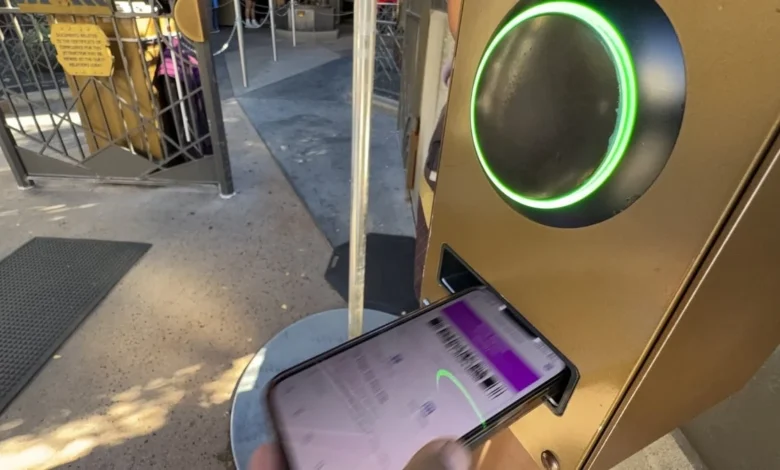
The modern iteration of visiting a Disney theme park—whether in California, Florida, Paris, Tokyo, or Shanghai—is supposed to be an exercise in escapism, designed to transport guests into fantastical worlds of wonder, nostalgia, and cinematic magic. However, for millions of visitors annually, the reality of a day at the "Happiest Place on Earth" has become inextricably linked to a very mundane, ubiquitous part of contemporary life: staring anxiously at a smartphone screen.
From securing elusive Lightning Lane appointments to bypass lengthy queues, to booking time-sensitive dining reservations and mobile-ordering meals on the fly, navigation of a modern Disney vacation demands constant digital engagement. Guests frequently find themselves glued to their screens, refreshing applications repeatedly to avoid enduring multi-hour stand-by waits for iconic attractions like Space Mountain, or trying to secure a table at coveted dining locations like the Blue Bayou restaurant.
This pervasive reliance on digital infrastructure has not gone unnoticed by company leadership. Walt Disney Imagineering President Bruce Vaughn openly acknowledged the problem during a candid panel discussion last year, admitting that the overwhelming need to interact with various resort apps actively "breaks the spell" of visiting a Disney resort. The paradox of using a digital device to escape the digital world has created a significant friction point for customer satisfaction, prompting the entertainment giant to search for innovative solutions.
Enter Disney’s latest and somewhat paradoxical initiative: the newly launched Disney Imagineering Labs application. Designed ostensibly to help reduce overall smartphone usage within the parks, the introduction of yet another app into the visitor ecosystem has raised eyebrows across both the tech and tourism sectors.
Initial Phase: Secrets of the Spire and Galaxy’s Edge
The first public-facing offering from the Disney Imagineering Labs app rolled out this week, targeting select participants of the Magic Key annual passholder program at Disneyland Resort in California. The inaugural feature, titled Secrets of the Spire, is deployed within Star Wars: Galaxy’s Edge. According to reports from specialized tracking outlets like the Disney Tourist Blog, the feature delivers an interactive, gamified experience embedded directly into the physical environment of the themed land, utilizing minigames and immersive challenges to engage passholders.
While the initiative aims to make the physical environment more engaging, initial industry observers have questioned the fundamental logic of introducing a gamified application as a remedy for screen fatigue. Critics and park-goers alike have pointed out that adding more software to a visitor’s device does not inherently solve the core problem of excessive screen time, even if the application is engineered to encourage visitors to look up at their surroundings rather than down at a traditional utility menu.
The Disneyland Enchanted Guide: AI-Powered Relief
Recognizing that gamification alone will not cure the underlying malady of app dependency, the more substantial and anticipated component of the Imagineering Labs initiative is the Disneyland Enchanted Guide. While the software does not yet possess a firm release date, industry analysts and specialized outlets such as Mickey Visit anticipate a rollout early next year.
The Enchanted Guide represents a significant technological shift by integrating artificial intelligence into the park experience, supporting both text-based and voice-based queries. Instead of forcing guests to manually navigate complex menus to find operational details, visitors can theoretically interact with the AI assistant naturally. Queries such as "How long is the line at Pirates of the Caribbean right now?" or "Where should we eat around noon near Tomorrowland?" can be answered conversationally.
Crucially, the Enchanted Guide introduces a notification-based alert system designed to eliminate active screen checking altogether. Rather than manually refreshing wait-time dashboards, visitors can set custom parameters to be alerted only when a specific ride’s wait time drops below an acceptable threshold or when a dining reservation becomes available. Instead of staring anxiously at a display, a guest can continue enjoying the park ambiance until an audible notification signals that it is time to act.
User Feedback and the Path Forward
During this initial exploratory phase, Disney is actively soliciting granular feedback directly through the Imagineering Labs interface. By leveraging its most dedicated constituency—annual passholders and theme park power users—the company hopes to iteratively refine the software to ensure that future iterations genuinely enhance the guest experience rather than adding cognitive load.
Despite these promising use cases, significant operational questions remain regarding how the Imagineering Labs ecosystem will interface with existing infrastructure. Disney has made no official announcements indicating that the Imagineering Labs app is intended to consolidate or replace the primary resort apps currently in operation.
This omission hints at potential fragmentation: a visitor might receive an automated alert regarding Lightning Lane availability via the Enchanted Guide, only to be forced to open the primary Disneyland app to complete the actual financial transaction and booking. Industry analysts note that unless these distinct software ecosystems are eventually unified under a single, cohesive banner, the user experience could paradoxically become more complicated rather than streamlined.
The Meta Partnership and Smart Glasses Integration
Adding another layer of complexity to Disney’s strategy to balance technology and immersion is an unexpected hardware integration. Alongside the software rollout, Disney has announced a strategic alignment between the Enchanted Guide app and Meta’s Ray-Ban smart glasses.
Through this integration, users who wear the compatible smart eyewear will be able to interface directly with the AI assistant, asking contextual questions about the physical environment around them entirely hands-free. While proponents argue that wearable technology could liberate hands and eyes from handheld screens, skeptics point out that incorporating augmented reality devices into a themed environment may amplify, rather than diminish, the sensation of being tethered to a digital matrix.
Historical Context: The Evolution of Disney’s Digital Infrastructure
To understand the weight of Disney’s current dilemma, one must look back at the trajectory of technology adoption within theme parks over the past decade. The integration of personal electronics into the Disney park model began in earnest with the introduction of the My Disney Experience platform and the subsequent rollout of MagicBands in 2013 at Walt Disney World.
Initially conceived as a tool to streamline park entry, hotel room access, and FastPass reservations through wearable RFID technology, the system gradually shifted toward smartphone dependency as physical ticketing and legacy fast-pass systems were phased out. The retirement of the complimentary FastPass system in favor of paid models—first branded as Disney Genie+ and later rebranded as Lightning Lane Multi Pass—cemented the smartphone’s role as an indispensable operational tether.
By tying high-demand attraction access directly to rapid-fire digital reservations, Disney inadvertently created a hyper-competitive virtual marketplace. Guests found themselves waking up before dawn to secure spots for popular rides, transforming a vacation day into a high-stakes logistics exercise. The subsequent consumer backlash and growing sentiment of digital exhaustion ultimately forced executives to reevaluate the long-term sustainability of screen-centric park management.
Economic and Industry Implications
The pivot toward AI-driven assistants and passive notification systems represents a broader trend within the leisure and entertainment industry: finding the delicate equilibrium between operational efficiency and experiential authenticity.
For theme parks, mobile applications are not merely a convenience for guests; they are powerful data-gathering engines and labor-saving mechanisms. Mobile food ordering reduces physical queue congestion at quick-service restaurants, optimizes kitchen staff workflows, and increases average transaction values through frictionless upselling. Similarly, paid queue-skipping services generate hundreds of millions of dollars in high-margin ancillary revenue annually.
Consequently, Disney cannot simply abandon its digital infrastructure without risking severe operational bottlenecks and financial headwinds. The Imagineering Labs experiment is therefore less an attempt to eliminate technology and more an exercise in UX (user experience) optimization—attempting to make the technology invisible. By moving from active engagement (searching, refreshing, and tapping) to passive engagement (conversational AI and threshold alerts), Disney hopes to reclaim the psychological magic that drew guests to its parks in the first place.
Looking Ahead
As the beta testing phase of the Imagineering Labs app continues through the coming months, industry watchers will be monitoring user adoption rates and sentiment metrics very closely. If the Disneyland Enchanted Guide successfully delivers on its promise to reduce active screen time without disrupting the complex logistical ballet required to manage millions of visitors annually, it could serve as a blueprint for theme parks worldwide grappling with the digital age.
For now, however, visitors passing through the turnstiles will continue to navigate the dual realities of physical enchantment and digital oversight—waiting for the day when the magic of a Disney park can be experienced entirely in the moment, uninterrupted by the glow of a smartphone screen.