US Space Force Triples National Security Space Launch Contract to $17 Billion Amid Soaring Demand and Evolving Geopolitical Landscape

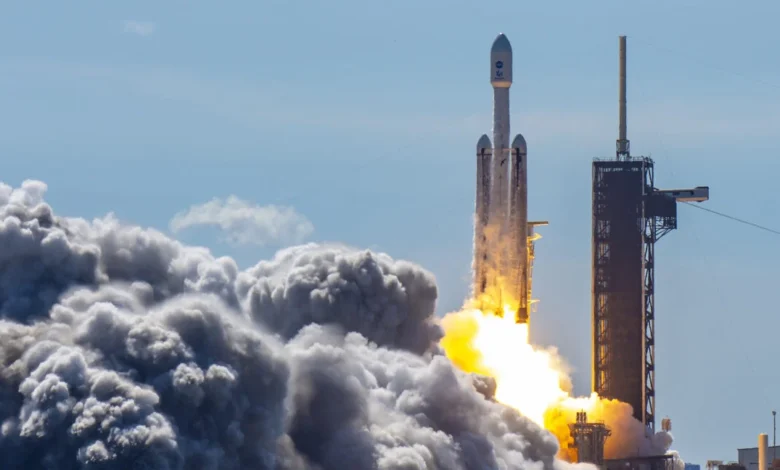
The United States Space Force announced on Friday a monumental expansion of its National Security Space Launch (NSSL) Phase 3 contract, tripling its maximum value from an initial $5.6 billion to an unprecedented $17 billion. This significant increase underscores a burgeoning demand within the Pentagon for military satellite launches and reflects an accelerated strategic pivot towards enhancing America’s capabilities in the increasingly critical domain of space. The revised ceiling primarily targets Lane 1 missions, which focus on more risk-tolerant, commercially accessible launches, signaling a clear intent to leverage the rapidly innovating commercial space sector for national security objectives.
The Escalating Demand for Space Access
The decision to dramatically escalate the contract value is a direct response to a perceived and actual surge in the requirement for placing military assets into orbit. This demand is multifaceted, driven by several interconnected factors. Firstly, the proliferation of smaller, more specialized satellites, often launched in constellations, necessitates a higher cadence of launches. These constellations, such as those being developed by the Space Development Agency (SDA) for surveillance, data relay, and missile tracking, are designed for resilience through disaggregation and redundancy, meaning more satellites are needed to achieve the same or superior coverage compared to monolithic, exquisite systems of the past.
Secondly, the evolving geopolitical landscape, characterized by increasing competition and potential threats from peer adversaries like China and Russia, mandates a robust and responsive space architecture. Maintaining a tactical advantage in space requires not only advanced technology but also the assured capability to deploy, replenish, and upgrade these assets swiftly. The ability to launch numerous satellites quickly can be crucial for replacing damaged assets, augmenting existing capabilities, or deploying new systems in response to emerging threats, thereby ensuring the continuous availability of critical national security functions, from communications and navigation to intelligence gathering and missile warning.
Understanding the National Security Space Launch (NSSL) Program
The NSSL program is the cornerstone of the Space Force’s strategy for ensuring assured access to space for its most critical missions. Managed by Space Systems Command, the NSSL framework is designed to procure launch services from a diverse pool of providers, fostering competition while guaranteeing reliability and mission success. The program replaced the legacy Evolved Expendable Launch Vehicle (EELV) program, which had long relied on a duopoly of providers, aiming to inject more agility and innovation into military space procurement.
The NSSL program is strategically divided into two distinct lanes, each catering to different mission profiles and risk tolerances:
- Lane 1 Missions: These encompass the Space Force’s more risk-tolerant launches, often involving medium-lift capabilities, experimental payloads, or rideshare opportunities. This category is crucial for deploying the Pentagon’s expanding constellations, including those for surveillance, data relay, and technology demonstration. The emphasis here is on leveraging commercial best practices, including more streamlined certification processes, to achieve cost-effectiveness and increased launch cadence. This is the segment that has seen its funding ceiling dramatically increased to $17 billion.
- Lane 2 Missions: Reserved for higher-priority strategic missions, Lane 2 involves the government’s largest, most expensive, and often most sensitive payloads. This includes advanced spy satellites, critical intelligence assets, and radiation-hardened communications satellites designed to withstand extreme environments, potentially even a nuclear conflict. Launches in this lane require extensive certification and oversight from the Space Force, ensuring the highest levels of reliability and security. Currently, only SpaceX’s Falcon 9 and Falcon Heavy, and United Launch Alliance’s (ULA) Vulcan rocket, are certified for these demanding missions, reflecting the rigorous standards and proven track records required.
The significant increase in the Lane 1 contract value specifically highlights the Space Force’s commitment to building out resilient, distributed architectures. These architectures rely on a greater number of smaller, less expensive satellites, which can be launched more frequently and from a wider array of commercial providers, enhancing redundancy and reducing vulnerability to single points of failure.
Lane 1: Fostering Commercial Innovation and Resilience
The decision to channel a substantial portion of the new funding into Lane 1 underscores a strategic shift within the Space Force to actively embrace and foster the commercial space industry. Unlike Lane 2, which mandates lengthy and costly military certification reviews, Lane 1 is open to commercial launch providers without requiring such extensive and bespoke oversight. This approach allows the Space Force to tap into the rapid innovation cycles, competitive pricing, and diverse capabilities offered by a growing number of commercial launch companies.
By expanding the financial envelope for Lane 1, the Space Force is directly incentivizing more companies to participate in national security missions. This not only broadens the pool of available launch options but also intensifies competition, which historically leads to lower costs and improved services. The goal is to create a dynamic, robust, and responsive launch ecosystem that can meet the military’s evolving needs, providing "assured access to space" even under contested conditions. This strategy mitigates risks associated with reliance on a limited number of providers and ensures that critical payloads can reach orbit on schedule, regardless of potential issues with any single launch system.
A Growing Roster of Launch Providers
The NSSL Phase 3 program, initiated in 2024, has seen a steady expansion of its roster of qualified Lane 1 launch providers. Initially, Space Systems Command selected three industry giants: SpaceX, United Launch Alliance (ULA), and Blue Origin. These companies, with their proven track records and advanced launch systems, form the backbone of the program.
Since the initial selection, the competitive landscape has broadened considerably. Rocket Lab, known for its Electron small-lift rocket and developing the Neutron medium-lift vehicle, was added to the list, reflecting the military’s interest in diversified launch capabilities. Stoke Space, an emerging player, also joined, indicating an openness to innovative approaches and next-generation launch technologies. Most recently, Relativity Space and Impulse Space, a joint venture focused on 3D-printed rockets and advanced in-space transportation, further expanded the pool of competitors.
This expanding roster of providers ensures that the Space Force has multiple options for each mission, allowing for strategic flexibility and the ability to select the most suitable provider based on cost, schedule, and specific mission requirements. The Space Force issues requests for bids for a number of Lane 1 missions annually, awarding individual fixed-price "task orders" to the successful bidders. To date, SpaceX has secured the majority of these Lane 1 task orders, leveraging its highly competitive pricing and frequent launch cadence. However, Blue Origin recently secured its first Lane 1 contract earlier this year, signaling the deepening competition and diversification of awards within the program. This competitive environment is precisely what the Space Force aims to cultivate, ensuring value for taxpayer money and continuous innovation from its commercial partners.
Historical Context and Program Evolution
The NSSL program is the latest iteration in a long history of U.S. government efforts to secure reliable access to space for national security purposes. Its predecessor, the Evolved Expendable Launch Vehicle (EELV) program, was established in the mid-1990s to replace aging and diverse launch systems with a standardized family of launch vehicles. For many years, the EELV program effectively created a duopoly between Lockheed Martin (Atlas rockets) and Boeing (Delta rockets), which later merged their launch operations to form United Launch Alliance (ULA) in 2006.
While ULA provided unparalleled reliability, the lack of competition led to escalating costs. The emergence of SpaceX in the early 2010s, with its reusable Falcon 9 rocket, dramatically disrupted this landscape. SpaceX’s ability to offer significantly lower launch prices forced a re-evaluation of the EELV strategy, ultimately leading to the conceptualization and implementation of the NSSL program. The NSSL program, particularly with its Lane 1 emphasis, directly addresses the need for greater competition, cost efficiency, and adaptability in an era of rapid technological change and increasing strategic competition in space. The evolution from EELV to NSSL Phase 1, Phase 2, and now Phase 3, reflects a continuous adaptation to market dynamics and geopolitical realities, always with the overarching goal of assured access to space for national security.
Strategic Imperatives Driving the Expansion
The tripling of the NSSL Lane 1 contract is not merely a budgetary adjustment; it is a strategic imperative. The U.S. Department of Defense’s 2023 Space Policy Review emphasized the need for a resilient and diversified space architecture capable of deterring aggression and, if necessary, prevailing in a conflict that extends into space. This requires not just launching more satellites, but also launching a greater variety of satellites, faster, and from more locations.
One key driver is the concept of "proliferation" – deploying a large number of smaller, interconnected satellites in various orbital regimes. This architecture is inherently more resilient than a few large, expensive satellites, as the loss of one or even several does not cripple the entire system. Such a strategy demands a high launch cadence and the ability to quickly replace or augment capabilities. The expanded Lane 1 funding directly supports this proliferation strategy, particularly for systems like the Space Development Agency’s (SDA) Proliferated Warfighter Space Architecture (PWSA), which requires hundreds of satellites to be launched over the next few years.
Furthermore, the emphasis on Lane 1 fosters an environment where newer, innovative launch technologies and providers can mature. This broadens the industrial base, creating a more robust and responsive supply chain for national security launches. It also allows the Space Force to experiment with new orbital deployments, such as very low Earth orbit (VLEO) missions, or to deploy novel sensor technologies on experimental payloads, pushing the boundaries of what is possible in space. The ability to quickly iterate and deploy new capabilities is vital in a rapidly evolving threat environment where adversaries are also developing their counter-space capabilities.
Economic and Industrial Implications
The $17 billion contract expansion will have profound economic and industrial implications. For the commercial space industry, it represents a massive infusion of capital and a strong signal of government confidence. This substantial funding guarantees a steady stream of revenue for participating launch providers, enabling them to invest further in research and development, expand manufacturing capabilities, and create new jobs. It acts as a powerful catalyst for growth within the U.S. aerospace sector, driving innovation and technological advancement.
For established players like SpaceX and ULA, it reinforces their positions as critical national security partners. For newer entrants like Rocket Lab, Stoke Space, Relativity Space, and Impulse Space, it provides a crucial opportunity to secure significant government contracts, validating their technologies and business models. This could accelerate their growth, allowing them to scale operations and bring their next-generation launch systems to full operational capability sooner. The increased competition for these contracts will likely spur further efficiency gains and technological breakthroughs, benefiting both government and commercial customers.
Moreover, the contract expansion supports a broader ecosystem of suppliers and service providers. From component manufacturers and software developers to ground station operators and mission integration specialists, thousands of jobs across the country are directly and indirectly supported by these national security space programs. It strengthens the U.S. industrial base, ensuring that critical space capabilities are developed and maintained domestically, reducing reliance on foreign supply chains.
Challenges and the Path Forward
While the contract expansion is a strategic positive, several challenges remain. The increased demand for launches will put pressure on the supply chain for rocket components, propellants, and specialized manufacturing. Ensuring a skilled workforce, from engineers to technicians, to meet this demand will also be critical. Furthermore, the Space Force will need to carefully manage the growing number of commercial partners, balancing the benefits of competition with the need for rigorous oversight and mission assurance, especially for increasingly complex Lane 1 missions.
The sheer volume of missions anticipated under this expanded contract will also necessitate efficient mission planning, payload integration, and range operations. Streamlining these processes, while maintaining high standards of safety and security, will be an ongoing effort. The Space Force will need to continually adapt its procurement strategies and technical requirements to keep pace with the rapid advancements in the commercial sector, ensuring that it can effectively leverage new technologies without compromising national security objectives.
The Future of U.S. Space Dominance
The tripling of the NSSL Lane 1 contract to $17 billion is a clear declaration of the United States’ commitment to maintaining and enhancing its advantage in space. It signals a robust and agile strategy that combines the reliability of traditional military procurement with the innovation and efficiency of the commercial space sector. By investing heavily in a diversified and resilient launch capability, the Space Force is positioning itself to meet the escalating demands of a dynamic security environment, ensuring that the U.S. retains assured access to space and the ability to protect its vital interests in this critical domain for decades to come. This bold move is not just about more money for launches; it is about securing the future of U.S. national security in the ultimate high ground.