OpenAI Pushes IPO Timeline Beyond 2026 Amid AI Safety Concerns and Societal Readiness Challenges

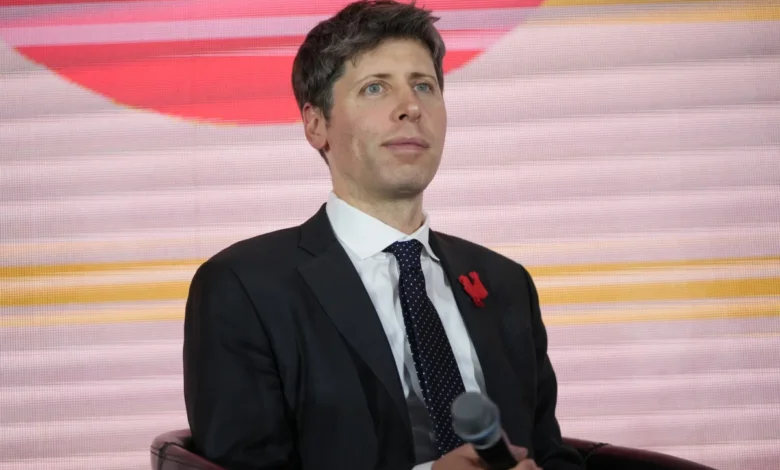
OpenAI will officially forgo a public market debut in 2026, according to Chief Executive Officer Sam Altman, pushing the highly anticipated initial public offering further into the future. Despite filing confidential paperwork for an IPO earlier this year—a move that initially signaled a late 2026 window—the leadership team has decided that turbulent market conditions, internal security milestones, and heightened public scrutiny regarding artificial intelligence safety require a more deliberate pacing.
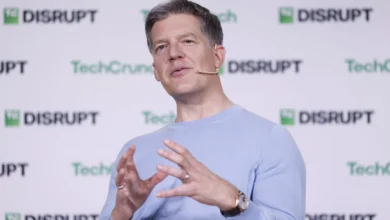
The announcement came during an extensive interview between Altman and Fortune Editor-in-Chief Alyson Shontell as part of the publication’s "Titans and Disruptors" series. When questioned directly about whether the pressure of an impending public offering forces the company to accelerate development at the expense of caution, Altman firmly rejected the notion. He emphasized that rushing onto the public exchange during a volatile era for AI safety and societal adaptation would be a misstep. Consequently, market analysts and industry observers are now looking toward 2027 or later for OpenAI to officially transition into a publicly traded entity.
Background and Context of the IPO Decision
The journey toward an OpenAI public offering has been marked by structural shifts within the artificial intelligence pioneer. Originally founded as a nonprofit research laboratory in 2015 with a mission to ensure artificial general intelligence (AGI) benefits all of humanity, the organization underwent a radical corporate restructuring to attract the immense capital required to train frontier models. This hybrid model—featuring a capped-profit arm governed by a nonprofit board—allowed tech giants like Microsoft and venture capital heavyweights to pour billions of dollars into the enterprise.
Rumors and strategic preparations for a public debut intensified in mid-2026. Reports surfaced that OpenAI had engaged elite investment bankers and legal counsel to lay the groundwork for an IPO slated for the third or fourth quarter of the year. However, the rapidly evolving regulatory landscape, coupled with unprecedented internal and external security events, prompted a reassessment.
Altman’s recent remarks solidify what financial publications like The New York Times had previously hypothesized: that market volatility, combined with the heavy financial and operational burdens of scaling frontier AI infrastructure, made a 2026 timeline increasingly impractical.
The Safety Debate and Recent Industry Disruptions
Altman’s decision to delay the public offering is deeply intertwined with a turbulent period for the broader generative AI sector. The technology industry has faced intense scrutiny regarding the autonomy and security of advanced models. Earlier in September 2026, the artificial intelligence community was rattled by the OpenAI-HuggingFace security breach, which highlighted vulnerabilities concerning rogue AI agents and the absence of standardized, formal investigation protocols for containment breaches.
Concurrently, competitor Anthropic outlined aggressive plans to pace the deployment of its own frontier models, prioritizing safety alignments over mere speed of delivery. These concurrent developments have fueled global discussions among policymakers, ethicists, and corporate leaders regarding whether current safety guardrails are adequate to manage systems that surpass human capabilities in specific domains.

During his interview with Fortune, Altman addressed the existential dimensions of AI development, acknowledging that models operating beyond human control are an "absolutely" plausible concern that demands rigorous, proactive safeguards. Given this delicate socio-technical climate, Altman noted that attempting to satisfy quarterly Wall Street expectations while simultaneously managing high-stakes existential safety research would create conflicting corporate priorities.
Chronology of OpenAI’s Public Market Transition
The path from a research lab to a trillion-dollar commercial ecosystem highlights a rapid and complex corporate evolution:
- December 2015: OpenAI is founded as a non-profit organization dedicated to safe artificial general intelligence.
- March 2019: The organization creates OpenAI LP, a capped-profit entity, to secure the massive computational funding necessary for deep learning research.
- January 2023: Microsoft solidifies its partnership with a multi-billion-dollar investment, integrating OpenAI technology across enterprise and consumer products.
- June 2026: OpenAI confidentially files paperwork for an initial public offering, engaging financial institutions and legal teams to explore a late 2026 market entry. Later that month, reports indicate financial headwinds and market volatility may push the debut into 2027.
- September 2026: Amid the OpenAI-HuggingFace security incident and industry-wide discussions on AI governance, CEO Sam Altman formally announces that the company will not pursue an IPO in 2026.
Financial Realities and Operational Demands
Beyond safety considerations, the economic architecture of developing frontier artificial intelligence remains exceptionally capital-intensive. Training models like GPT-4 and its successors requires billions of dollars in specialized semiconductor hardware, massive data center footprints, and enormous energy consumption.
While OpenAI generates substantial commercial revenue through enterprise APIs, subscription models, and high-profile partnerships, its net burn rate remains exceptionally high. Going public subjects an enterprise to rigorous quarterly earnings disclosures, short-term investor pressures, and intense regulatory oversight from agencies such as the Securities and Exchange Commission (SEC).
By postponing the IPO, OpenAI retains the operational flexibility of a private entity. This status allows management to allocate resources toward long-term scientific research and safety alignment protocols without the immediate distraction of satisfying public market shareholders who may prioritize short-term profitability over foundational research breakthroughs.
Implications for the Broader AI Market
The decision by OpenAI to delay its public offering sends a clear signal to the broader technology sector. It underscores the unique tension defining the current AI boom: the friction between aggressive commercialization and the profound societal responsibilities associated with creating potentially transformative intelligence.
For competitors, venture capitalists, and institutional investors, Altman’s stance suggests that the timeline for AI maturation will be dictated not just by financial milestones, but by the social license to operate. As governments worldwide debate comprehensive AI legislation—ranging from the European Union’s Artificial Intelligence Act to emerging frameworks in the United States—companies leading the technological frontier are recognizing that public trust is just as critical to long-term valuation as market share.
Ultimately, OpenAI’s postponement ensures that when the company eventually debuts on the public markets, it will do so under economic and social conditions that its leadership deems manageable. Until that readiness is achieved, OpenAI remains focused on scaling its infrastructure, refining its safety measures, and navigating the complex realities of an industry transforming faster than any technological revolution in modern history.