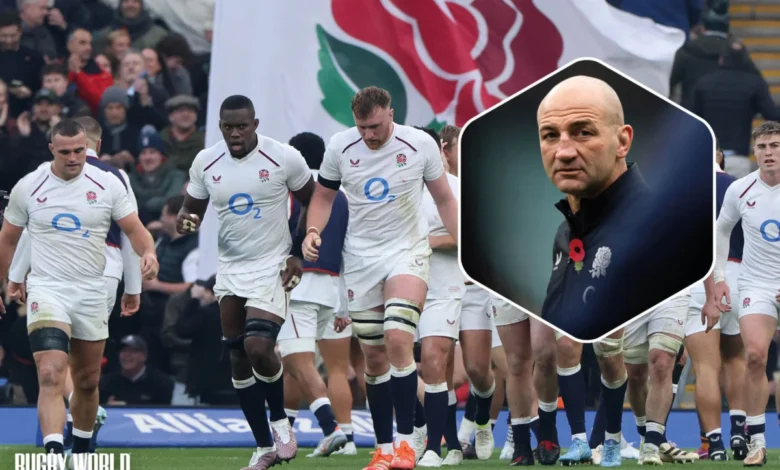
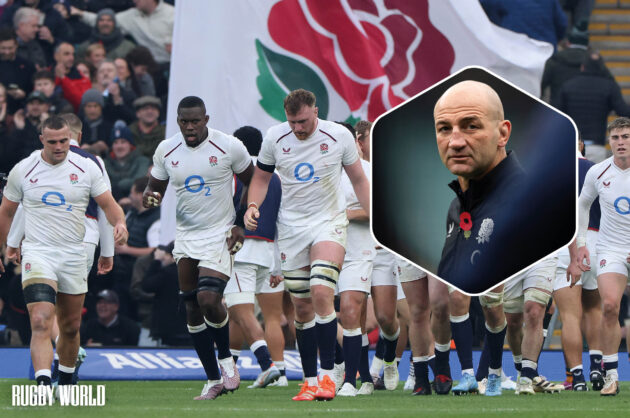
The debate surrounding the performance, trajectory, and systemic health of the England men’s national rugby union team continues to occupy a central space in international sports discourse. Following a convincing 45-22 victory over Australia in the Nations Championship, English rugby found itself confronting a familiar paradox: an undeniably talented playing roster executing a dominant on-field performance, set against a backdrop of subdued public praise and lingering structural scrutiny.
While tier-one rivals such as Ireland and South Africa routinely draw widespread acclaim for comprehensive victories—such as Ireland’s 42-12 dismantling of Argentina and South Africa’s crushing defeat of an injury-depleted Italy—England’s emphatic win in the fixture yielded a distinctly muted response. This divergence raises fundamental questions regarding how the modern England team is perceived by the media, its supporters, and the broader rugby ecosystem, contrasting the undeniable quality of its personnel with persistent institutional anxieties.
Up Front Grunt: The Foundation of the Tight Five
Historically, England’s competitive identity has been anchored in the physical dominance of its forward pack. Spanning decades of international competition, the national side has consistently produced industrial-grade tight fives capable of exerting maximum pressure at the scrum, winning the physical battle at the breakdown, and dictating the tempo of the game through sheer attrition.
The current squad maintains this legacy. In an era where numerous tier-one nations face acute talent deficits in identifying and developing test-standard tighthead props, England boasts reliable depth. Players like Joe Heyes provide immense structural integrity at the set-piece, anchoring the scrum with defensive resilience that mirrors the durability of traditional pack foundations.
Behind the front row, the second-row partnership combines international experience with relentless work rate. Maro Itoje continues to operate as a world-class operator in the engine room, while Ollie Chessum has emerged as an indispensable pillar of the pack. Chessum’s athletic profile and defensive intensity render him a cornerstone of the modern forward unit, capable of matching the physical standards set by southern hemisphere powerhouses.
In the back row, players like Ben Earl offer exceptional versatility across the six, seven, and eight positions. Earl’s work rate is statistically underscored by high carrying volumes, leading the competition in carries during recent rounds of the Nations Championship. Rather than relying solely on raw mass, the modern English loose forward unit functions with high-motor efficiency, sustaining pressure over prolonged periods of play.
Backline Evolution and Tactical Versatility
Beyond the forward dominance, England’s backline evolution has introduced new dimensions to their tactical approach. At fly-half, Fin Smith exemplifies a balanced skillset, merging tactical game management with long-range kicking accuracy and distribution range. In the midfield, the integration of Seb Atkinson addresses a historical search for a center partnership capable of seamlessly blending direct carrying power with expansive passing abilities.
On the wings, explosive talents such as Immanuel Feyi-Waboso provide game-breaking capabilities. During the fixture against Australia, Feyi-Waboso’s performance over limited minutes highlighted his effectiveness, registering multiple line breaks and demonstrating an ability to generate momentum through contact against low defensive tackling strategies.
Despite these positive developments on the pitch, England occupies the fifth position in the World Rugby Men’s Rankings with 86.99 points, trailing South Africa, New Zealand, Ireland, and France. While fifth position appears modest for a union of England’s financial and demographic scale, the mathematical margins within the rankings remain tight, placing them within striking distance of third-place Ireland.
World Rugby Men’s Rankings – Top 10 (As of November 2026)
| Rank | Team | Points | Weekly Change |
|---|---|---|---|
| 1 | South Africa | 93.09 | 0.00 |
| 2 | New Zealand | 92.65 | +0.38 |
| 3 | Ireland | 88.70 | +0.63 |
| 4 | France | 87.49 | +0.06 |
| 5 | England | 86.99 | +1.31 |
| 6 | Scotland | 84.40 | -0.38 |
| 7 | Australia | 83.12 | -1.31 |
| 8 | Argentina | 81.62 | -0.63 |
| 9 | Fiji | 77.79 | -0.06 |
| 10 | Wales | 77.37 | +0.99 |
Source: World Rugby, rankings updated 9 November 2026.
Historical Expectations and Public Perception
A significant factor influencing the reception of the England team is the long shadow cast by historical success. Public and media expectations are frequently benchmarked against the standards set by the triumphant 2003 Rugby World Cup-winning squad. That generation established an iconic standard of forward dominance and tactical execution that remains deeply embedded in the cultural memory of English supporters.
More than two decades later, the modern game has undergone radical evolution in terms of pace, sports science, tactical complexity, and global competitiveness. Consequently, evaluating contemporary squads against an exceptional historical anomaly creates an unrealistic pressure ecosystem that complicates objective assessment of current achievements.
Institutional Stability and Coaching Dynamics
While the playing roster demonstrates clear international competitiveness, organizational stability off the pitch has frequently been a subject of intense debate. The leadership tenure of head coach Steve Borthwick and the broader Rugby Football Union (RFU) high-performance setup have experienced notable volatility regarding backroom staff retention.
Since 2022, the coaching and support staff has undergone substantial turnover, involving approximately eleven different specialists across attack, defense, scrum, and conditioning roles. Notable personnel transitions have included:
- Richard Wigglesworth (Attack / Senior Assistant Coach / Defence)
- Kevin Sinfield (Skills and Kicking Coach)
- Felix Jones (Defence Coach)
- Aled Walters (Head of Strength and Conditioning)
- Matt Proudfoot (Forwards and Scrum Coach)
- Brett Hodgson (Defence Coach)
- Richard Cockerill (Scrum and Forwards Coach)
- Martin Gleeson (Assistant Coach)
- Tom Harrison (Scrum Coach)
- Lee Blackett (Attack Coach)
- Joe El-Abd (Defence Coach)
- Andrew Strawbridge (Coach Advisor / Assistant Coach)
In any high-performance sporting organization, such a frequency of structural and personnel adjustments typically signals underlying operational friction. Analysts suggest that while the talent pool within English rugby remains robust and fully capable of challenging any team globally outside of South Africa’s sustained benchmark, the realization of the team’s full potential may depend upon achieving long-term continuity and stability within the coaching infrastructure.
Related posts: