Early Black Friday Deals Bring Rare Discounts to High-Performance 3D Printing Gear With Bambu Lab P1S Drop

The holiday shopping landscape has shifted dramatically over the past decade, with major retail events like Black Friday and Cyber
Monday no longer confined to the Friday immediately following Thanksgiving. Instead, major e-commerce platforms and technology manufacturers have progressively pushed promotional windows earlier into the autumn season, frequently launching significant hardware discounts as early as late October or early November. This strategic expansion is designed to capture consumer demand ahead of the traditional holiday rush, alleviate supply chain bottlenecks, and provide shoppers with extended opportunities to research and purchase high-ticket electronics. Among the early beneficiaries of this retail trend is the consumer and prosumer 3D printing market, a sector that has experienced explosive growth due to advancements in printing speeds, reliability, and user-friendly software ecosystems.
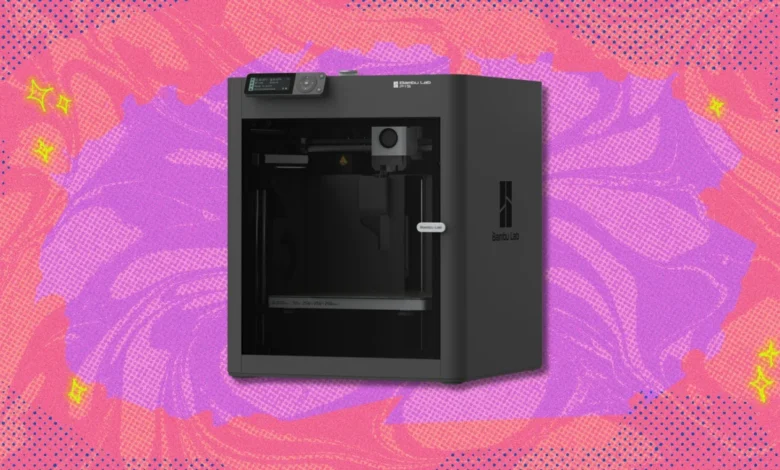
A prominent example of this early holiday discounting strategy is currently unfolding on Amazon, where the highly regarded Bambu Lab P1S 3D printer has received a notable price reduction. As of November 11, the ready-to-use FDM (Fused Deposition Modeling) device is listed at $349, down from its standard retail price of $399. This represents a 13% discount, or a direct savings of $50, for consumers looking to invest in desktop manufacturing hardware for personalized gifts, rapid prototyping, or custom creative projects. While a $50 price drop may appear modest relative to enterprise-grade machinery, it is a significant margin for a device that has consistently maintained its market value due to high demand and strong performance reviews within the maker community.
Technical Capabilities and Performance Metrics
The Bambu Lab P1S has earned a reputation in the desktop manufacturing space for bridging the gap between hobbyist accessibility and professional-grade performance. Unlike older generations of 3D printers that often required extensive calibration, manual bed leveling, and troubleshooting, the P1S is engineered for out-of-the-box readiness. According to product specifications and manufacturer documentation, the unit can be unboxed, set up, and initiated in approximately 15 minutes, significantly lowering the barrier to entry for novice users.
At the core of the P1S’s appeal is its mechanical speed and structural design. The printer is capable of reaching speeds of up to 500 mm/s, paired with an acceleration rate of 20,000 mm/s². This high-velocity output allows complex digital models to be realized in a fraction of the time required by standard desktop printers. Furthermore, when paired with Bambu Lab’s proprietary Automatic Material System (AMS), the P1S supports multi-color printing of up to 16 distinct filaments in a single print job. This capability transforms multi-part artistic creations and functional prototypes, enabling smooth transitions between colors and support materials without requiring manual filament swaps mid-print.
Material Compatibility and Enclosure Engineering
Another critical factor driving the popularity of the Bambu Lab P1S is its fully enclosed chassis. Traditional open-frame 3D printers are often limited to basic thermoplastics like PLA because they are susceptible to warping and temperature fluctuations caused by ambient room conditions. The enclosed design of the P1S, however, stabilizes the internal thermal environment, making it suitable for a broader spectrum of advanced engineering materials.
According to the official product guidelines, the printer is fully compatible with a wide array of filaments, including Polylactic Acid (PLA), Polyethylene Terephthalate Glycol (PETG), Thermoplastic Polyurethane (TPU), Polyvinyl Alcohol (PVA), Polyester (PET), and Acrylonitrile Butadiene Styrene (ABS). Additionally, the enclosure supports more demanding polymers such as Acrylic Styrene Acrylonitrile (ASA), Polyamide (Nylon, or PA), and Polycarbonate (PC). However, the manufacturer explicitly advises against using carbon-fiber-reinforced or glass-fiber-reinforced polymers with the standard stock configuration of the P1S, as these abrasive materials can cause premature wear on standard nozzles and extrusion components.
The integration of automatic bed leveling further streamlines the user experience. By utilizing a sensor grid to map the exact contours of the print bed before every job, the printer automatically adjusts the Z-axis height to ensure optimal first-layer adhesion—historically one of the most common failure points in desktop 3D printing. This automated calibration ensures consistent, repeatable results, reducing wasted filament and failed prints for both beginners and experienced makers.
The Evolution of Early Holiday Shopping Trends
The appearance of deep discounts on high-performance hardware in mid-November highlights a broader transformation in consumer retail psychology. Industry analysts note that consumers have become increasingly strategic, utilizing online price-tracking tools, wishlists, and deal aggregation sites to monitor product pricing weeks before major shopping holidays occur. Retailers respond to this behavior by staggering promotions, testing various price points, and securing consumer commitments early in the fourth-quarter shopping season.
For the technology sector, this trend is particularly pronounced. Devices that were once guarded by strict minimum advertised pricing (MAP) policies, such as specialized 3D printers, high-end graphics cards, and premium audio equipment, are now frequently discounted during early November events. This shift helps manufacturers clear warehouse inventory ahead of incoming next-generation product cycles while simultaneously capturing market share from competitors during the critical holiday gifting window.
Market observers suggest that early sales also serve as a barometer for broader economic consumer confidence. When shoppers are willing to invest in non-essential hobbyist technology weeks before the official holiday shopping kickoff, it signals sustained interest in creative tech sectors. Furthermore, promotional events like the current Amazon discount on the Bambu Lab P1S provide an opportunity for educational institutions, small design studios, and independent creators to acquire hardware at a lower total cost of ownership, potentially driving higher software and filament sales for manufacturers down the line.
Market Implications and Broader Industry Impact
The broader implications of aggressive pricing on consumer 3D printers extend far beyond a single holiday promotion. As companies like Bambu Lab, Creality, Prusa Research, and AnkerMake compete for dominance in the desktop manufacturing space, the overall baseline for printer performance continues to rise. Features that were once considered luxury specifications—such as enclosed build chambers, high acceleration rates, multi-color filament management systems, and automated calibration—are rapidly becoming industry standards.
This democratization of advanced manufacturing tools has profound implications for local economies, education, and small-scale entrepreneurship. With reliable printers available at lower price points, individuals can design, prototype, and manufacture physical goods directly from home. From custom mechanical replacement parts and architectural mockups to artistic sculptures and educational aids, the utility of desktop 3D printers has expanded well beyond the niche hobbyist market of the 2010s.
Industry analysts emphasize that as hardware costs decline and reliability increases, the primary value proposition for manufacturers will shift toward software ecosystems, cloud-based model repositories, and proprietary filament subscriptions. By lowering the initial financial threshold to acquire the hardware via promotions such as the current Amazon discount, companies effectively expand their user base, fostering long-term brand loyalty within an increasingly competitive global market.
For consumers currently evaluating the desktop 3D printing landscape, the availability of early holiday markdowns suggests that waiting until Black Friday proper may not always yield superior savings, particularly for high-demand items with limited stock. As retail inventories fluctuate throughout November, prospective buyers are encouraged to verify warranty terms, shipping speeds, and return policies to ensure they secure authentic hardware backed by official manufacturer support.
Related posts: