IBM Pivots Quantum Roadmap to Prioritize Operational Speed and Scalability Over Modular Interconnects

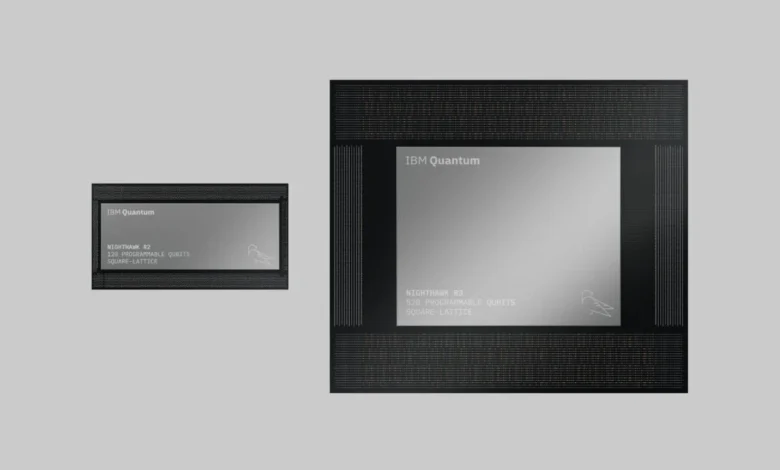
The trajectory of quantum computing development is rarely a straight line, a reality underscored by IBM’s recent strategic recalibration regarding its Nighthawk processor roadmap. While previous projections anticipated a move toward modular, multi-chip architectures—specifically the ambitious plan to link multiple Nighthawk processors to scale qubit counts by 2026—the company has shifted its near-term focus toward optimizing the performance of single-chip systems. This pivot, evidenced by the release of the Nighthawk r2 in September, emphasizes architectural efficiency and the implementation of innovative “dissipative reset” technology, which promises significant gains in computational speed rather than immediate increases in raw qubit quantity.
The Evolution of the Nighthawk Roadmap
IBM’s quantum roadmap has long served as a North Star for the industry, providing a transparent, albeit evolving, look at how the company intends to navigate the transition from experimental noisy intermediate-scale quantum (NISQ) devices to fault-tolerant systems. In previous iterations of this roadmap, the central objective for 2027 was to achieve a milestone of 10,000 gate operations while maintaining the 120-qubit count established in earlier hardware iterations. The proposed methodology for achieving this scale involved a transition to modularity: connecting three Nighthawk processors to create a unified 360-qubit machine by 2026.
However, the reality of current hardware deployment has diverged from this timeline. The Nighthawk r2, launched in September, arrived as a standalone chip, deferring the multi-chip interconnect strategy. While this may appear to be a deviation from the stated goal, IBM executives frame the decision as a necessary optimization phase. By refining the performance of a single chip, the company is establishing a more robust foundation upon which future modular systems will be built. This pragmatic approach suggests that the technical challenges of maintaining coherence across interconnected quantum processors—the so-called "interconnect bottleneck"—are being met with a "quality over quantity" strategy that seeks to maximize the utility of existing qubit real estate.
Technical Innovation: The Rise of Dissipative Reset Gadgets
The most compelling aspect of the Nighthawk r2 is the architectural inclusion of dedicated hardware to manage qubit state resets. In the quest for quantum utility, one of the most persistent hurdles is the time required to return a qubit to its ground state after a calculation is performed. If a qubit is not properly reset, residual energy can lead to errors in subsequent operations, effectively limiting the speed at which circuits can be run.
IBM has addressed this by incorporating what it calls “dissipative reset gadgets.” These are physical structures on the chip that mimic the characteristics of a qubit but serve a purely utilitarian, non-computational role. The Nighthawk r2 features 458 total physical qubits, yet only 120 of these are designated as programmable. The remaining devices act as specialized cooling or reset mechanisms, enabling the rapid removal of energy from the programmable qubits.
According to Oliver Dial, a Vice President at IBM Quantum Systems, this inclusion is transformative for user experience. "This is an extra physical qubit that we include on the chip for each programmable qubit that lets us quickly remove the energy from one of our programmable qubits, returning it to the ground state," Dial explained. "That capability lets our users run circuits on this chip faster than was ever before possible."
The impact of this design choice is measurable. IBM reports that these dissipative reset gadgets can accelerate certain computational operations by up to 19 times compared to the r1 architecture. This is a critical development because, in quantum computing, "circuit depth"—the number of operations that can be performed before the system decoheres—is directly linked to how quickly those operations can be executed. By reducing the idle time between gates, IBM is effectively extending the operational window of its processors.
Chronology and Hardware Scaling
To understand the scale of this shift, one must look at the progression of IBM’s hardware development over the past half-decade. Since the introduction of its initial quantum roadmaps, IBM has moved from the 5-qubit Canary and 27-qubit Falcon chips to the 127-qubit Eagle and the 433-qubit Osprey processors. The Nighthawk series represents a departure from the "more qubits at any cost" philosophy, focusing instead on the density of information and the reliability of operations.
The current Nighthawk r2 (120 programmable qubits) serves as a bridge to the anticipated Nighthawk r3, slated for 2027. The r3 aims to scale the programmable qubit count to 520. If IBM maintains its current ratio of one reset gadget per programmable qubit, the r3 would necessitate a total of roughly 2,000 individual physical components on a single die. This would represent the most complex single-chip quantum processor IBM has produced to date, doubling the size of its previous largest offerings in terms of total physical components.
Contextualizing the Industry Shift
The broader quantum computing sector is currently grappling with the transition from physical qubits to logical, error-corrected qubits. While the industry has been obsessed with "qubit counts," analysts note that the number of physical qubits is a misleading metric if those qubits are prone to high error rates. IBM’s focus on performance-enhancing technology—like the reset gadgets—is part of a broader industry shift toward "Quantum Utility," where the emphasis is placed on the ability to run circuits that are beyond the reach of classical supercomputers.
The implications for researchers and commercial partners are significant. If IBM can successfully maintain high-speed, high-fidelity operations while scaling toward 500+ programmable qubits, it creates a pathway to error-mitigated quantum computing that does not necessarily rely on the immediate, highly complex implementation of large-scale modular interconnects. This buys the company time to perfect the hardware interconnects required for the next generation of modular systems, ensuring that when they do launch, they are capable of operating at the high speeds demonstrated by the r2 and r3 chips.
Strategic Implications and Future Outlook
IBM’s decision to prioritize the efficiency of the Nighthawk architecture reflects a maturation of the quantum hardware development lifecycle. In the early stages, the primary objective was the proof of concept—simply demonstrating that quantum logic gates could function at scale. Today, the objective is the reduction of overhead.
The dissipative reset mechanism is a prime example of "hardware-software co-design," where the physical structure of the chip is tailored to support the specific needs of quantum algorithms. By dedicating over 70% of the physical hardware on the Nighthawk r2 to auxiliary tasks (the reset gadgets), IBM is acknowledging that the future of quantum computing will be defined by how well we manage the environment surrounding the qubits, rather than just the number of qubits themselves.
Looking toward 2027, the challenge for IBM will be to maintain this high-performance trajectory while managing the increased thermal and signal-management complexities associated with a 2,000-component chip. If successful, the Nighthawk r3 will serve as a definitive proof point that the company’s strategy of iterative, performance-focused hardware design is superior to the more aggressive, modular-heavy approaches taken by some competitors.
As the industry continues to evolve, the distinction between "raw" physical qubits and "functional" programmable qubits will become increasingly critical. IBM’s transparency regarding the Nighthawk r2’s internal composition provides a useful lens through which to view this transition. While the shift in the roadmap may have initially appeared as a setback, the technical data suggests it is a calculated effort to build a more powerful, stable, and ultimately useful quantum machine. The road to 10,000 gate operations and beyond is paved with these types of granular improvements, suggesting that the most significant breakthroughs in the coming years will not just be in the quantity of qubits, but in the speed and reliability with which they can be harnessed.