BYD Unveils the Second-Generation Seal 07: A Paradigm Shift in Affordable Luxury EVs and Advanced Body Control Systems

The global electric vehicle landscape is undergoing a profound transformation, characterized by a relentless pursuit of luxury-tier features at increasingly accessible price points. In a move that underscores this competitive shift, Chinese automotive giant BYD has officially launched the second-generation Seal 07. While its physical footprint—measuring 5,080 mm in length, 1,960 mm in width, and 1,495 mm in height, with a generous 2,960 mm wheelbase—places it in a size category comparable to the globally recognized Toyota Camry, its technological architecture operates in an entirely different tier. Positioned by the manufacturer as a new benchmark for class-leading luxury experiences, the Seal 07 breaks away from traditional segment boundaries by offering cutting-edge innovations typically reserved for vehicles costing three to four times as much.
The official market debut of the second-generation Seal 07 took place last week during a major corporate showcase hosted by BYD’s Ocean sales division. Zhang Zhuo, general manager of the division, presented the vehicle to industry analysts and consumers alike, highlighting its dual-powertrain strategy. The vehicle is available in both a fully battery-electric vehicle (BEV) configuration and a plug-in hybrid electric vehicle (PHEV) format. Pricing strategies for the lineup have aggressive market penetration at their core: the plug-in hybrid variants start at a remarkably competitive 139,900 yuan (approximately $21,000 USD), while the fully electric iterations begin at 149,900 yuan (around $22,500 USD). For a limited promotional window, BYD has introduced an even more aggressive "super trade-in price" structure, dropping entry points further to 135,900 yuan ($20,500 USD) for the PHEV and 145,900 yuan ($22,000 USD) for the EV, signaling the company’s intent to aggressively capture market share from legacy internal combustion engine manufacturers and rival EV startups alike.
Technological Breakthroughs: The Disus-M Body Control System
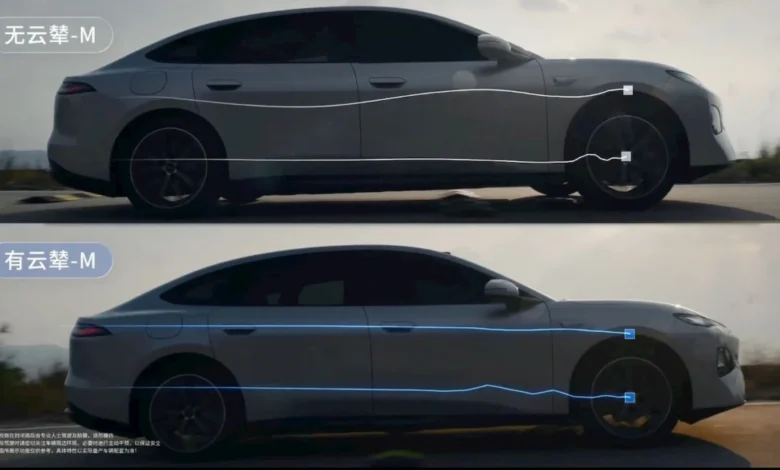
One of the most significant engineering milestones accompanying the launch of the second-generation Seal 07 is the integration of BYD’s proprietary Disus body control ecosystem. Specifically, the top-tier, all-electric flagship variant of the Seal 07 serves as the global debut vehicle for the Disus-M Intelligent Magnetorheological Body Control System. Lower-tier trims will incorporate the robust Disus-C intelligent body control system, but the Disus-M setup represents a technological tour de force for vehicles in this pricing tier.
The Disus-M system is architected around a sophisticated mechanical foundation, utilizing a front double-wishbone suspension paired with an advanced rear five-link suspension setup. However, the hardware is only part of the equation; the system operates in real-time synergy with exterior road-surface sensors—including a roof-mounted LiDAR unit—and BYD’s proprietary iTAC 2.0 (Intelligent Torque Adaptation System). According to technical data released by BYD, the system boasts ultra-fast response times measured in milliseconds. By continuously analyzing road conditions and vehicle dynamics, the magnetorheological dampers can dynamically adjust damping forces across an exceptionally wide operational range of 100 to 10,000 Nm.

Demonstration footage shared by Zhang Zhuo during the launch event illustrated the practical implications of this technology. Vehicles equipped with the Disus-M system demonstrated an unprecedented ability to neutralize body roll, absorb severe road irregularities instantaneously, and maintain optimal cabin stability during aggressive maneuvers. For a flagship variant equipped with this advanced suspension setup priced starting at 172,900 yuan ($26,000 USD), industry analysts note that the ride quality and chassis sophistication challenge European and American luxury sedans priced well north of $60,000 USD.
Next-Generation Battery Chemistry and Lightning-Fast Charging
Beneath the sleek exterior styling of the fully electric Seal 07 lies a power source designed to address one of the primary consumer pain points of electric vehicle ownership: charging anxiety. The vehicle is outfitted with a 76.7 kWh second-generation BYD Blade LFP (Lithium Iron Phosphate) battery pack. Thanks to the inherent structural efficiency and thermal stability of the second-generation Blade architecture, the Seal 07 achieves an impressive CLTC-rated driving range of up to 481 miles (775 kilometers) on a single charge.
More impressive than the raw range figures, however, is the integration of BYD’s proprietary Flash Charging technology. Traditional electric vehicle charging often requires upward of 30 to 45 minutes to achieve a meaningful replenishment of energy on fast chargers. The Seal 07 dramatically compresses this timeline. Utilizing high-output charging infrastructure, the vehicle’s battery can surge from 10% to 70% state of charge in a mere five minutes. Furthermore, a near-complete replenishment from 10% to 97% capacity requires only nine minutes. This charging velocity effectively bridges the convenience gap between refueling a conventional gasoline-powered automobile and charging an electric vehicle, marking a substantial leap forward for mass-market EV adoption.
Cabin Luxury and Smart Ecosystem 2.0 Integration
Stepping inside the second-generation Seal 07 reveals an interior design language that prioritizes minimalist digital luxury, ergonomic comfort, and passenger entertainment. The dashboard is anchored by a prominent 15.6-inch floating center infotainment touchscreen, complemented by a crisp 10.25-inch digital instrument cluster for the driver. To ensure rear-seat occupants are equally catered to, BYD has integrated dual rear passenger entertainment screens, creating a multi-display cabin environment.
Comfort features have also been elevated beyond the expectations of the mid-size sedan segment. The Seal 07 incorporates built-in zero-gravity seats designed to reduce fatigue on long journeys, a dedicated driver headrest audio system for personalized soundscapes and navigation prompts, and a built-in 6.8-liter smart refrigerator capable of cooling or warming beverages on the go.

The technological sophistication extends deep into the vehicle’s software architecture with the debut of BYD’s Smart Ecosystem 2.0. A standout feature of this ecosystem is "Diva," a companion smartwatch provided to drivers that allows seamless, remote interaction with the vehicle. Through the smartwatch, owners can manage climate control, check vehicle security status, unlock doors, and monitor charging progress without needing to pull out a smartphone or traditional key fob.
For autonomous driving capabilities, higher-priced trims of the Seal 07 feature BYD’s advanced "God’s Eye B" intelligent driving system. Leveraging the vehicle’s exterior camera suite and roof-mounted LiDAR hardware, the system provides comprehensive active safety features and convenience functions. These include Navigation on Autopilot (NOA) capabilities for both urban commuting and high-speed highway driving, as well as full-scenario intelligent parking capabilities that allow the vehicle to autonomously navigate complex parking structures and tight spaces.
Industry Implications and Market Outlook
The launch of the second-generation Seal 07 is not merely a product refresh; it is a strategic statement of intent by BYD, currently one of the world’s leading manufacturers of new energy vehicles (NEVs). By packing ultra-fast charging capabilities, advanced magnetorheological body control, high-end autonomous driving hardware, and luxury cabin appointments into a vehicle priced between $21,000 and $26,000 USD, BYD is exerting immense pricing and technological pressure on both domestic and international competitors.
Automotive market analysts point out that the Seal 07 exemplifies the widening gap between traditional legacy automakers and Chinese EV manufacturers in terms of vertical integration and software-hardware co-development. By producing critical components—such as batteries, semiconductors, and suspension control systems—in-house, BYD retains the cost-structure flexibility necessary to offer feature sets that would be cost-prohibitive for competitors relying on traditional global supply chains.
As the Seal 07 rolls out to dealerships and customer deliveries commence across key markets, industry observers will be closely monitoring how competing manufacturers respond to the technological bar set by BYD’s Disus-M system and Flash Charging architecture. If the market reception of the second-generation Seal 07 is any indication, the democratization of high-end automotive luxury and performance is accelerating faster than many industry forecasts predicted, signaling a turbulent yet consumer-friendly era for the global automotive industry.