Kia Makes History as First Non-European Brand to Secure a Hat Trick at the 2026 Golden Steering Wheel Awards

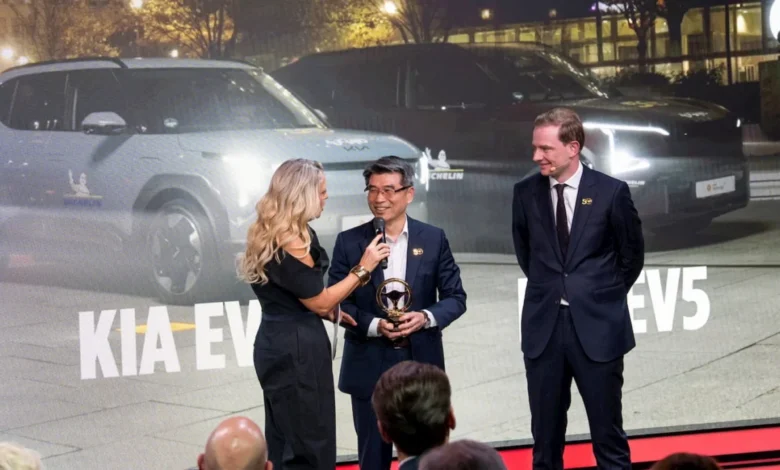
In a groundbreaking milestone for the global automotive industry, South Korean manufacturer Kia has achieved what no non-European brand has accomplished in the fifty-year history of Germany’s prestigious Golden Steering Wheel (Das Goldene Lenkrad) Awards. During the 2026 ceremony, Kia secured a historic triple crown, dominating three distinct vehicle classes with a mix of innovative fully electric platforms and highly refined internal combustion engine offerings.
The unprecedented victory highlights the brand’s rapid ascension in automotive engineering, design versatility, and market adaptability. Organized jointly by major German publications AUTO BILD and BILD am SONNTAG, the Golden Steering Wheel Awards represent one of the most rigorous evaluations in the European automotive calendar, celebrating excellence, innovation, and consumer value.
A Rigorous Selection and Testing Process
The path to securing a Golden Steering Wheel award is notoriously challenging. The 2026 competition began with an initial pool of 90 newly released automotive models spanning nine distinct categories. From this expansive field, readers of AUTO BILD and BILD am SONNTAG cast their votes to narrow the competition down to 27 finalists—three standout contenders in each of the nine classes.
Once the finalists were established, the vehicles underwent exhaustive real-world testing at the DEKRA-Lausitzring racetrack in Germany. The judging panel comprised an elite group of automotive journalists, industry experts, and well-known public figures. Each vehicle was subjected to strict performance evaluations assessing driving dynamics, ride comfort, ergonomics, cabin craftsmanship, and everyday utility. Furthermore, the judges factored in modern consumer priorities, including long-term sustainability, total cost of ownership, and overall market value.
When the dust settled at the Lausitzring, Kia emerged victorious across three unique segments, with the fully electric EV2 and EV5 taking top honors in their respective classes, alongside the gas-powered K4 Sportswagon, which outperformed heavy regional competition in the compact bracket.
The Winning Lineup: Engineering Excellence Across Segments
Kia’s sweeping victory was driven by vehicles tailored to very different segments of the modern consumer market, demonstrating the company’s broad manufacturing capabilities.
Leading the charge in the entry-level segment was the Kia EV2, which clinched the title for the Best Car Under €30,000. Purpose-built and optimized specifically for the European market, the compact urban electric vehicle punches well above its weight class. Measuring just 4.06 meters in length, the EV2 maximizes its interior packaging to deliver an impressive 403 liters of cargo capacity. More importantly, it addresses consumer range anxiety by offering a WLTP-certified driving range of up to 453 kilometers (approximately 281 miles) on a single charge, placing it at the very top of its segment for efficiency and long-distance capability in a small footprint.

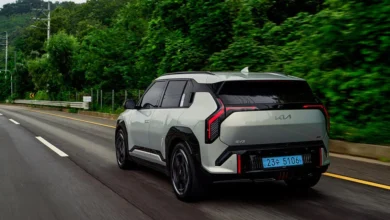
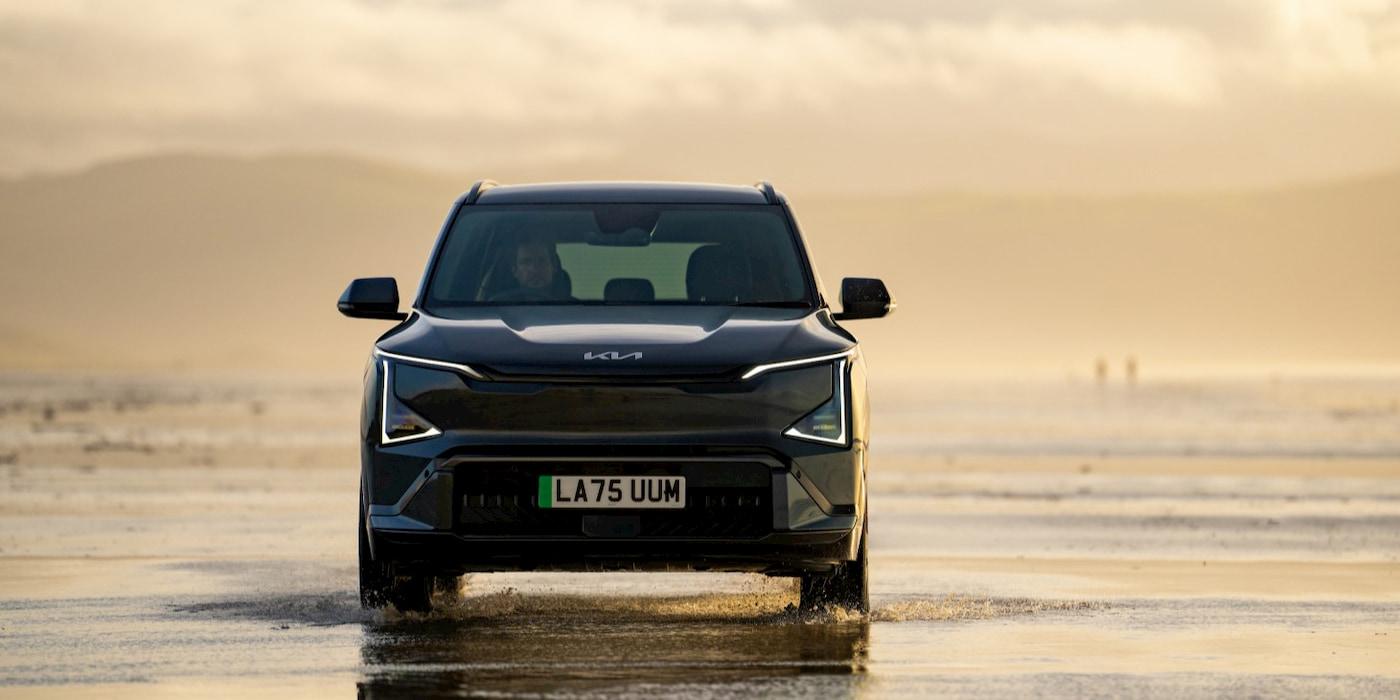
In the fiercely contested compact SUV category, the Kia EV5 outpaced formidable German and European rivals, including the Audi Q3 and the Cupra Formentor VZ5. Officially launched in December, the EV5 matches the footprint of the popular internal combustion-powered Kia Sportage while offering a dedicated, spacious battery-electric architecture. Available in both front-wheel-drive and dual-motor all-wheel-drive configurations, the EV5 boasts an operational range exceeding 550 kilometers (341 miles). It also introduces robust utility to the electric compact SUV class, offering a maximum towing capacity of up to 1,800 kilograms (roughly 4,000 pounds), a feature highly valued by European motorists who require weekend adventure capabilities.
Rounding out Kia’s historic hat trick was the Kia K4 Sportswagon. Launched earlier in the year, the gas-powered wagon surprised industry observers by defeating high-profile electric and hybrid alternatives in the compact class, including the Volkswagen ID.3 Neo and the Cupra Born. The victory underscores Kia’s ongoing commitment to meeting diverse global consumer demands by maintaining high-quality internal combustion and hybrid options alongside its rapidly expanding battery-electric vehicle (BEV) portfolio.
Corporate Reactions and Leadership Presence
Accepting the awards on behalf of the corporation in Germany, Ho Sung Song, President and CEO of Kia Corporation, stood alongside prominent European media figures, including German television presenter Barbara Schöneberger and BILD Group CEO Christoph Eck-Schmidt.
The presence of Kia’s global leadership at the ceremony underscored the strategic importance of the European market to the automaker’s long-term growth trajectory. Over the past decade, Kia—operating in tandem with parent company Hyundai Motor Group—has systematically transitioned from a budget-friendly alternative to a recognized global leader in design, safety, and electrification technology. Achieving a triple victory in Germany’s home market serves as formal validation from European automotive purists that Korean engineering and design philosophy now match, and frequently surpass, traditional domestic benchmarks.

Regional Strategies: Product Availability and Global Disparities
While Kia’s recent triumph highlights the brand’s robust product pipeline, it also brings to light the complex regional strategies governing automotive availability across global markets.
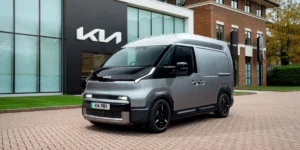
In Europe, Kia has curated a comprehensive, all-electric ecosystem designed to capture every tier of the market. The European lineup now scales seamlessly from the entry-level EV2 and urban-focused EV3 and EV4, up to the compact EV5, the fastback EV6, the flagship three-row EV9, and the commercial-oriented PV5 electric van. This broad portfolio ensures that European consumers have access to cutting-edge electric mobility regardless of their budget or lifestyle requirements.
However, vehicle availability remains segmented due to local regulatory frameworks, manufacturing footprints, and consumer preferences. Currently, Kia has no immediate plans to introduce the award-winning EV2 or the EV5 to the United States market. Instead, American consumers looking for an entry point into the brand’s electric lineup must look to models like the Kia EV3, which has established its own award-winning pedigree. The EV3 previously secured the Golden Steering Wheel award for Best Car Under €40,000 during the 2024 competition, establishing a precedent for Kia’s current streak of success.
For North American buyers, the 2027 Kia EV3 has recently hit showrooms with a starting MSRP of $29,890, positioning it as one of the most accessible and competitively priced long-range electric vehicles available in the United States. Available across five distinct trim levels, the North American EV3 offers two primary battery configurations to suit varying driver needs. The base EV3 Light utilizes a 58.3 kWh battery pack delivering an EPA-estimated range of 221 miles, while higher trims—including the Wind, Land, GT-Line, and GT—upgrade to an 81.4 kWh battery pack that extends the driving range up to an impressive 321 miles on a single charge.

Industry Implications and Future Outlook
Kia’s historic performance at the 2026 Golden Steering Wheel Awards marks a definitive turning point in the global automotive landscape. For decades, the European compact and affordable vehicle segments were heavily defended strongholds for domestic manufacturers based in Germany, France, and Italy. By successfully challenging—and defeating—established European marques on their home turf with both electric and traditional powertrains, Kia has proven that its design-led transformation and aggressive electrification strategy have yielded world-class results.
As legacy automakers navigate the uneven transition toward widespread vehicle electrification, stories like Kia’s triple-crown victory signal a broader shift in consumer expectations. Modern car buyers increasingly prioritize software integration, space efficiency, aerodynamic design, and transparent value over historical brand prestige.
Looking forward, Kia’s dominance in these competitive classes places intense pressure on rival manufacturers to accelerate their own vehicle development cycles and refine their pricing structures, particularly within the affordable electric vehicle sector represented by the EV2 and EV3. With global supply chains stabilizing and new manufacturing hubs coming online, Kia’s recent accolade in Germany is unlikely to be an isolated triumph, but rather a preview of an increasingly competitive and consumer-centric automotive future.