Rimac Automobili Concludes Production Run of the Nevera Hypercar as Focus Shifts to Future Automotive Technologies

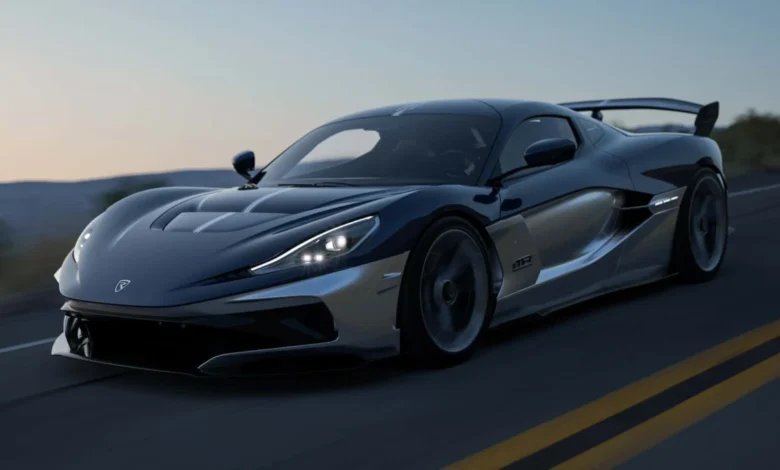
The curtain is officially falling on one of the most transformative chapters in modern automotive history. Rimac Automobili, the Croatian pioneer of high-performance electric vehicles, has confirmed that it is entering the final phase of production for the Nevera, its flagship all-electric hypercar. As the assembly lines at the company’s state-of-the-art facility in Sveta Nedelja prepare to output the final ten units of the specialized Nevera R variant, the company is closing the book on a vehicle that redefined the performance benchmarks for battery-electric propulsion. By the end of this calendar year, the last of these engineering marvels will have been delivered to their respective owners, marking the end of a production cycle that spanned three years and established a new paradigm for the hypercar industry.
A Legacy of Performance Benchmarks
Since the commencement of customer deliveries in 2022, Rimac has produced a total of 71 vehicles, comprised of 51 standard Nevera models and 20 iterations of the more aggressive, track-focused Nevera R. While the initial business plan formulated in 2018—during the debut of the C_Two concept—envisioned a total production run of 150 units, the company’s leadership maintains that the project has exceeded its primary objectives.
The Nevera did not merely function as a commercial product; it served as a proof-of-concept for the viability of electric powertrains in the ultra-luxury, high-performance segment. When the vehicle was first unveiled as the C_Two at the 2018 Geneva Motor Show, the automotive world was skeptical of an electric vehicle’s ability to rival the internal combustion dominance of marques like Bugatti or Koenigsegg. The Nevera shattered that skepticism with a quadruple-motor setup capable of generating a staggering 1,914 horsepower. This output allowed the car to sprint from zero to 60 mph in a mere 1.85 seconds, a figure that remains among the fastest for any production vehicle in existence.
The subsequent launch of the Nevera R in 2024 further pushed these boundaries, elevating the output to 2,107 horsepower. This evolution reduced the 0-60 mph sprint to 1.74 seconds and enabled the vehicle to cover a quarter-mile in 8.23 seconds. These figures represent more than just technical specifications; they symbolize the closing of the gap between traditional combustion engines and the near-instantaneous torque delivery of electric motors.
Chronology of the Nevera Era
The journey from concept to production conclusion has been a rapid and intense period for the Rimac Group.
- 2018: Rimac unveils the C_Two concept at the Geneva Motor Show, promising unprecedented performance levels.
- 2021: The production-ready Nevera is officially revealed, featuring significant design and engineering refinements over the concept.
- 2022: The first production units are delivered, with high-profile figures such as former Formula 1 World Champion Nico Rosberg taking possession of the inaugural vehicle.
- 2023: The Nevera sets multiple world records for acceleration and braking, solidifying its reputation as the fastest-accelerating production car of its time.
- 2024: The introduction of the Nevera R variant marks the final evolution of the platform.
- Late 2024: Production concludes, with the final ten units currently in assembly.
The Strategic Pivot: Beyond the Hypercar
Mate Rimac, the founder and CEO of Rimac Automobili, has framed the conclusion of the Nevera program not as a retirement, but as a graduation. In a recent statement, he underscored that the capital, infrastructure, and technical expertise gained through the Nevera program were the foundational pillars for the company’s current status. "Without that, there wouldn’t be the Tourbillon today; there wouldn’t be this factory," Rimac noted.
The transition is indicative of a broader shift in the Rimac Group’s business model. The company has evolved from a boutique manufacturer of ultra-rare hypercars into a Tier 1 supplier and a diversified technology conglomerate. Through Rimac Technology, the group provides advanced EV components, battery systems, and electric drivetrains to global automotive manufacturers. This shift toward mass-scale technology supply is intended to sustain the company’s growth far beyond the limitations of the low-volume hypercar market.

Furthermore, the 2021 joint venture between Rimac and Porsche to form Bugatti-Rimac has fundamentally changed the landscape of the luxury automotive sector. The recently announced Bugatti Tourbillon, which features a hybrid powertrain combining an 8.3-liter V16 engine with a sophisticated electric motor system, is a direct beneficiary of the engineering R&D conducted during the Nevera’s development. This synergy between the heritage of Bugatti and the electric agility of Rimac represents a new strategy in the transition to electrification for high-end luxury brands.
Autonomous Mobility and Future Initiatives
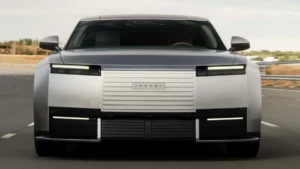
Beyond the realm of performance, Rimac is also venturing into the nascent field of autonomous mobility. The company’s "Verne" project, a dedicated autonomous robotaxi, represents a radical departure from the hypercar segment. Unveiled in 2024, the project aims to integrate autonomous driving technology into an urban ride-hailing infrastructure. By tackling both the pinnacle of driver-focused performance and the future of urban transport, Rimac is attempting to hedge its bets across the entire spectrum of automotive innovation.
The implications of this shift are significant. Analysts suggest that the end of the Nevera production line signals a maturation of the electric vehicle industry. When the Nevera arrived, it was a singular disruptor; today, the technologies it pioneered—such as sophisticated torque vectoring and high-discharge battery management—are becoming increasingly integrated into the mainstream automotive supply chain.
Industry Impact and Market Reception
The Nevera will likely hold a distinct position in automotive history as the definitive bridge between the era of the high-displacement combustion hypercar and the current era of electric dominance. Its influence can be seen in the design language and engineering philosophy of several subsequent electric vehicles.
However, the conclusion of the program also raises questions regarding the future of low-volume manufacturing at Rimac. With the focus shifting toward the Tourbillon and the technological demands of the Bugatti-Rimac partnership, the company’s manufacturing capacity is being reallocated toward more complex, hybrid-focused production processes.
For the owners of the 71 produced units, the end of production marks a shift in the vehicle’s status from a current production model to a collector’s asset. Given the technical specifications and the historical significance of the model as the company’s first large-scale hypercar, the Nevera is expected to maintain strong valuation levels in the secondary market.
Final Reflections
As the final ten Nevera R units make their way through the final stages of quality assurance and delivery, the Rimac team is already looking toward the next decade. The company’s evolution from a garage-based startup to a leader in the global automotive supply chain is a unique trajectory in an industry known for its high barriers to entry.
While the Nevera will no longer be built, its DNA will continue to permeate the automotive world through the systems that Rimac provides to other manufacturers and the hybrid engineering prowess found in the new generation of Bugatti hypercars. As Mate Rimac stated, the car has "done its job." It served as a catalyst for growth, a beacon for electric performance, and a testament to the fact that boutique manufacturers can, through engineering excellence, challenge the entrenched titans of the automotive world. With the assembly line lights dimming on the Nevera, the industry now turns its gaze toward what the Rimac Group will produce next in its quest to redefine the future of mobility.