The BTCC’s most controversial driver is back – and he wants to dominate all over again | Autocar


The Path to Redemption and a New Role
For Jason Plato, the establishment of Plato Racing is more than a business venture; it is a personal resurgence. Following his departure from full-time racing, Plato faced a series of cascading challenges that saw the loss of his television work as a presenter on Channel 5’s Fifth Gear, the failure of several significant investments, and the dissolution of his marriage. Plato has been candid about the psychological toll of this period, citing two suicide attempts during his "rock bottom." He credits a support network of close friends, including former Formula 1 team principal Ross Brawn, with helping him navigate the darkness and find a path back to the sport that defined his life for three decades.
The return to the BTCC in a managerial capacity represents a fundamental shift in mindset for a man whose career was built on the "selfish, blunt, and narcissistic" traits he admits are inherent to elite racing drivers. Plato, a two-time champion with 97 race wins to his name, acknowledges that the transition from driver to team principal requires a move away from self-centeredness toward a responsibility for the livelihoods and safety of his staff. The project, which began in earnest in October of the previous year, has been described by Plato as a "late" but aggressive entry into the 2026 season.
The Technical Partnership with RML Group
Central to the viability of Plato Racing is its partnership with RML Group, one of the most successful motorsport engineering firms in Europe. Based in Wellingborough, RML has a storied history in the BTCC, having previously run factory programs for Vauxhall, Nissan, and Chevrolet. Most notably, RML prepared the Chevrolet Cruze in which Plato secured his second BTCC title in 2010.
However, the current partnership is structured differently from the factory-backed efforts of the past. Under the BTCC’s New Generation Touring Car (NGTC) regulations, RML serves as the sole supplier of specified chassis and suspension components for the entire grid. This includes the supply of wishbones, pushrods, rockers, uprights, steering systems, and subframes to every competing team. To avoid conflicts of interest and maintain the integrity of the championship, RML CEO Paul Dickinson has emphasized that the relationship with Plato Racing is strictly that of a supplier and vehicle builder, rather than a race-running operation.
While RML has designed and built the Mercedes-AMG A35 saloons, the cars have been handed over to Plato’s independent team for trackside operations. Dickinson has noted that the team will be under intense scrutiny from both the series organizer, TOCA, and rival teams to ensure that no "insider knowledge" or unfair advantage is gained from RML’s position as the universal parts supplier. To maintain this "firewall," RML staff will remain in their own facility and apparel during race weekends, focusing on their role as parts suppliers to the wider grid.
Engineering the Mercedes-AMG A35 Saloon
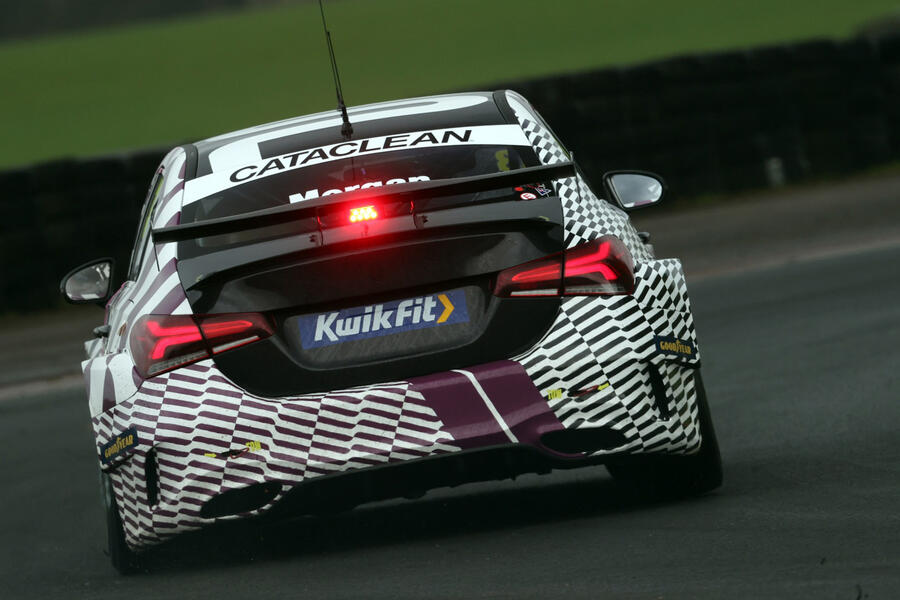
The choice of the Mercedes-AMG A35 saloon as the base vehicle for Plato Racing was driven primarily by aerodynamic efficiency. In the highly competitive environment of the BTCC, where performance parity is managed through boost and weight adjustments, the base drag coefficient of a road car shell is one of the few areas where teams can find a natural advantage. The A35 saloon was identified as having the most favorable aerodynamic profile currently available for the NGTC platform.
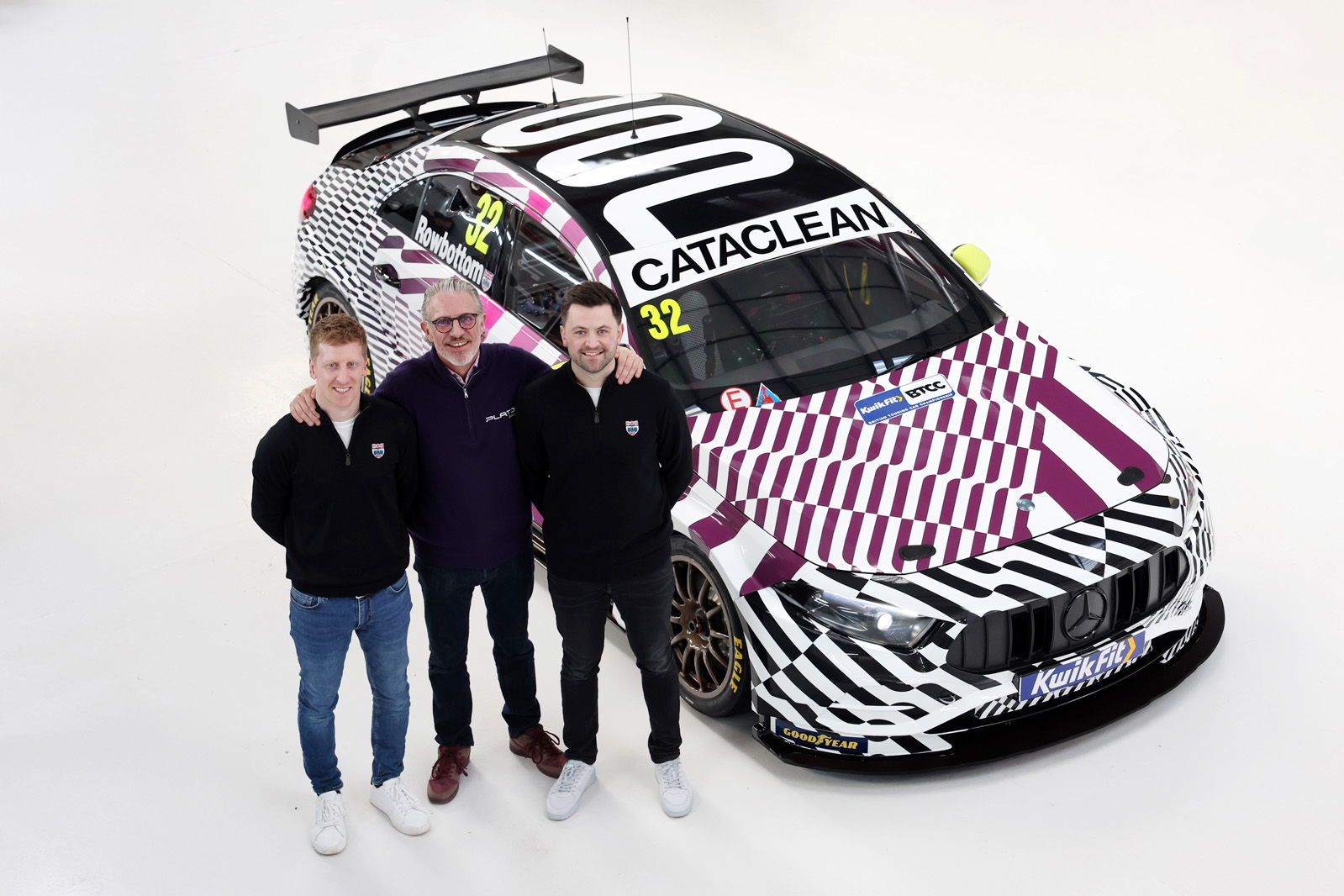
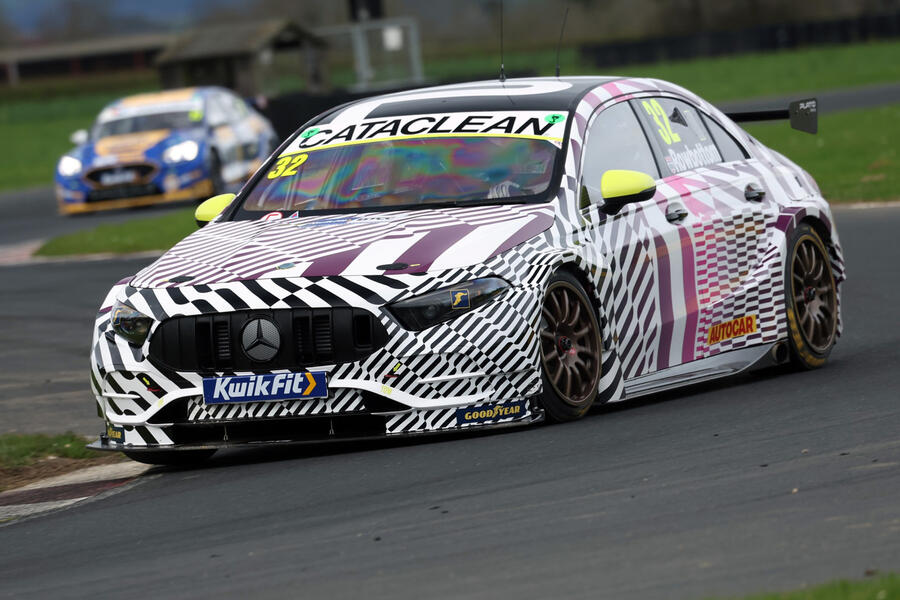
The construction process was unconventional. Without direct factory support from Mercedes-Benz, Plato sourced three road-going shells, two of which had previously suffered water damage. RML’s engineering team stripped these shells, performed high-resolution scans, and utilized Computational Fluid Dynamics (CFD) modeling to design a bespoke racing chassis around the road car’s silhouette. The resulting vehicle features extensive use of carbon fiber and an advanced roll-cage structure, with observers noting that the finished product bears a closer resemblance to a high-tech DTM (Deutsche Tourenwagen Masters) car than a traditional touring car.
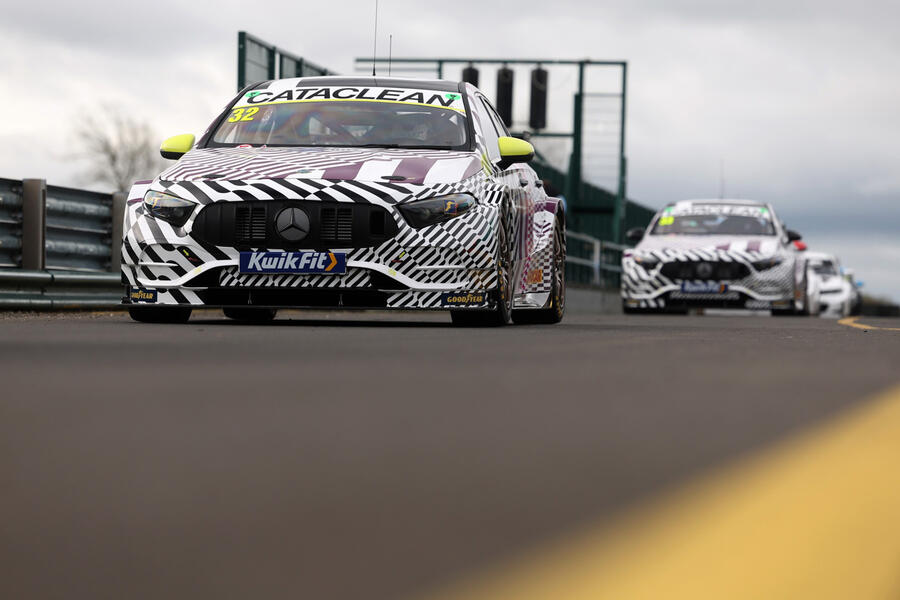
Despite the maturity of the NGTC regulations, which have been in place since 2011, RML’s vehicle engineering head, Adam Airey, suggests that the firm’s sophisticated toolset will allow them to optimize the cars for various circuit layouts more effectively than many of their rivals. The goal is to return RML to the forefront of motorsport manufacturing, using the Plato Racing project as a springboard for future OEM (Original Equipment Manufacturer) collaborations.
A Formidable Driver Lineup: Rowbottom and Morgan
Plato Racing has secured a potent driver pairing for its debut season, blending youthful ambition with veteran experience. Dan Rowbottom, 37, joins the team not only as a lead driver but also as a founding partner in the business. Rowbottom makes the move from Alliance Racing (formerly Motorbase Performance), the team that propelled Ash Sutton to the 2023 championship. Despite a successful 2025 campaign that saw him take three race victories, Rowbottom felt the need to step out from the shadow of teammates like Sutton and Dan Cammish to mount his own championship challenge.
Rowbottom’s involvement was a key catalyst for the team’s formation, bringing with him significant commercial backing from Cataclean. He views the project as a necessary "kick up the arse" for the BTCC, citing a need for the "magic" and controversy that Jason Plato historically brought to the series.
Joining Rowbottom is Adam Morgan, another 37-year-old veteran with 11 career wins. Morgan, who has been a mainstay of the championship since 2012, moves from the Excelr8 Hyundai squad. Known for his calm demeanor—a contrast to the more volatile personalities of Plato and Rowbottom—Morgan believes that the technical package provided by RML and the infrastructure of Plato Racing provide him with his best opportunity to date to contend for the overall drivers’ title.
The 2026 BTCC Landscape and Regulatory Changes
The entry of Plato Racing coincides with several major shifts across the BTCC grid. The 2026 season sees a resurgence of the saloon body style, as teams look to replicate the aerodynamic benefits identified by the Plato/RML project. Alliance Racing has transitioned from the Ford Focus hatchback to the Titanium saloon, while Power Maxed Racing has introduced an all-new Audi A3 program following a catastrophic fire at their headquarters that destroyed their previous Vauxhall fleet.
The championship is also undergoing significant sporting and technical changes:
- Saturday Qualifying Race: A new race format on Saturday afternoons will now determine the grid for the first of Sunday’s three races, adding more competitive mileage to the weekend.
- Weight Reduction: The base weight of the cars has been reduced by 55kg, a move intended to increase agility and reduce tire wear.
- Sustainability: The series continues its commitment to 100% renewable fuel and hybrid-assisted turbo power, balancing environmental goals with the high-performance demands of touring car racing.
- Driver Shuffles: The departure of 2024 champion Jake Hill has opened the door for Gordon Shedden and Árón Taylor-Smith to lead the Speedworks Toyota Corolla charge under the Laser Tools Racing banner.
Broader Impact and Implications for the Series
The return of Jason Plato as a team owner is expected to provide a significant commercial and promotional boost to the BTCC. As the series faces increasing competition for viewership from international categories, the presence of one of its most polarizing and popular figures is a major draw for fans and sponsors alike.
From a technical standpoint, the success or failure of the Plato Racing Mercedes program will be a litmus test for the NGTC regulations. If the RML-built cars prove dominant, it may prompt a re-evaluation of how much "bespoke" engineering should be allowed within a series designed for cost-effective parity. Conversely, if the team struggles with the "fireworks" Plato predicts, it will highlight the immense difficulty of launching a new operation in one of the world’s most competitive domestic championships.
Plato himself remains undeterred by the scale of the challenge. Drawing on the standards he learned during his early career with the Williams-run Renault team in the late 1990s, he has signaled that he will demand excellence from every member of the organization. As the cars head for their initial shakedowns and the season opener approaches, the paddock remains on high alert for the impact of Plato Racing—a team built on the ruins of a personal crisis, fueled by a desire for redemption, and engineered by the best in the business.