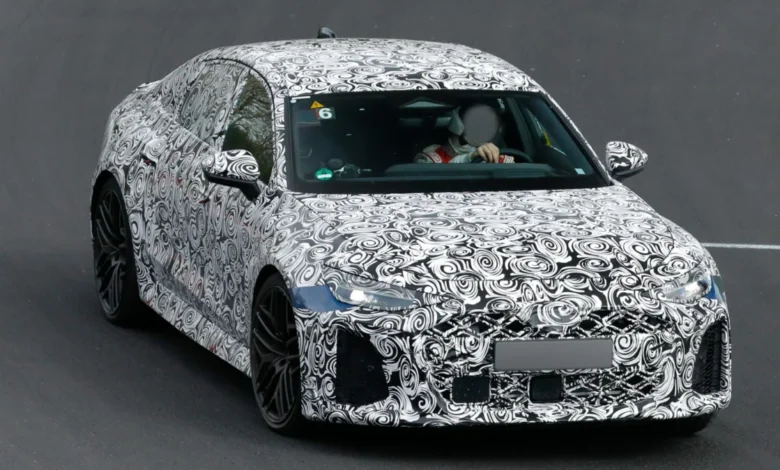
The automotive landscape is witnessing a significant shift in performance engineering, and Audi Sport is at the forefront of this evolution. Recent spy photography captured at the Nürburgring circuit has confirmed that Audi is preparing to reintroduce the RS6 sedan, a nameplate that has been absent from the manufacturer’s lineup since the conclusion of the C6 generation in 2010. This development signals a strategic pivot in how the German marque intends to balance its storied history of high-performance wagons—the iconic Avants—with the traditional, three-box sedan architecture that remains a cornerstone of the premium performance segment.
A Historical Perspective on the RS6 Lineage
To understand the significance of this reintroduction, one must look back at the trajectory of the RS division. Since the debut of the RS2 Avant in the mid-1990s, Audi Sport has cultivated a brand identity inextricably linked to its "Avant" body style. While the RS4 and RS6 Avant models achieved cult status for their utility-meets-performance ethos, the sedan variants were often treated as secondary or, in some generations, omitted entirely.
The last iteration of the RS6 sedan was powered by a formidable, twin-turbocharged 5.0-liter V10 engine, a machine that defined an era of excess for the brand. When that model ceased production in 2010, the executive-level high-performance void was nominally filled by the RS7 Sportback. However, with the automotive market shifting toward electrification and the consolidation of model lines—notably the disappearance of the A7 designation—Audi has identified a clear opening to reintroduce a dedicated RS6 sedan based on the upcoming C9-generation A6 platform.
Technical Specifications and Powertrain Innovation
The upcoming RS6 sedan represents a departure from the purely internal combustion engine (ICE) roots of its predecessors. Emerging data and industry reporting indicate that this model will utilize a sophisticated plug-in hybrid (PHEV) powertrain. Contrary to early speculation that suggested the vehicle might adopt the twin-turbocharged V6 architecture currently employed in the new RS5, current intelligence points toward an evolution of the Porsche-derived 4.0-liter twin-turbo V8.
This engine, which has served as a benchmark in various high-performance applications within the Volkswagen Group—including Bentley’s continental lineup and various Porsche Cayenne and Panamera models—is set to be paired with an advanced electric motor and a high-capacity battery pack. Engineers are targeting an output of at least 700 horsepower, a figure that positions the new RS6 as a direct competitor to the most potent offerings from Mercedes-AMG and BMW M. Furthermore, the inclusion of a battery-electric component will provide a usable electric-only range, allowing the vehicle to meet increasingly stringent urban emission standards without sacrificing the raw performance expected of an "RS" badge.
Design Evolution and Aerodynamic Considerations
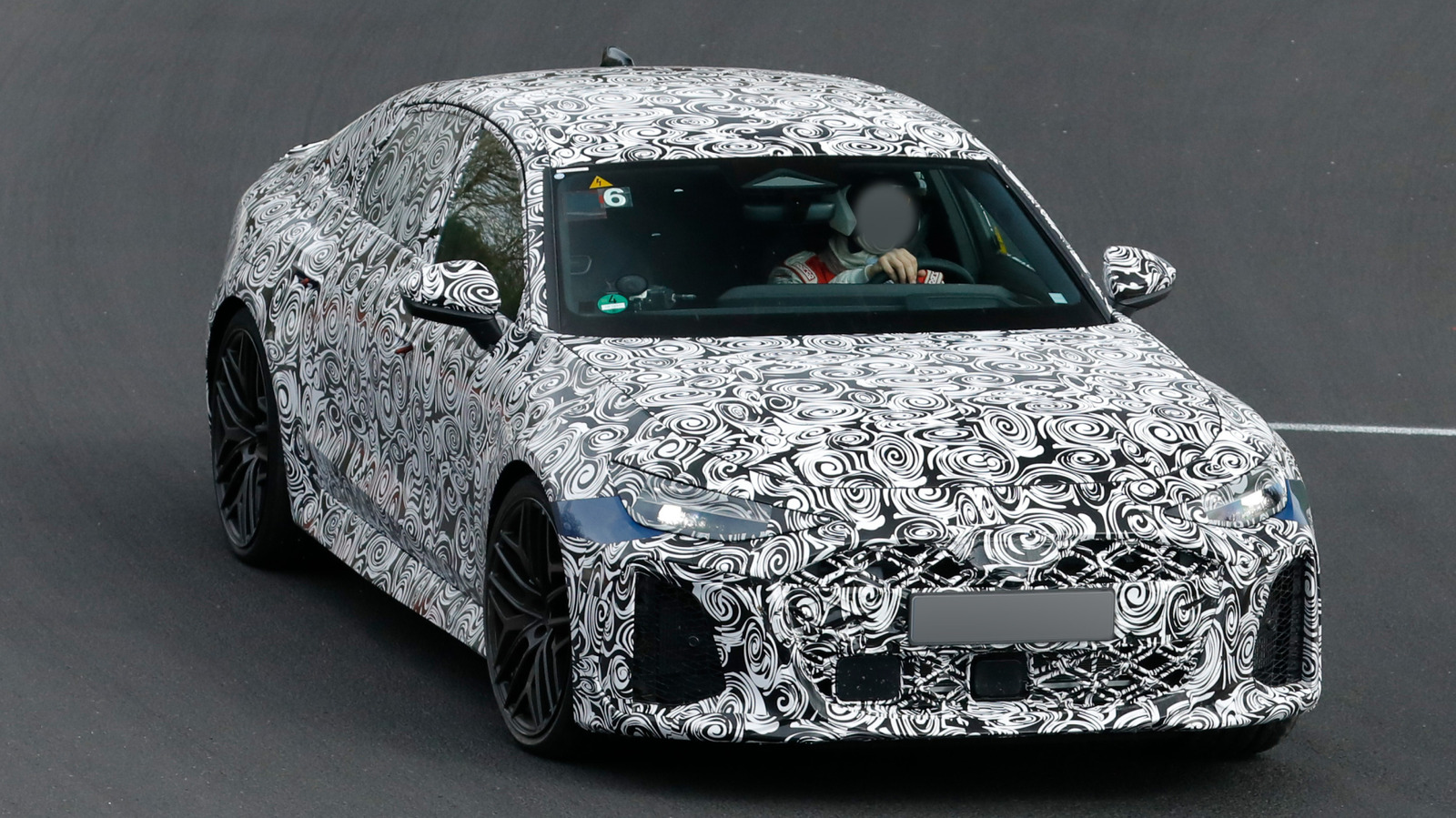
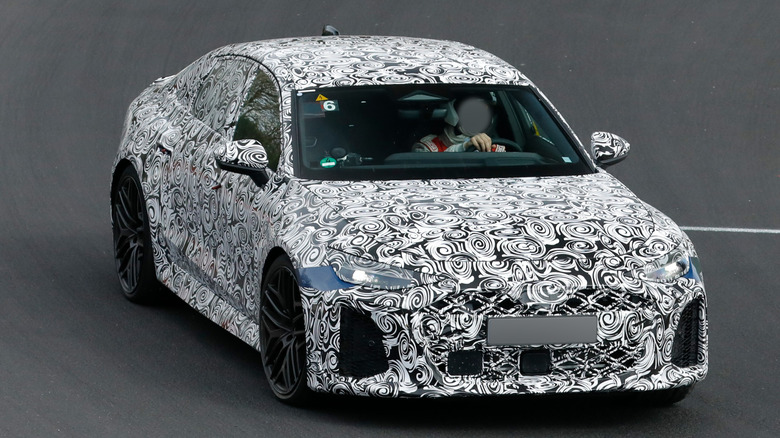
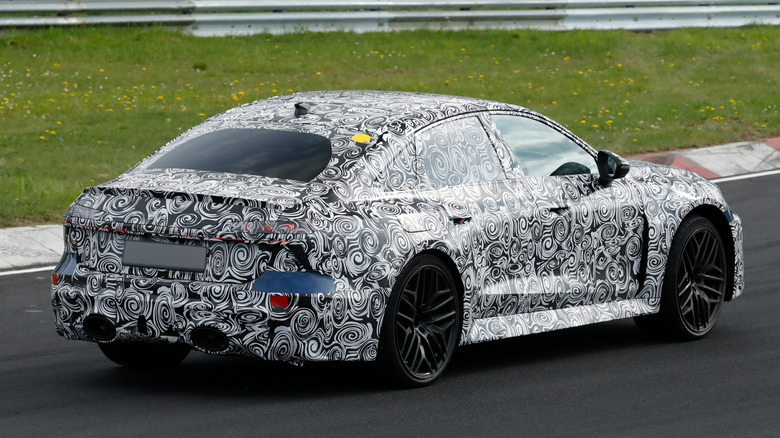
The camouflaged prototypes currently undergoing durability and performance testing at the Nürburgring reveal a design language that aligns with the broader C9 A6 aesthetic but with the aggressive, widebody treatment synonymous with RS models. Spy images indicate that the vehicle is significantly wider than the standard A6, with track-focused modifications including integrated front fender vents for improved brake cooling and engine bay airflow.
The front fascia features an evolution of the signature honeycomb grille, flanked by enlarged air intakes designed to feed the cooling requirements of both the V8 engine and the hybrid hardware. The rear profile is characterized by a subtle integrated trunk lip spoiler and the traditional, oversized dual oval exhaust outlets that have become the visual signature of Audi’s RS range. The use of 22-inch alloy wheels, as observed on the test mules, suggests that the production vehicle will maintain an aggressive stance, prioritizing high-speed stability and grip.
Strategic Market Positioning
The decision to bring back the RS6 sedan is rooted in a nuanced understanding of consumer demand. While the Avant has long been the darling of European enthusiasts, global markets—specifically North America and parts of Asia—have historically shown a distinct preference for the traditional sedan profile. By offering both the Avant and the sedan simultaneously, Audi is effectively expanding its footprint in the high-performance executive segment.
This dual-track strategy acknowledges that while the "wagon-phobia" of the American market is slowly waning, there remains a substantial demographic of buyers who desire the prestige and formal aesthetics of a sedan. By positioning the RS6 sedan as a high-power PHEV, Audi is also addressing the transition toward electrified mobility. This allows the company to maintain the visceral experience of a V8 internal combustion engine while simultaneously adopting the efficiency metrics required by modern regulatory environments.
Industry Implications and Future Outlook
The transition to a hybrid-only high-performance lineup is not without its challenges. Adding battery packs and electric motors increases curb weight, which is the natural enemy of agility. Audi’s engineering team is reportedly employing extensive use of carbon fiber-reinforced plastics (CFRP) and aluminum chassis components to offset the weight penalty of the hybrid system. The goal is to ensure that the new RS6 retains, or perhaps even surpasses, the handling dynamics of the outgoing ICE-only generation.
Furthermore, the introduction of this vehicle serves as a bridge for the Audi brand. As the manufacturer works toward its goal of becoming an all-electric automaker by the early 2030s, models like the RS6 PHEV serve to acclimate the consumer base to the integration of high-performance electric torque. It is a calculated move to retain brand loyalty among traditionalists while embracing the inevitability of the electrification era.
Chronology and Expected Debut
The development timeline for the C9-gen RS6 has been extensive, with testing protocols beginning well over a year ago. Based on the current stage of development, where the test vehicles are shedding heavy, non-production body panels in favor of final-spec wraps, analysts expect a global unveiling in 2027. This timeline allows Audi to fine-tune the hybrid software, which is critical for seamless integration between the V8 engine and the electric drive unit.
As the industry looks toward the official release, the consensus among automotive observers is that the RS6 sedan will be a defining model for the brand in the latter half of the decade. It represents a synthesis of Audi’s past successes—the V8 engine and the Quattro all-wheel-drive system—and its future ambitions in the electrified performance space.
Final Analysis
The re-emergence of the RS6 sedan is a testament to the enduring appeal of the segment, even in a market increasingly dominated by SUVs and crossovers. By maintaining the RS6 sedan alongside the Avant, Audi is doubling down on the "performance luxury" ethos that first brought the brand to prominence in the late 20th century. While the shift to a plug-in hybrid architecture is a significant departure from the brand’s purely internal combustion heritage, it is a necessary evolution. For the performance enthusiast, the prospect of a 700-horsepower, all-wheel-drive executive sedan that can operate in silence within city limits while offering unmatched power on the open road is a compelling proposition. As Audi continues to refine its C9 platform, the focus will undoubtedly remain on ensuring that the RS6 nameplate continues to represent the pinnacle of German engineering, regardless of the energy source powering its wheels.