Elon Musk Eyes Record-Breaking Merger as Tesla and SpaceX Talks Accelerate Toward Potential December Announcement

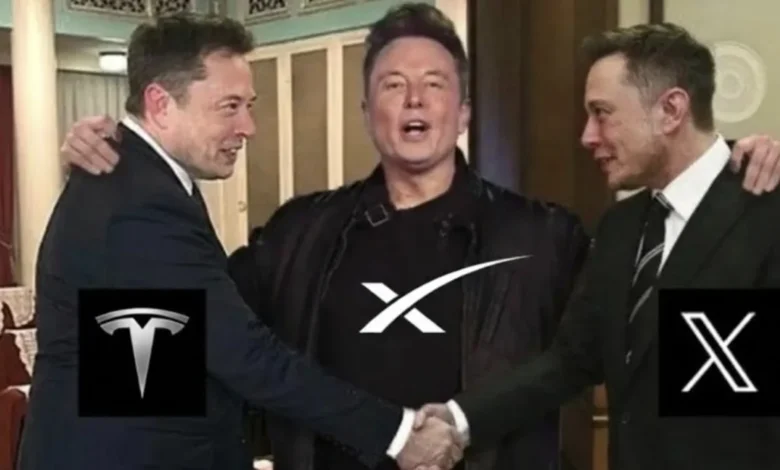
Negotiations between executives, special committees, and financial advisers regarding a historic corporate consolidation of electric vehicle pioneer Tesla Inc. and aerospace manufacturer SpaceX have entered a decisive phase. According to people familiar with the matter, discussions concerning final terms, share-swap ratios, and corporate valuation parameters are progressing rapidly, raising the possibility of a formal announcement as early as December, or alternatively, the first quarter of 2027. If completed, the transaction would instantly become the largest corporate merger in financial history, surpassing decades-old records set during the turn-of-the-century telecommunications boom.
The convergence of these two corporate giants comes at a critical juncture for Tesla, which is scheduled to host its annual shareholder meeting on December 3. The timing of the corporate dialogue aligns closely with governance milestones, as the very directors responsible for evaluating and potentially approving the transaction are currently up for re-election on the upcoming ballot. Market reaction to the reports has been immediate, with Tesla shares ticking upward as Wall Street analysts and institutional investors attempt to price in the unprecedented structural changes.
Valuation Dynamics and Deal Structure
At the core of the ongoing negotiations is the relative valuation of both entities. SpaceX, which completed an initial public offering in June, commands a market capitalization exceeding $1.9 trillion. Meanwhile, Tesla trades at approximately $1.5 trillion. Given these financial metrics, the proposed transaction is structured as an absorption of Tesla by SpaceX, rather than a traditional merger of equals or a reverse acquisition.
Financial historians note that a deal of this magnitude would shatter existing corporate records. For decades, the benchmark for a single corporate acquisition has been Vodafone Group Plc’s $183 billion takeover of Mannesmann AG in 2000. More recently, SpaceX executed a private purchase of xAI valued at roughly $250 billion earlier this year. However, a combination of Tesla and SpaceX would dwarf both historical milestones, creating a combined corporate behemoth worth well over $3 trillion, unifying terrestrial automotive manufacturing, energy storage, satellite communications, space exploration, and artificial intelligence development under a single corporate umbrella.
Negotiations are currently focused on the precise financial mechanics, specifically the exchange ratio determining how many SpaceX shares Tesla investors will receive for their existing equity. Neither Tesla nor SpaceX corporate communications departments have issued formal statements regarding the ongoing Bloomberg reports, maintaining a policy of silence as advisers hash out the intricate details.
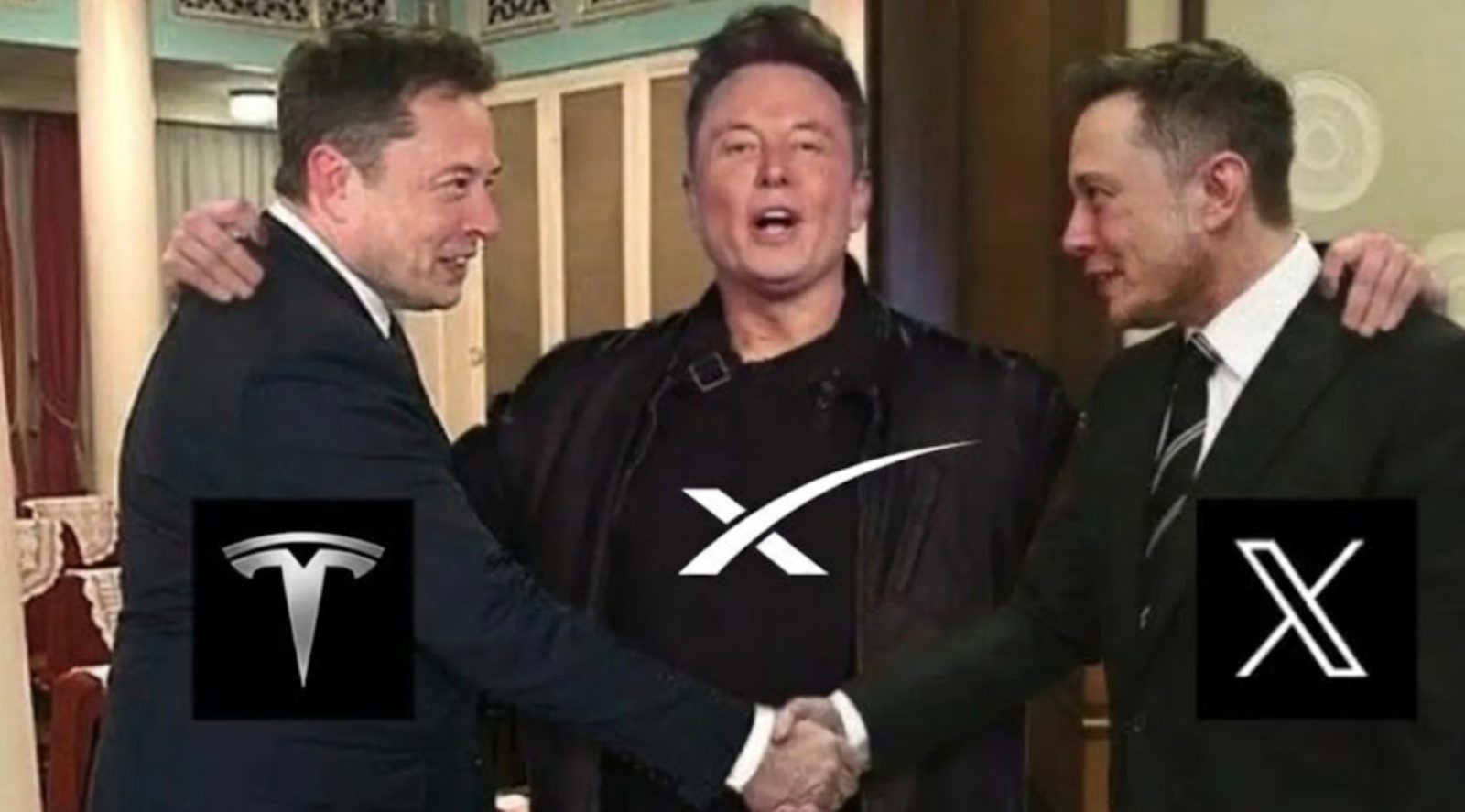
Chronology of a Potential Mega-Merger
The path toward a potential Tesla-SpaceX combination has developed steadily over the course of several months, marked by escalating governance scrutiny and corporate restructuring:
- May 2026: Elon Musk first publicly floats the concept of merging Tesla and SpaceX, coinciding with preparations for SpaceX’s initial public offering. Market observers immediately draw parallels to previous controversial transactions involving Musk-led entities.
- June 2026: SpaceX successfully completes its highly anticipated IPO, establishing a public market valuation that surpasses $1.9 trillion and sets the financial baseline for the subsequent acquisition talks.
- July 2026: Amid rising speculation regarding regulatory friction, reports emerge that Tesla is evaluating strategic options for its lucrative China operations, including a potential sale or spinoff, to mitigate cross-border regulatory hurdles.
- October 2026: Tesla releases its annual proxy statement ahead of the December shareholder meeting. Governance experts note that the proxy composition and board overlaps strongly signal structural preparations for a major combination. Ira Ehrenpreis, chair of Tesla’s compensation and governance committees, has served on the SpaceX board since February.
- Late October 2026: Musk formally confirms that independent special committees have been established by the boards of both Tesla and SpaceX to officially explore the viability of a merger.
- November 2026: Bloomberg reports that talks have moved past preliminary exploratory phases and are actively focusing on valuation, pricing, and structural terms, with a target announcement window set for December 2026 or early 2027.
Governance and Executive Compensation Implications
For institutional shareholders and corporate governance watchdogs, the proposed transaction introduces complex questions regarding voting power, shareholder dilution, and executive compensation triggers.
Elon Musk currently maintains an equity stake of approximately 20% in Tesla. However, his control over SpaceX has historically been substantially higher, anchored by super-voting shares that granted him roughly 85% of the voting power, according to regulatory filings associated with the SpaceX S-1. A share-swap transaction would effectively transition Tesla investors—many of whom hold traditional one-share-one-vote equities—into an enterprise where Musk’s voting supremacy is permanently locked in, reducing minority shareholder influence over long-term strategic decisions.
Furthermore, the mechanics of the merger interact directly with Musk’s compensation packages. Under specific change-in-control provisions embedded within his 2025 CEO award, traditional operational milestones are bypassed. Instead, market capitalization tests are evaluated directly against the agreed deal price, allowing earned shares to vest instantaneously upon closing. Proxy disclosures indicate that a transaction valuing Tesla at $2 trillion—representing a roughly 33% premium over its current trading range—would immediately clear the initial market capitalization tranches. Additionally, millions of restricted shares remaining from his 2018 compensation package are structured to accelerate vesting upon a corporate change of control.
Regulatory Hurdles and International Complications

Despite the enthusiasm from proponents of vertical integration, financial analysts and legal experts point to significant regulatory hurdles that could delay or derail the transaction. Chief among these is what industry observers term "the China problem."
Tesla’s Gigafactory Shanghai serves as the company’s most prolific manufacturing hub, producing more than half of its global vehicle inventory and shipping nearly 68,000 vehicles in October alone. Conversely, SpaceX maintains extensive, highly classified contracts with the United States Department of Defense, NASA, and intelligence agencies. Financial analysts, including those at JPMorgan Chase, have highlighted a fundamental structural conflict between SpaceX’s deep integration with sensitive U.S. national security infrastructure and Tesla’s massive commercial footprint within the People’s Republic of China. Regulators in Washington, including the Committee on Foreign Investment in the United States (CFIUS), are expected to subject the transaction to rigorous national security reviews.
Political dynamics in Washington add another layer of complexity. Following the recent midterm elections, control of Congress shifted, and incoming legislative leadership has signaled an intent to increase oversight regarding corporate governance practices, political affiliations, and cross-border dependencies associated with Musk’s corporate portfolio. Financial reports indicate that leadership teams across both companies are strongly motivated to accelerate the negotiation timeline to secure regulatory clearance and finalize terms prior to upcoming shifts in the federal administration.
Market Implications and Industry Outlook
Financial analysts remain divided on the broader implications of a Tesla-SpaceX merger. Proponents argue that combining Tesla’s manufacturing prowess, battery technology, and artificial intelligence capabilities with SpaceX’s aerospace engineering, Starlink satellite network, and rocket logistics creates an unprecedented innovation engine capable of dominating multiple future industries, from autonomous robotics to interplanetary transport.
Conversely, skeptics argue that the deal represents another instance of financial consolidation designed to buffer slower growth in Tesla’s core automotive sector under the umbrella of a higher-valued aerospace entity. With traditional vehicle sales facing mounting competitive pressures and broader market maturation, some institutional investors view the potential transaction as a strategic pivot that fundamentally alters the risk and reward profile of holding Tesla stock.
As the December 3 annual shareholder meeting approaches, attention will remain focused on board communications, proxy voting outcomes, and official announcements from the special committees. Whether the companies can successfully navigate the intricate web of cross-border regulatory compliance, valuation negotiations, and governance scrutiny will determine whether this unprecedented corporate union moves from the negotiating table to reality.
Related posts: