The Hidden Climate Cost of Peatland Drainage and the Long-Term Consequences for Earth’s Energy Budget

Peatlands, once considered merely remote and boggy expanses of land, have emerged as a critical front in the global battle against climate change. These ecosystems, which act as massive natural carbon sinks, are being systematically compromised by drainage for agriculture, forestry, and infrastructure development. New research published in the journal Nature (2026, DOI: 10.1038/s41586-026-11339-0) provides a comprehensive analysis of the climate impact resulting from this drainage, revealing that human-driven land-use changes in peatlands have significantly altered the Earth’s energy budget. By quantifying the release of carbon dioxide (CO2) and the simultaneous, albeit smaller, reduction in methane (CH4) emissions, scientists have pinpointed that the legacy of these activities is not merely a historical footnote but a persistent driver of global warming that will continue to influence the climate for decades to come.
Quantifying the Greenhouse Forcing of Drained Peatlands
To understand the climate impact of peatland drainage, researchers focused on the change in the Earth’s energy budget—a direct measure of the strength of the greenhouse effect. When peatlands are drained, the water table drops, exposing organic matter that has been sequestered for millennia to oxygen. This triggers the rapid decomposition of peat, releasing massive quantities of carbon dioxide into the atmosphere. Conversely, these waterlogged environments typically produce methane—a potent greenhouse gas—under anaerobic conditions. When the land is drained, methane production slows or ceases, providing a slight negative forcing effect that acts as a minor offset to the massive CO2 emissions.
The researchers calculated the net effect of these processes as of 2020. The findings indicate that CO2 emissions from drained peatlands contributed approximately +83 milliwatts per square meter to the Earth’s surface. When accounting for the reduced methane emissions, which contributed roughly -9 milliwatts per square meter, the total net effect was +73 milliwatts per square meter. This represents approximately 2.7 percent of the total human-caused change in the Earth’s energy budget. While this percentage may seem modest, it is a significant figure when considering it originates from a single category of land-use change. Given the uncertainty inherent in climate modeling, the researchers noted an error range of 1.8 to 3.6 percent, reinforcing the reality that peatland degradation is a non-negligible factor in global radiative forcing.
Beyond energy budget calculations, the scale of this loss is staggering. Current data suggests that approximately 4 percent of all carbon historically sequestered in the world’s peatlands has already been released into the atmosphere due to human intervention.
A Geographic and Temporal Analysis of Carbon Release
The contribution to global warming from peatland drainage is not distributed uniformly across the globe. The research highlights distinct regional patterns that reflect the history of land management and industrialization. Europe accounts for over half of the total CO2 emissions derived from peatland drainage. This is largely attributed to the continent’s long history of agricultural expansion and industrial peat extraction, which began centuries ago and accelerated during the industrial revolution.
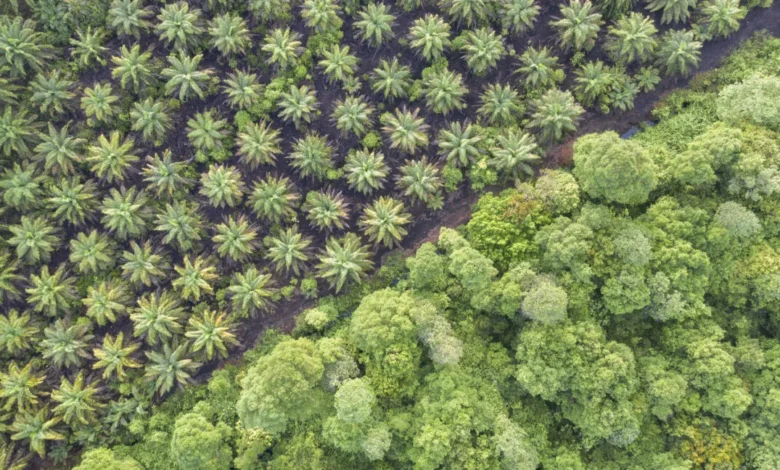
In contrast, Southeast Asia presents a different, more recent trajectory. While it contributes almost a quarter of the total CO2 emissions from this source, the surge in emissions from this region is a relatively modern phenomenon, primarily concentrated within the last few decades. This spike is largely linked to the expansion of palm oil plantations and pulpwood forestry, which frequently involve the clearing and draining of vast, deep-peat tropical forests. North America, while historically active in peatland utilization, accounts for approximately 14 percent of the total, reflecting a more stabilized—though still significant—land-use pattern compared to the rapid shifts observed in tropical zones.
The timeline of these emissions is essential for policymakers. While European emissions have been a steady, long-term influence on the climate, the rapid intensification in Southeast Asia underscores the immediate need for improved land-use governance in developing nations to prevent a further acceleration of warming.
The Future Trajectory: Why Drainage is a Legacy Problem
One of the most concerning aspects of peatland drainage is that the initial disturbance is only the beginning of the emission cycle. Because peatlands are vast, deep reservoirs of organic material, the drainage process initiates a long-term decay process that persists for decades or even centuries after the initial modification of the landscape.

To project the long-term implications, the research team modeled the climate impact of peatland emissions through the year 2100 under various scenarios. The findings are sobering: if global peatland water levels were held constant at 2020 levels, the total change in Earth’s energy budget would nearly double by the end of the century, rising from 73 to 138 milliwatts per square meter. This "locked-in" warming suggests that even if no further drainage were to occur tomorrow, the existing drained landscapes would continue to leak carbon into the atmosphere, compounding the challenge of meeting international climate targets.
However, the model also demonstrates the potential for mitigation. Moderate restoration of peatland water levels could significantly curb the growth of these emissions. Under a scenario of "ambitious restoration"—where large-scale rewetting of drained peatlands is prioritized—the research suggests that the radiative forcing effect could be reduced, potentially shrinking it below its current 2020 potency. This provides a clear, actionable pathway for climate mitigation: restoring the hydrology of these landscapes is not just a biodiversity imperative, but a high-leverage tool for climate stabilization.
Broader Implications and Scientific Context
The implications of this research extend far beyond the narrow field of soil science. The persistence of carbon release from drained peatlands complicates the global carbon budget. As nations update their Nationally Determined Contributions (NDCs) under the Paris Agreement, the "legacy emissions" from land-use changes like peatland drainage are often under-accounted for.
Experts in the field suggest that this data highlights a critical gap in climate policy. "We often focus on current industrial emissions and deforestation rates," notes one independent climate scientist reviewing the study, "but we are effectively dealing with a ‘slow-motion’ carbon bomb. The peat that was drained in the 20th century is still burning, in a sense, in the 21st century."
This study also emphasizes the interconnectedness of the climate system. The shift from methane-producing wetlands to CO2-releasing drylands creates a net positive feedback loop that accelerates global heating. While methane is a more potent greenhouse gas than CO2 on a per-molecule basis, the sheer volume of CO2 released from peat decomposition over decades far outweighs the short-term benefit of reduced methane emissions.
The Challenge of Restoration and Policy Implementation
Returning the landscape to its pre-1800 state is an impractical goal given current global economic demands for food, fuel, and fiber. However, the study serves as a scientific baseline for where to focus restoration efforts. By identifying the regions with the highest emission trajectories—particularly in Southeast Asia—international bodies and NGOs can target financial and technical resources to restore high-impact peatlands.
The reality, as described by the researchers, is that this is a segment of the climate system where change plays out slowly, but with profound long-term consequences. The "slow" nature of these emissions is both a challenge and an opportunity. Because the process is gradual, it allows for a window of intervention. Unlike a sudden wildfire or a chemical leak, the decay of peat can be slowed or halted through the engineering of water tables.
Conclusion
The research published in Nature provides a vital quantitative framework for understanding how localized land-use decisions manifest as global climate drivers. By demonstrating that 2.7 percent of the human-caused change in the Earth’s energy budget can be traced back to peatland drainage, the study underscores the necessity of including land-use history in climate projections. As the world approaches the mid-century milestones set by various international climate accords, the management of peatlands will likely move from a niche environmental issue to a central pillar of climate mitigation strategy.
The path forward is clear: to prevent the doubling of this specific radiative forcing by 2100, the global community must shift its focus from mere preservation of existing wetlands to the active, large-scale restoration of those already compromised. The legacy of past land-use changes is written into our atmosphere, but the severity of that legacy in the coming decades remains a choice that can still be influenced by informed policy and ecological intervention.