Grand Theft Auto VI Public Transit Systems Offer Unprecedented Detail for Open World Navigation

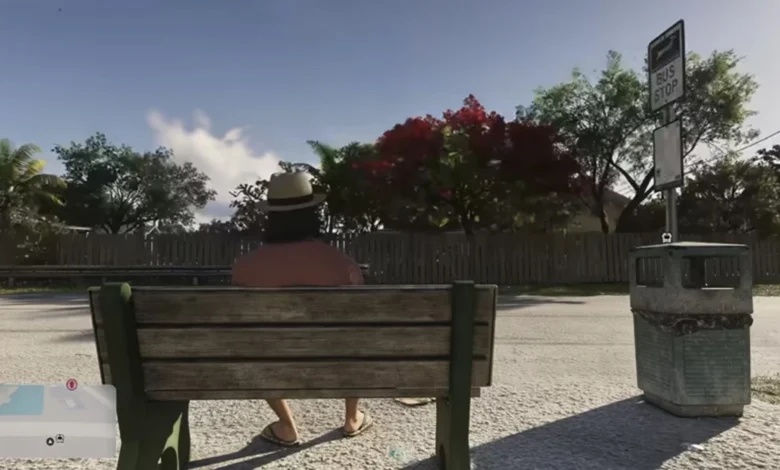
Rockstar Games has long been recognized for the obsessive level of detail present in its open-world environments, a reputation that continues to be bolstered by the highly anticipated release of Grand Theft Auto VI. Recent investigations into the game’s infrastructure, specifically the public transportation systems within the fictional state of Leonida, reveal a sophisticated network that mimics real-world transit patterns. Content creator Sonny Evans recently conducted a comprehensive study of these systems, mapping the functionality and reliability of bus and rail lines, which underscores the technical complexity behind Rockstar’s latest digital recreation of Florida.
The investigation serves as a case study in how modern game development prioritizes environmental storytelling and world-building. While previous iterations of the Grand Theft Auto franchise featured transit lines, the integration in Leonida appears to offer a more cohesive, functional layer of travel that allows players to traverse the map without the immediate necessity of commandeering private vehicles.
The Methodology of Digital Urbanism
Sonny Evans, known for his experimental approaches to open-world navigation—including notable feats in Red Dead Redemption 2—undertook a systematic evaluation of Leonida’s transit nodes. The objective was to determine if the transit systems were merely aesthetic assets or fully simulated functional networks. Using in-game maps and timing indicators at designated stops, Evans tracked routes from residential hubs to the primary metropolitan center, Vice City, culminating at the international airport.
The findings indicate that the Interstate Loop bus system functions on a consistent internal clock. Evans documented that a commute via the Loop bus took approximately five hours of in-game time. This duration provides a significant data point regarding the scale of the map. By correlating in-game time with distance, observers can infer that Leonida represents one of the largest landmasses ever constructed by Rockstar Games, mirroring the geographical sprawl of the Florida peninsula.
Chronology of Transit Integration in Rockstar Titles
The evolution of public transit in Rockstar’s portfolio is a testament to the studio’s technical growth. In Grand Theft Auto III (2001), the transit system was largely static, serving as a backdrop for the narrative. Grand Theft Auto IV (2008) introduced a more robust subway system that was central to the Liberty City experience, allowing players to navigate the boroughs with relative ease.
With Grand Theft Auto V (2013), the focus shifted toward highway infrastructure and vehicle customization, with public transport taking a backseat to the game’s core vehicular mechanics. The return to a complex, working transit network in Grand Theft Auto VI represents a shift back toward urban simulation. This suggests that the developers aim to provide a "lived-in" experience where the world continues to function regardless of player interaction.
Technical Analysis of System Reliability and Discrepancies
A notable aspect of Evans’ findings is the punctuality of the transit lines. While real-world public transportation is frequently plagued by delays, mechanical failures, and external traffic, the transit systems in Leonida maintain near-perfect adherence to their schedules. From an engineering perspective, this represents a deliberate design choice rather than a lack of realism. Implementing randomized delays would create frustration for players attempting to use the systems for navigation, potentially discouraging their use.
However, the simulation is not without its minor technical oversights. Evans noted a discrepancy in the signage for the metro system. The Northbound and Southbound indicators were identical, lacking the granular navigational cues seen in real-world transit systems like the New York City Subway or Miami’s Metrorail. In a real-world setting, such a design error would lead to significant passenger confusion; in a game, it highlights the challenge of balancing environmental detail with player accessibility.
Broader Implications for Gameplay Dynamics
The existence of a functional transit network introduces new possibilities for player behavior. Historically, the Grand Theft Auto series has been synonymous with carjacking and high-speed chases. By providing a viable alternative in the form of public buses and trains, Rockstar is expanding the range of role-playing opportunities.
If a player finds themselves stranded in a remote section of Leonida—perhaps following a mission that results in the loss of their primary vehicle—the public transit network acts as a safety net. This mechanic promotes exploration of the environment from a passenger’s perspective, allowing players to witness the dynamic NPC (non-player character) behavior that defines the game’s artificial intelligence.
The potential for "no-car" playthroughs—a style of play where the user avoids stealing vehicles entirely—is now a tangible possibility. Such challenges have historically been popular in the gaming community, and the inclusion of a reliable transit system essentially legitimizes this style of play, moving it from a self-imposed restriction to a supported feature set.
Environmental Design and World-Building Standards
The level of detail identified in the luggage carousels and terminal interiors at the Vice City airport suggests that Rockstar is prioritizing "micro-immersion." By creating fully modeled interiors that are not strictly necessary for the core mission path, the developers are establishing a standard for the next generation of open-world games.
Industry analysts suggest that this level of detail serves a twofold purpose. First, it satisfies the high expectations of a consumer base that has waited over a decade for the next installment in the franchise. Second, it serves as a defensive measure against "empty world" critiques. By ensuring that every aspect of the infrastructure—from transit maps to airport security checkpoints—is functional, the studio ensures that the world feels reactive to the player’s presence.
The Role of Community Testing
The viral success of Evans’ investigation into transit reliability underscores the role of the gaming community in post-release and pre-release analysis. While Rockstar Games maintains strict control over its marketing and pre-launch information, the community has become the primary laboratory for stress-testing game systems.
These findings often reach the developers, who use the feedback to refine gameplay mechanics. While there is no official word from Rockstar Games regarding the specific design of the transit systems, the consistency observed by players suggests a deep, underlying simulation layer that is likely to be a cornerstone of the Leonida experience.
Conclusion: A New Benchmark for Urban Simulation
The integration of a functional public transit system in Grand Theft Auto VI is more than a quality-of-life improvement; it is a signal of Rockstar’s commitment to building a believable, simulated society. While the "on-time" nature of the buses and the minor navigational errors in signage provide points of debate, the overall architecture of the system is a significant achievement in game design.
As the gaming community continues to dissect the mechanics of Leonida, the importance of these systems will likely become more pronounced. Whether players utilize these routes for efficiency, role-playing, or simply to admire the scope of the digital landscape, the transit network stands as a core pillar of the game’s infrastructure. The ability to navigate an entire state via public transit—and to experience the nuances of that commute—marks a milestone in the evolution of open-world development, setting a high bar for the industry at large. Future analysis will undoubtedly focus on whether these transit lines intersect with other dynamic world systems, such as weather, traffic density, and police responses, further cementing the status of Grand Theft Auto VI as a hallmark of modern interactive entertainment.