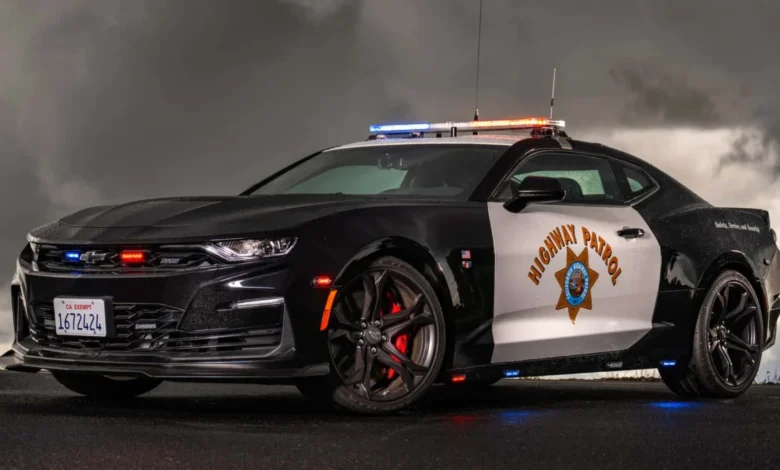
The announcement, delivered via the California Highway Patrol (CHP) Fleet Operations social media channels, confirms that the black-and-white SS 1LE model has been fully outfitted for duty. Equipped with the iconic CHP livery, a high-visibility push bar, and a sophisticated array of emergency lighting, this vehicle represents the last of its kind to be inducted into the agency’s rigorous highway patrol rotation. This induction comes nearly three years after Chevrolet ceased production of the sixth-generation Camaro at its Lansing Grand River Assembly plant in Michigan on December 13, 2023, signaling the final depletion of the agency’s long-standing inventory of the American pony car.
A Legacy Forged in High-Speed Pursuit
The relationship between the California Highway Patrol and the Chevrolet Camaro is deeply rooted in the operational requirements of patrolling the state’s massive infrastructure. The history of this partnership dates back to 1979, an era when the agency began diversifying its fleet to better manage the unique challenges of high-speed enforcement.
During the late 1970s, the CHP sought a specialized pursuit vehicle that could offer superior handling and acceleration compared to the heavy-duty, full-size sedans that dominated the market at the time. The introduction of the Camaro Z28 provided the agency with a tactical advantage, offering a platform that was not only fast but stable at high velocities. Over the subsequent decades, the Camaro became a symbol of the CHP’s pursuit capabilities.
The chronology of the Camaro within the CHP fleet is not a continuous line, but rather a series of strategic acquisitions. While the agency has long relied on domestic sedans and SUVs for general patrol, the Camaro was cycled in and out of service as a specialty asset. Notable iterations appeared in the fleet in 1991 and 2002, often serving alongside other iconic muscle cars, including various generations of the Ford Mustang, which also found a home in several state law enforcement fleets across the United States.
Technical Specifications of the Final Unit
The specific model entering service today—the SS 1LE—is a testament to the performance capabilities that made the platform a favorite among law enforcement procurement officers. Unlike standard variants, the 1LE track-tuned suspension package was specifically engineered for high-speed stability, cornering precision, and endurance.
Under the hood lies a 6.2-liter naturally aspirated V8 engine, which produces a formidable 455 horsepower and 455 lb-ft of torque. In independent testing and historical pursuit scenarios, the sixth-generation SS 1LE has demonstrated top speeds approaching 175 mph. These figures are critical for an agency tasked with patrolling approximately 105,000 miles of California’s diverse highway landscape, which ranges from flat, arid stretches of the Central Valley to the winding mountain passes of the Sierra Nevada.
Beyond the drivetrain, the vehicle features a modern suite of electronics, including a digital dashboard and advanced communication systems. However, in a nod to the agency’s rich history, the vehicle has been fitted with a whip antenna. This aesthetic and functional callback mirrors the configurations seen on the original CHP Camaros from the late 1970s, bridging the gap between the agency’s past and its present.
Operational Logistics and Deployment
As of this week, the CHP has not officially disclosed which specific division or region will host this final Camaro. The decision regarding the vehicle’s assignment is a matter of operational utility; the unit that receives the car will effectively determine its longevity. Given the rigors of California patrol duty—where vehicles are often subjected to prolonged idling, high-speed maneuvers, and demanding road conditions—the agency maintains a strict maintenance schedule for its specialty fleet.
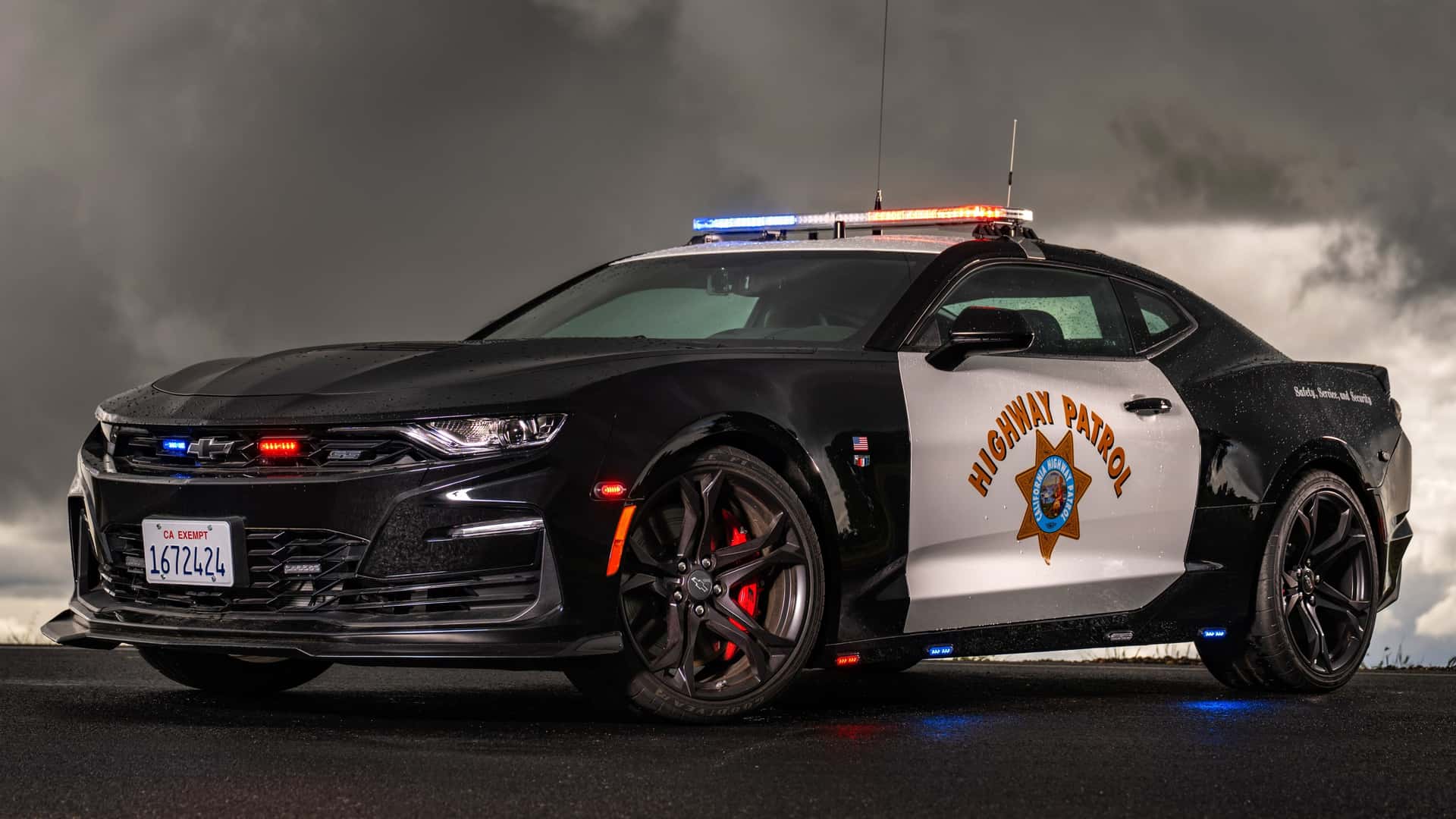
The vehicle is expected to hit the road as early as next week. While it is officially designated as the "final" Camaro in the fleet, it remains a fully operational patrol car. It will be tasked with standard traffic enforcement and high-speed interception, carrying the same responsibilities as any other unit in the CHP inventory.
Broader Implications for Law Enforcement Fleets
The retirement of the Camaro from the CHP fleet is part of a broader, systemic shift within American law enforcement. For decades, the "muscle car" patrol unit was a fixture of the American highway, representing a specialized tool for traffic enforcement. However, the market has undergone a significant transformation. The discontinuation of the Camaro, combined with the waning presence of other traditional sedan platforms, has forced agencies to transition toward SUVs and crossover vehicles.
The Ford Explorer, for instance, has become the de facto standard for police work across the United States due to its versatility, cargo capacity, and ride height. While these SUVs offer undeniable practical benefits, their performance dynamics—particularly in terms of aerodynamic efficiency and center of gravity—differ drastically from those of a purpose-built performance coupe like the Camaro.
The departure of the Camaro leaves a void in the "interceptor" niche. Currently, Dodge and Ford continue to occupy the space with high-performance variants of their existing lineups, but the unique cultural and tactical presence of the Camaro is difficult to replicate. From an engineering standpoint, the loss of a platform that successfully balanced V8 power with track-ready suspension creates a challenge for agencies that rely on specialized vehicles for high-speed enforcement.
The Future of Chevrolet in Law Enforcement
While the Camaro nameplate has officially ended its run as a mass-produced consumer vehicle, the brand continues to exert influence in the high-performance space. Chevrolet remains committed to V8 architecture through its truck and performance segments, and the Camaro continues to exist in the public eye through its presence in the NASCAR Cup Series. The "Next Gen" Camaro NASCAR variant keeps the nameplate relevant in one of the most high-stakes automotive environments in the world, though this has little bearing on the daily operations of state troopers.
There has been persistent speculation regarding a potential seventh-generation Camaro or a return of the nameplate on a new platform. Chevrolet has issued teasers regarding the future of its performance division, but no official confirmation exists regarding a replacement for the police-spec Camaro. For now, the automotive industry and law enforcement agencies alike are watching to see how manufacturers adapt to the changing regulatory and economic landscape.
A Symbolic End to a Storied Era
The induction of this final SS 1LE is more than just a routine fleet update; it is a commemorative event for the California Highway Patrol. Throughout its years of service, the Camaro earned a reputation among troopers for its responsiveness and, perhaps more importantly, its deterrent effect. There is a psychological component to law enforcement, and the sight of a performance-oriented cruiser on the shoulder of a highway has long served as a visible reminder of the agency’s commitment to traffic safety.
As the last Camaro joins the ranks, it serves as a historical bookmark. It concludes a narrative that began during a period of massive expansion for the California highway system and ends at a time when the automotive world is pivoting toward electrification and new vehicle architectures.
The California Highway Patrol has not yet announced a formal retirement plan for this specific vehicle, as it is just entering service. However, it is almost certain that when the time comes to decommission this unit, it will be preserved, likely finding a place in the agency’s museum or a private collection. For now, the final CHP Camaro will serve its duty on the open road, acting as a high-speed sentinel and a rolling monument to the intersection of American muscle and law enforcement tradition. As it merges into traffic next week, it carries the weight of a 45-year legacy, ensuring that the legacy of the "pony car" in the service of public safety ends not with a whisper, but with the roar of a 6.2-liter V8.
Related posts: