Bose QuietComfort Headphones Second Generation Hit Lowest Price Ever for Black Friday 2026

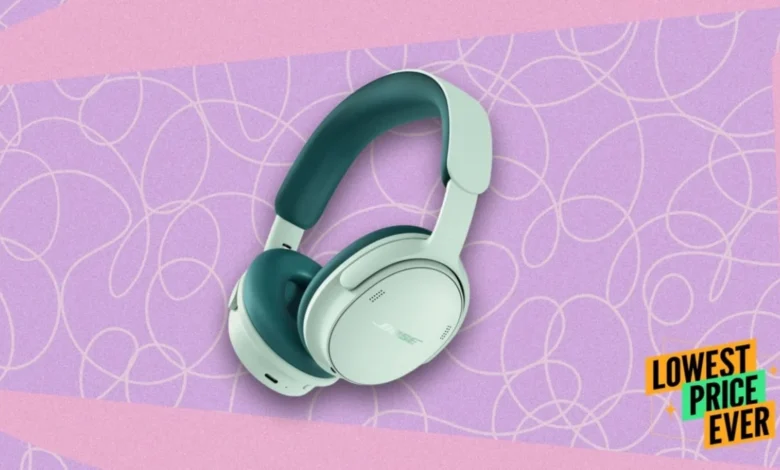
The consumer electronics market has officially entered its most aggressive pricing period of the year, with Bose marking a significant milestone in its audio hardware lineup. As part of the 2026 Black Friday promotional cycle, the second-generation Bose QuietComfort Headphones have seen their price reduced by 45%, bringing the premium over-ear device to $199. This represents a $160 reduction from the manufacturer’s suggested retail price, effectively establishing a new floor for the product’s historical pricing. The deal, which includes aesthetic options such as Dewdrop Mint, Eucalyptus Green, and Hazelnut Taupe, arrives amidst a broader trend of manufacturers leveraging holiday retail windows to clear inventory and capture market share in the highly competitive noise-canceling headphone segment.
Contextualizing the Bose Market Position
Bose has long occupied a dominant position in the active noise cancellation (ANC) industry, a category the company helped pioneer for the consumer market. The second-generation QuietComfort Headphones, which serve as a foundational pillar in their current portfolio, are designed to address the balance between professional-grade audio isolation and daily wearability.
The device features an 8.1-ounce chassis, emphasizing portability through a foldable design that integrates into a hardshell travel case. From an engineering standpoint, the focus remains on long-term comfort, utilizing a cushioned headband and synthetic protein leather earpads designed to distribute clamping force evenly across the cranium. These earpads are modular, allowing users to replace them individually, a feature that extends the functional lifespan of the hardware—a key consideration for consumers looking to maximize the return on their initial investment.
Technical Performance and Audio Architecture
The acoustic signature of the Bose QuietComfort series is characterized by a warm, bass-forward profile, a tuning preference frequently observed in consumer-facing audio hardware to provide a more immersive listening experience. While the device excels at neutralizing low-frequency ambient sounds—such as aircraft cabin drones or HVAC hums—independent testing indicates that higher-frequency vocal ranges may retain some presence.
Connectivity has been modernized to meet the requirements of contemporary users, with the inclusion of Bluetooth 5.4. This iteration of the protocol provides improved energy efficiency and more stable multipoint pairing, allowing users to maintain simultaneous connections to two devices, such as a laptop and a smartphone. The integration of Google Fast Pair further streamlines the onboarding process for Android users. Additionally, the inclusion of a USB-C port that supports both charging and lossless audio playback offers a versatile solution for users who prefer wired connections for high-fidelity audio or to circumvent potential wireless latency.
However, power users should note that the device maintains an average battery performance, rated for 24 hours of playback with active noise cancellation engaged. While this is sufficient for most daily use cases, it trails behind some industry rivals that offer 30 to 40 hours of playback. The fast-charging feature, which provides 2.5 hours of playback from a 15-minute charge, serves as a mitigation strategy for the moderate battery capacity.
The Landscape of Black Friday 2026
The significance of this price drop must be analyzed within the broader framework of the 2026 holiday retail season. Retail analysts have observed that the 2026 Black Friday period has shifted away from the "doorbuster" model of previous decades toward a more sustained, month-long promotional strategy. By discounting the QuietComfort headphones to $199, Bose is directly positioning its mid-tier offering to compete with lower-cost budget headphones while simultaneously attempting to upsell consumers who might otherwise settle for entry-level models.

This pricing strategy also serves to differentiate the QuietComfort line from the company’s flagship QuietComfort Ultra series. While the QuietComfort headphones offer a robust feature set, they omit certain high-end specifications, such as support for the aptX Adaptive codec, which is reserved for the Ultra lineup. By maintaining this tiering, Bose provides a clear value proposition: high-tier comfort and standard wireless performance at a mid-tier price point, versus high-fidelity codec support and advanced spatial audio processing at a premium price.
Comparative Analysis and Industry Implications
When evaluating the current $199 price point, consumers are essentially gaining access to a mature, refined product at a cost that typically coincides with entry-level or refurbished units. The decision to discount these headphones so aggressively suggests a strategic push by the manufacturer to standardize its presence across mid-range hardware segments.
Data from the consumer audio sector indicates that while the market for over-ear headphones remains saturated, brand loyalty remains a primary driver for purchase decisions in the $200–$300 range. Bose, by leveraging its brand heritage and the well-documented efficacy of its noise-cancellation algorithms, is effectively creating a barrier to entry for smaller, emerging audio companies attempting to capture market share during the busiest shopping days of the year.
Furthermore, the environmental and economic impact of such sales is notable. The move toward modular, replaceable components—such as the aforementioned ear cushions—aligns with growing consumer demand for "right to repair" features and increased product longevity. By focusing on durability alongside aggressive pricing, the company is catering to a demographic that values sustainability as much as acoustic performance.
Consumer Considerations
For potential buyers, the primary consideration remains the trade-off between the standard AAC/SBC codec support and the need for higher-bitrate streaming capabilities. For the average user, the standard wireless codecs will suffice for streaming services like Spotify or Apple Music. For audiophiles who prioritize lossless, high-resolution audio, the lack of aptX Adaptive support may be a point of friction, though the inclusion of a USB-C-to-3.5mm wired option serves as a viable workaround for stationary listening environments.
As of November 26, 2026, the deal remains active at major retail outlets. Given the volatility of Black Friday pricing, availability is subject to change based on real-time inventory levels. Potential buyers are advised to consider the specific colorways available, as promotional pricing often applies to the entire inventory pool, though demand can fluctuate based on consumer aesthetic preferences.
In conclusion, the current promotional period represents a tactical alignment of premium audio hardware with competitive holiday pricing. Whether this move signals a broader transition toward lower price points for the entire QuietComfort range remains to be seen; however, for the immediate future, it provides a compelling entry point for consumers seeking to upgrade their personal audio equipment without committing to the higher expenditure usually associated with flagship noise-canceling technology. The combination of Bose’s established reputation for comfort and this significant price adjustment makes the current offer a notable event in the 2026 consumer tech calendar.
Related posts: