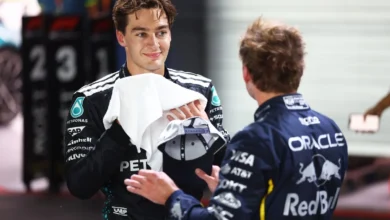
When a Formula 1 team elevates a teenage prospect from the junior categories directly into a premier factory seat, the initial contract is rarely structured like a blockbuster superstar deal. It is a calculated gamble, designed to mitigate risk while providing a platform for growth. However, when that protégé secures a drivers’ world championship in his sophomore season, the original financial terms become instantly obsolete. This is the precise reality currently confronting Mercedes-AMG Petronas F1 Team regarding 20-year-old sensation Andrea Kimi Antonelli.
The transition from promising academy driver to world champion is a rare trajectory in modern motorsport, one that demands a complete recalibration of a driver’s market value. As Antonelli’s influence within the Brackley-based team grows, the conversation surrounding his compensation has shifted from rookie-level retainers to elite-tier earnings.
The Anatomy of the Rookie Contract
In the high-stakes world of Formula 1, rookie contracts are notoriously front-loaded with performance incentives rather than guaranteed base salaries. When Antonelli was signed to his current deal, the agreement reflected his status as an unproven, albeit highly touted, talent. Industry insiders suggest that his current base salary sits in the neighborhood of €4 million ($4.6 million USD), a figure that, while substantial by any standard, represents a modest investment for a team operating at the pinnacle of the sport.
To put this in perspective, the disparity between Antonelli’s current base and that of his teammate, George Russell—who commands a salary reported to be in excess of $34 million—is stark. While the gap is partially bridged by performance-based bonuses, the base salary is the fundamental indicator of a driver’s standing within the team’s hierarchy. Antonelli’s current deal essentially treats him as a developmental prospect, whereas his on-track results dictate that he should be compensated as a franchise cornerstone.
Chronology of a Meteoric Rise
The timeline of Antonelli’s ascent to the Mercedes seat is defined by speed. His progression from Formula 4 to Formula Regional and subsequently to Formula 2 was marked by a relentless accumulation of victories and championship titles.
- The Early Years: Antonelli dominated the junior categories, capturing titles in ADAC and Italian Formula 4 in 2022.
- The Rapid Promotion: Following his performance in the Formula Regional European Championship, Mercedes opted to fast-track the Italian driver, skipping traditional prolonged waiting periods to secure him in a seat as soon as a vacancy emerged.
- The Championship Season: Entering his sophomore year in F1 with the weight of expectation, Antonelli defied the odds by consistently outperforming seasoned veterans, ultimately clinching the 2025 Drivers’ World Championship.
- The Current Impasse: With the championship now secured, the team is forced to address the growing discrepancy between his contractual obligations and his real-world value.
Official Stance and Internal Dynamics
In a recent interview with the German publication BILD, Mercedes Team Principal Toto Wolff addressed the burgeoning conversation surrounding Antonelli’s remuneration. When confronted with the reality that the young champion’s salary is currently misaligned with his achievements, Wolff was careful to balance the legalities of the contract with the necessity of rewarding excellence.
"Kimi has a contract for next year," Wolff stated, effectively quelling rumors that Antonelli might leverage his championship status to exit the team in search of a higher-paying seat elsewhere. By emphasizing the existence of a binding agreement, Wolff has signaled that Mercedes intends to honor the current term structure for the immediate future.
However, Wolff was equally clear about the moral and business imperative to rectify the situation. "I won’t comment on the figures, but I can say this much: no one needs to worry about him financially," he remarked. "Kimi and his family especially care about him sitting in a competitive car. At the same time, we know that we have a world champion who should also be rewarded."

This acknowledgment from the team principal is significant. It suggests that while the base contract remains, supplementary agreements or a restructured deal is likely already under discussion behind closed doors to ensure the driver feels valued by the organization.
The Economics of Performance Bonuses
It is vital to understand that base salary is only one facet of a Formula 1 driver’s income. For a driver like Antonelli, the bulk of his earnings during his championship year likely originated from performance bonuses. These clauses typically trigger upon:
- Podium Finishes: Financial multipliers for reaching the top three.
- Race Wins: Significant payouts for grand prix victories.
- Championship Points: Bonus structures tied to the total point haul throughout the season.
- The Title Bonus: A major, one-time payout for securing the World Drivers’ Championship.
By triggering these bonuses, Antonelli has undoubtedly secured a significant windfall, which helps mitigate the perceived "low" base salary. Nevertheless, the professional standard in Formula 1 is for a world champion to command a base salary that reflects their status as the sport’s standard-bearer, regardless of how much they have already earned through bonuses.
Broader Implications for Mercedes
The situation with Antonelli presents a unique challenge for Mercedes. If they keep his base salary low, they risk appearing ungrateful or, worse, potentially vulnerable to poaching from rivals who would be eager to offer a champion a significantly higher guaranteed retainer. If they raise his salary too quickly, they risk upsetting the delicate balance of their current driver payroll and potentially disrupting the harmony within the team.
Furthermore, Antonelli’s rise has cemented his position as the "face" of Mercedes for the coming decade. As he replaces the mantle held by previous legends, the brand value he brings to the team—especially in the Italian market—cannot be overstated. Toto Wolff’s comparison of Antonelli to the stature of Michael Schumacher in Italy underscores the marketing potential of the young driver. Investing in him is not merely an expense; it is a strategic allocation of capital that guarantees the team’s long-term commercial appeal.
Strategic Forecasting: What Comes Next?
Looking toward the 2026 season and beyond, it is almost certain that Mercedes will engage in contract renegotiations. While Wolff is protective of the current legal framework, the team understands that a champion must be paid as a champion. A typical "championship clause" often exists in elite driver contracts, which may have already triggered a salary increase for the upcoming season, but even that might fall short of the open-market value of a world champion.
Expect to see a new, long-term extension announced within the next twelve months, one that elevates Antonelli into the highest tax bracket of Formula 1 drivers. This will serve two purposes: it will secure his loyalty to the Mercedes-AMG brand and it will signal to the rest of the paddock that the team is fully committed to building its future around its new star.
The "Antonelli phenomenon" has caught even the most seasoned analysts off guard. In the span of just two years, the sport has witnessed the transformation of a teenager into a global icon. As the dust settles on the championship celebrations, the focus at Brackley has shifted from the track to the boardroom, where the objective is to ensure that the driver who has given everything to the team is rewarded with a contract that reflects his extraordinary contribution to the Mercedes legacy.
Ultimately, the goal for Toto Wolff is to ensure that while Antonelli remains focused on the next race, he feels the full weight of the team’s appreciation for his historic achievement. In the high-stakes, high-reward world of Formula 1, keeping a champion happy is the most important investment a team can make.