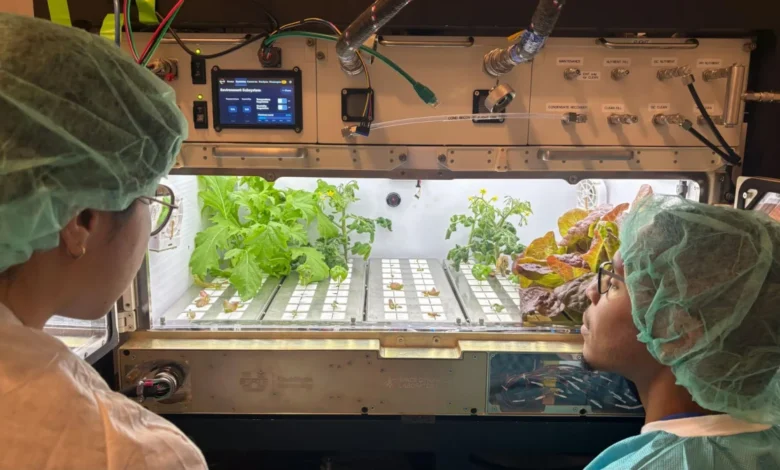
The National Aeronautics and Space Administration (NASA) is preparing to launch a suite of groundbreaking scientific investigations to the International Space Station (ISS) aboard Northrop Grumman’s 25th Commercial Resupply Services (CRS-25) mission. Scheduled to lift off from the Mid-Atlantic Regional Spaceport at NASA’s Wallops Flight Facility in Virginia, this upcoming resupply flight carries critical hardware and biological payloads managed by NASA’s Biological and Physical Sciences (BPS) Division. Among the most anticipated payloads is a first-of-its-kind space crop production system designed to revolutionize how fresh food is cultivated in microgravity, alongside a precision health investigation that marks a major leap forward in long-duration human tissue research in orbit.
As space agencies worldwide set their sights on establishing sustainable human presence on the Moon and eventually sending crewed missions to Mars, the challenge of life support becomes increasingly complex. Traditional packaged meals transported from Earth degrade in nutritional value over time and are insufficient to sustain astronauts during multi-year deep space expeditions. To overcome this hurdle, NASA and its commercial partners are accelerating research into autonomous, efficient, and reliable biological life support systems. The payloads heading to the ISS on the upcoming Northrop Grumman mission represent pivotal milestones in addressing these fundamental physiological and nutritional bottlenecks of human spaceflight.
Cutting-Edge Space Crop Production System Takes Flight
At the forefront of the BPS Division’s payload manifest is a novel space crop production system, designated under the Ohalo III investigation framework. For decades, space agriculture has relied on rudimentary plant pillows, modified veggie growth chambers, and basic hydroponic setups. While these earlier systems successfully demonstrated that leafy greens and dwarf tomatoes could be grown in microgravity, they lacked the scalability, water efficiency, and automated nutrient delivery required for long-duration deep space exploration.
The newly developed prototype growth chamber launching on the CRS-25 mission introduces sophisticated advancements in water delivery and volume optimization technology. In microgravity, fluid dynamics behave entirely differently than they do on Earth; water does not naturally pool, drain, or flow downward, making precise hydration of plant roots one of the most difficult hurdles in space botany. Overwatering can suffocate plant roots by depriving them of oxygen, while underwatering leads to rapid dehydration and crop failure.
The Ohalo III hardware validates a closed-loop system engineered to optimize water distribution down to the microliter, ensuring that crops receive the exact balance of moisture and nutrients necessary for optimal growth. Engineers and plant biologists at NASA’s Kennedy Space Center have spent years refining this technology to minimize crew intervention. In a deep space transit scenario, astronauts will have limited time to tend to crops, making automation a critical prerequisite for success.
Advancing Precision Health Through Miniature Brain Models
Complementing the agricultural advancements on the upcoming mission is a cutting-edge precision health investigation that builds upon previous milestones in space-based neurology. This research focuses on the behavior of human brain tissues in microgravity, utilizing lab-grown cellular models known as miBrains.
The roots of this experiment trace back to earlier pathfinder studies that transported miniature human brain tissue models to the ISS to observe how spaceflight factors—such as cosmic radiation and altered gravity—affect neurological cells at the cellular and molecular levels. However, maintaining these delicate biological models in orbit historically required intense, manual labor from astronauts, who had to manually refresh nutrient fluids and manage waste products.
To solve this operational bottleneck, the new payload tests a miniature fluid-handling system designed to autonomously mix, deliver, and maintain the complex nutrient-rich liquids required to keep miBrains alive over extended periods. By automating the fluidics, researchers can conduct much longer-duration studies on the ISS, observing how human neurological tissues respond to months of exposure to the space environment rather than just a few weeks.
The implications of this neurological research extend far beyond the needs of astronauts. On Earth, scientists struggle to model complex neurodegenerative diseases such as Alzheimer’s, Parkinson’s, and amyotrophic lateral sclerosis (ALS) in traditional two-dimensional cell cultures. The use of three-dimensional tissue models in the stable, microgravity environment of the ISS can eliminate sedimentation and convection artifacts that often interfere with terrestrial tissue engineering. Consequently, discoveries made aboard the space station could accelerate pharmaceutical development and disease modeling for patients on Earth.
Chronology of Commercial Resupply and Biological Research
The integration of advanced biological investigations into commercial resupply missions reflects the evolution of the International Space Station into a bustling, commercialized orbital laboratory. The timeline leading up to the Northrop Grumman CRS-25 mission highlights years of iterative hardware development, ground-based testing, and payload integration.
Initial concept designs for advanced watering systems began in the late 2010s, prompted by the increasing demand for high-yield, reliable food production units for Artemis-era lunar architecture. Following successive iterations of ground testing in simulated microgravity environments—such as parabolic flights and drop towers—the hardware underwent rigorous safety and flight qualification reviews throughout 2024 and 2025.
Concurrently, the precision health miBrain initiative advanced through sequential validation phases. The first phase successfully demonstrated that biological tissues could survive launch vibrations and orbital transit. The second phase focused on functional assays of cellular stress responses. The upcoming payload on the CRS-25 flight represents the third phase, shifting the operational paradigm from short-term survival to long-term autonomous cultivation and maintenance.
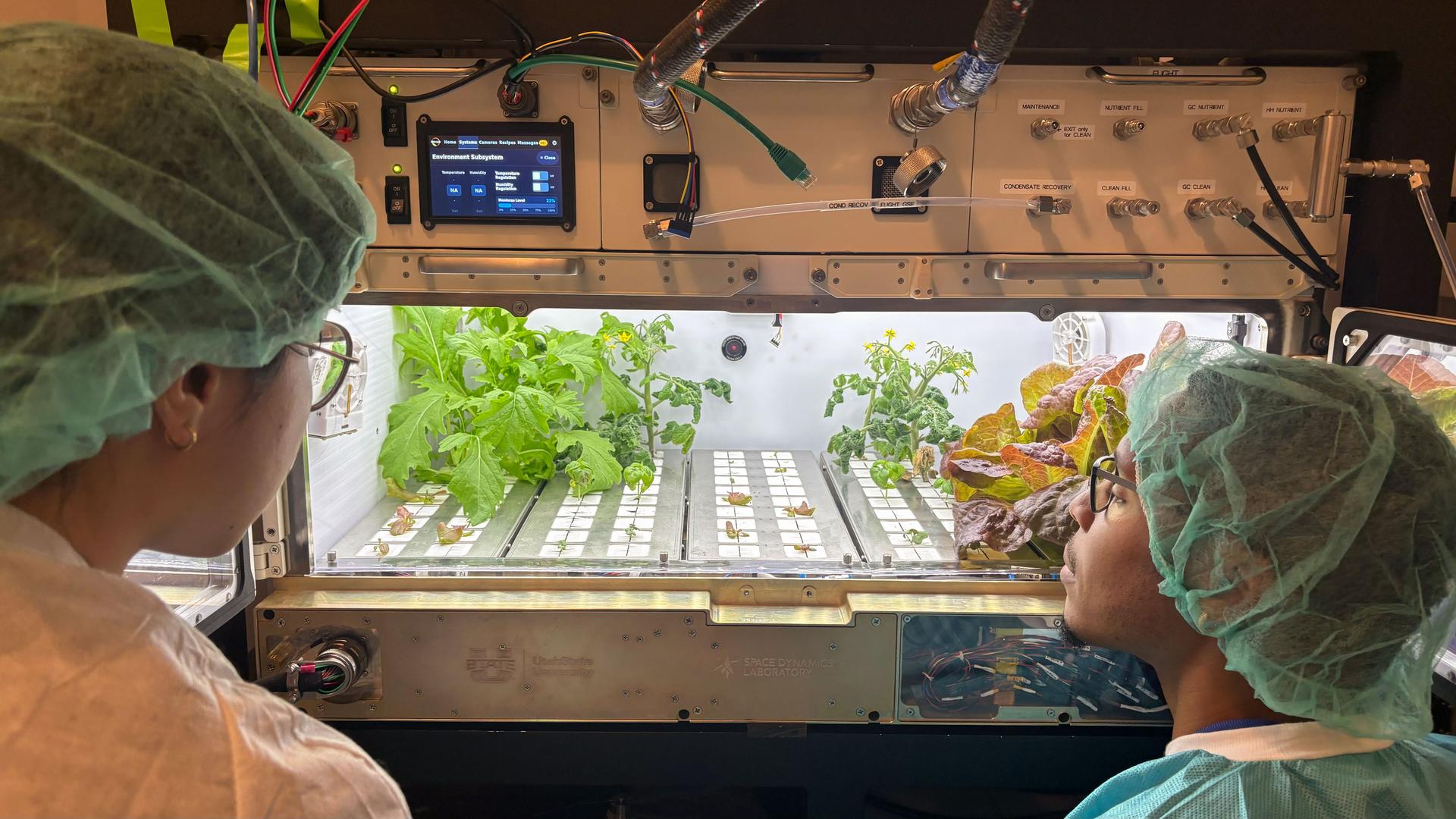
Ahead of the launch, the flight hardware underwent final integration and payload verification at the NASA Wallops facility. Once Northrop Grumman’s Cygnus spacecraft docks with the ISS—typically within days of liftoff—Expedition crew members will unpack the cargo, transfer the growth chambers and fluid-handling systems to their designated laboratory racks, and initiate the multi-week experimental runs.
Supporting Data and Technical Specifications
To contextualize the scale of these investigations, it is helpful to examine the logistical and operational parameters governing biological research aboard the ISS. The station orbits approximately 250 miles (400 kilometers) above Earth, traveling at speeds of roughly 17,500 miles per hour (28,000 kilometers per hour), completing an orbit every 90 minutes. This environment exposes payloads to a perpetual state of free-fall, or microgravity, alongside elevated levels of ionizing radiation originating from galactic cosmic rays and solar particle events.
The Ohalo III growth chamber operates within stringent power, mass, and volume limits imposed by ISS payload rack standards, typically utilizing standard EXPRESS (EXpedite the PRocess to Experiments for Space Station) rack interfaces. The system incorporates LED lighting arrays tuned to specific PAR (Photosynthetically Active Radiation) spectrums to maximize photosynthetic efficiency while minimizing thermal output in the confined cabin atmosphere.
Similarly, the precision health fluid-handling system relies on microfluidic channels, precision peristaltic pumps, and automated sensor suites to monitor pH levels, dissolved oxygen, and metabolic waste accumulation within the miBrain culture chambers in real-time. Telemetry data is downlinked continuously to the payload operations control center at NASA’s Marshall Space Flight Center in Huntsville, Alabama, allowing terrestrial research teams to monitor experiment health on a 24/7 basis.
Official Perspectives and Programmatic Goals
Leadership within NASA’s Science Mission Directorate and the Biological and Physical Sciences Division emphasizes that these investigations are not isolated science projects, but foundational building blocks for humanity’s future in space.
"Every step we take in low-Earth orbit brings us closer to securing a permanent footprint on the Moon and venturing onward to Mars," noted a senior BPS program spokesperson during a recent pre-launch mission overview. "When we look at long-duration exploration, we cannot rely solely on resupply ships from Earth. We must master closed-loop biological life support systems. The technology heading to the space station on this flight represents a critical evolution in how we grow food and monitor human health away from our home planet."
Commercial partners echoed the sentiment, highlighting the synergy between public space agencies and private aerospace contractors. Northrop Grumman’s Commercial Resupply Services program has served as a reliable logistical backbone for the ISS, regularly delivering thousands of pounds of scientific hardware, crew supplies, and critical research materials. The ability of the Cygnus spacecraft to accommodate specialized, sensitive biological payloads underscores the maturation of commercial spaceflight infrastructure.
Broader Impact, Commercial Applications, and Terrestrial Benefits
While the primary mandate of NASA’s BPS Division is to enable human space exploration, the secondary return on investment frequently manifests as transformative technology for terrestrial industries. The innovations tested on the ISS during the CRS-25 mission carry significant potential to revolutionize sectors ranging from commercial agriculture to biomedical engineering.
In the realm of agriculture, the water delivery and volume optimization technologies pioneered in the Ohalo III space crop system hold direct relevance for sustainable farming on Earth. As global climate change, water scarcity, and arable land degradation strain traditional agricultural supply chains, vertical farming and indoor controlled-environment agriculture (CEA) have emerged as vital alternatives. CEA facilities require immense amounts of water and energy; the precision irrigation insights gained from optimizing plant growth in microgravity can help terrestrial vertical farmers minimize resource waste, optimize nutrient delivery, and dramatically increase crop yields per square foot.
In the biomedical sector, the maturation of automated microfluidic tissue-handling systems for spaceflight directly supports the burgeoning field of organ-on-a-chip technology and automated drug screening platforms. By perfecting systems that can maintain complex human tissues without daily human intervention, biomedical engineers can develop automated laboratory equipment capable of running high-throughput pharmacological assays in remote, resource-limited, or hazardous environments on Earth.
Furthermore, understanding the neurological impacts of microgravity and radiation helps researchers unpick fundamental cellular mechanisms associated with aging, cognitive decline, and neurodegenerative disorders. As astronauts experience accelerated physiological changes resembling terrestrial aging during long-duration spaceflights, studying these changes in real-time provides a unique natural laboratory that cannot be replicated in ground-based facilities.
Conclusion and Next Steps
As the final preparations for Northrop Grumman’s 25th Commercial Resupply Services mission reach completion, the scientific community anticipates the wealth of data that will soon flow from the International Space Station. The integration of advanced crop production prototypes and precision neurological health systems signifies a mature, forward-looking space program focused on sustainability, autonomy, and deep space readiness.
Following the successful execution of these experiments on the ISS, data will be analyzed by multi-institutional research teams comprising NASA scientists, university researchers, and industry partners. The findings will directly inform the design of next-generation life support hardware slated for deployment in upcoming Artemis lunar surface habitats and transit vehicles destined for Mars. Through meticulous engineering and continuous scientific inquiry, NASA and its partners continue to lay the groundwork for a sustainable human future among the stars while delivering tangible technological dividends back to Earth.