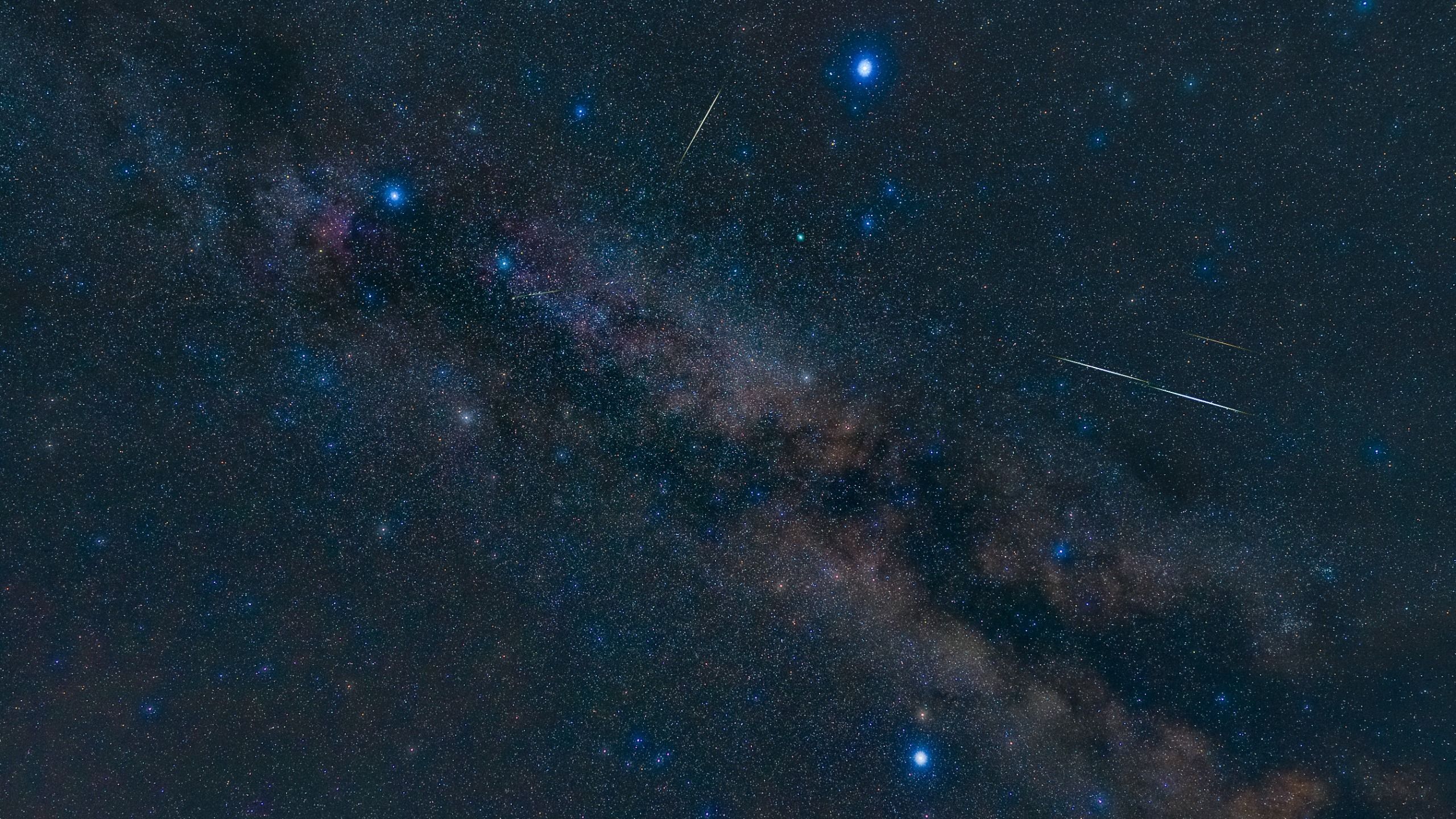
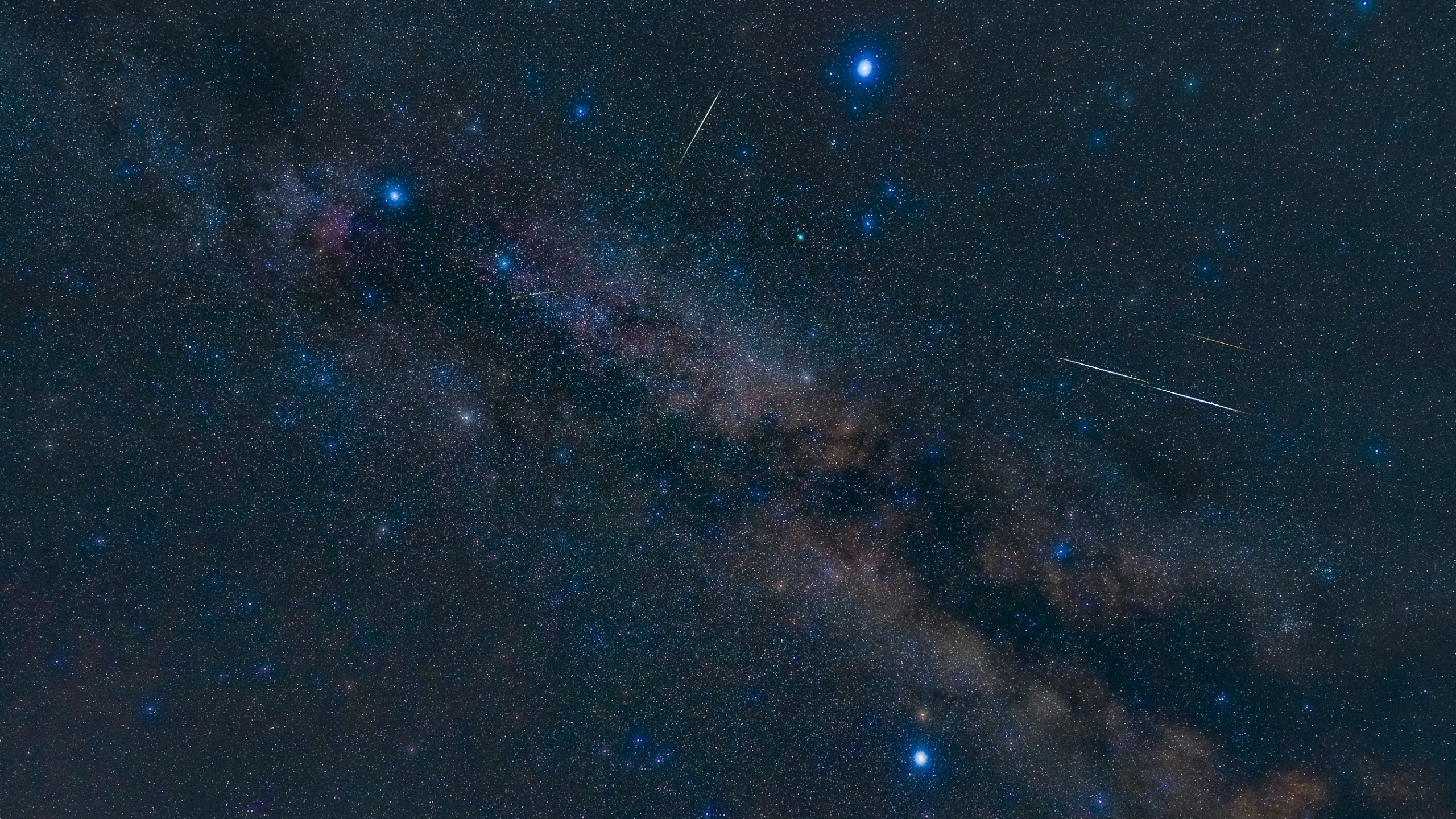
As the Northern Hemisphere transitions from the sweltering heat of summer into the crisp, cooling atmosphere of autumn, observers looking toward the zenith during September and October evenings often encounter a familiar celestial anchor: the Summer Triangle. Composed of the brilliant stars Vega, Altair, and Deneb, this prominent asterism remains a fixture of the night sky long after the summer solstice has passed. While the seasonal shift brings shorter days and cooler temperatures, this celestial landmark persists, defying the calendar in its visibility and raising questions about the nomenclature that ties it strictly to the summer months.
The persistence of the Summer Triangle in the autumn months is not a celestial anomaly, but rather a reflection of the Earth’s orbital position and the rotation of the heavens. In mid-September, as twilight fades, the triangle is positioned nearly overhead. By mid-November, the formation remains visible shortly after sunset, though it gradually drifts toward the western horizon as the season progresses into winter. This duration of visibility highlights a fundamental truth of observational astronomy: asterisms are governed by the mechanics of the Earth’s rotation and its annual journey around the sun, rather than the arbitrary boundaries of human seasonal calendars.
Chronology of an Astronomical Landmark
The term "Summer Triangle" is a relatively modern invention in the history of stellar observation. While the individual stars have been known and charted for millennia—Vega in Lyra, Altair in Aquila, and Deneb in Cygnus—the grouping as a distinct unit only gained popular traction in the 20th century.
The evolution of the name can be traced through several key publications and broadcasts:
- 1920s–1930s: Austrian astronomer Oswald Thomas was among the first to formalize the concept, referring to the trio as "Grosses Dreieck" (Great Triangle) in the late 1920s. By 1934, he refined this to "Sommerliches Dreieck" (Summerly Triangle).
- 1952–1954: H.A. Rey, the author famous for the "Curious George" series but also a dedicated astronomer, played a significant role in cementing the term. In his 1952 work, "The Stars: A New Way to See Them," he identified the pattern, and by his 1954 book, "Find the Constellations," he popularized the "Summer Triangle" moniker for younger generations.
- 1958: Sir Patrick Moore, the legendary British broadcaster and astronomer, famously claimed credit for the term’s widespread adoption following a 1958 BBC television broadcast. While his influence was undeniable in popularizing the term to a mass audience, the historical record suggests that the name was already in circulation within navigation manuals and earlier astronomical literature.
The Physics of the Triangle: Luminosity and Distance
A common misconception among amateur astronomers is that the three stars of the triangle are physically related or similar in nature. In reality, Vega, Altair, and Deneb are vastly different entities located at disparate distances from Earth, creating an optical illusion of unity.
The apparent brightness of these stars is a function of both their intrinsic luminosity and their proximity to our solar system. Altair, the closest of the three, resides at a distance of approximately 16.7 light-years. Vega, the brightest in the night sky, is slightly further at 25 light-years. These two stars appear brilliant primarily because they are our near-neighbors in the local galactic neighborhood.
Deneb, however, presents a different scenario. Located between 1,400 and 2,600 light-years away, Deneb is a massive blue supergiant. Its light, which we observe today, likely departed the star during the waning years of the Roman Empire. Despite its immense distance, it shines at a first-magnitude brightness, a testament to its status as one of the most luminous stars in the Milky Way. If Deneb were placed at the same distance as Vega, it would be so bright that it would cast shadows on Earth, dwarfing the luminosity of our own Sun by at least 55,000 times. This disparity highlights the complexity of stellar classification and the limitations of the human eye in assessing true celestial power.
Pronunciation and Cultural Impact
The naming and identification of these stars have occasionally bled into pop culture, most notably in the 1997 film "Contact." Based on the novel by Carl Sagan, the film depicts the discovery of a radio signal originating from the direction of Vega. Throughout the movie, characters pronounce the star as "Vey-gah," a choice that likely mirrors the nomenclature of the 1970s Chevrolet Vega subcompact car.
Professional astronomers, however, maintain a distinct linguistic tradition. The standard pronunciation is "Vee-ga," with the stress on the first syllable. The late George Lovi, a respected expert in star nomenclature, often quipped to his students that "Vee-ga is a star and Vey-gah is a car." This distinction serves as a reminder of the bridge between scientific terminology and the vernacular of popular media.
Broader Implications for Stargazing
The "Summer Triangle" remains a vital educational tool for astronomers, providing a reliable reference point for those navigating the night sky. Its presence during the autumn months is not a failure of its name, but a testament to its utility. By serving as a bridge between the seasons, it allows observers to transition from the warmer, high-sky constellations of late summer to the rising winter figures such as Orion and Taurus.
The persistent visibility of the triangle into November also serves as a practical lesson in orbital mechanics. Because the Earth is moving along its orbital path, the stars appear to shift their positions relative to the Sun. As the year progresses, the time at which these stars reach their highest point in the sky shifts earlier each day, eventually causing them to disappear into the sun’s glare during the late winter and early spring.
Scientific Analysis of Celestial Branding
From an analytical perspective, the "Summer Triangle" is a prime example of successful celestial branding. Much like the "Big Dipper"—which is actually an asterism within the constellation Ursa Major—the Summer Triangle is not an official scientific designation recognized by the International Astronomical Union (IAU). Instead, it is a social construct that facilitates easier recognition of the heavens for the general public.
The impact of such informal naming conventions is profound. By grouping Vega, Altair, and Deneb into a singular, memorable shape, astronomers and educators have significantly lowered the barrier to entry for novice stargazers. This "branding" of the night sky encourages ongoing engagement with science and physics, fostering an environment where individuals are more likely to inquire about the nature of blue supergiants like Deneb or the exoplanet research surrounding stars like Vega.
In conclusion, while the calendar may demand that we label the season as autumn, the sky remains indifferent to our dates. The Summer Triangle continues to burn brightly in the overhead darkness, a reminder that the stars above operate on a timeline far exceeding our own. Whether one chooses to call it the Summer Triangle, the Autumn Triangle, or simply an asterism in the Milky Way, its enduring presence remains one of the most reliable and awe-inspiring displays in the terrestrial view of the cosmos. As we look up on these cooling nights, we are not seeing the end of a season, but rather a continuation of a grand, celestial cycle that has persisted for millions of years.