The James Webb Space Telescope Unveils Cosmic Dust Factories in Dwarf Galaxy Sextans A, Illuminating Early Universe Enrichment

The cosmos, in its nascent stages, was a starkly different realm from the one we inhabit today. Composed almost entirely of hydrogen and helium, it lacked the heavier elements – what astronomers refer to as "metals" – that are fundamental building blocks for stars, planets, and ultimately, life itself. A pivotal question in astrophysics has long revolved around the origins of these crucial elements and, more specifically, the interstellar dust particles they formed, which acted as catalysts for subsequent generations of stars and the structured growth of galaxies. Recent observations by the James Webb Space Telescope (JWST) have provided unprecedented insights into this cosmological puzzle, pinpointing the stellar sources responsible for enriching the infant universe.
While the JWST possesses unparalleled power to peer back in time and observe distant, early galaxies, the immense distances involved often limit the granular detail achievable for individual stellar processes. To circumvent this observational hurdle, a team of international astronomers ingeniously turned their attention to a much closer, yet cosmologically representative, object: the dwarf galaxy Sextans A. Situated a mere 4.6 million light-years away, Sextans A offers a unique celestial laboratory, mirroring the primitive chemical conditions believed to have prevailed in the universe’s formative epochs. By studying this nearby analog, researchers can dissect the intricate mechanisms of element and dust production with a clarity impossible for truly ancient galaxies.
The Cosmic Dust Conundrum: A Glimpse into the Early Universe
In the immediate aftermath of the Big Bang, the universe was a relatively simple place chemically. The primordial gas clouds were predominantly hydrogen and helium, with only trace amounts of lithium. The first stars, known as Population III (Pop III) stars, formed from this pristine material. These colossal, short-lived stars were incredibly efficient at fusing lighter elements into heavier ones within their fiery cores, creating the first batches of carbon, oxygen, nitrogen, and other "metals." Upon their cataclysmic deaths in supernova explosions, these newly forged elements were violently dispersed into the surrounding interstellar medium. This process was crucial, as these "metals" would subsequently condense into tiny solid particles – cosmic dust – providing the necessary ingredients for the formation of the next generation of stars (Population II) and, eventually, planets.
However, the rapid accumulation of dust observed in high-redshift galaxies, seen as they were just a few hundred million years after the Big Bang, has long posed a significant challenge to cosmological models. Supernovae were believed to be the primary dust producers in the early universe, but theoretical calculations struggled to account for the sheer quantity of dust detected. This discrepancy, sometimes referred to as the "early dust problem" or "dust budget crisis," suggested that other stellar sources, or more efficient dust formation mechanisms, must have been at play. Understanding which stars were the most prolific dust factories in these early, metal-poor environments is paramount to resolving this long-standing astrophysical mystery and completing our picture of cosmic evolution.
Sextans A: A Living Fossil of the Early Cosmos
Sextans A is a dwarf irregular galaxy, characterized by its chaotic structure and ongoing, albeit modest, star formation. It is a member of the Local Group, the cluster of galaxies that includes our own Milky Way and the Andromeda Galaxy. What makes Sextans A particularly invaluable for this study is its remarkably low metallicity. Compared to our Sun, which is a Population I star rich in heavy elements, Sextans A contains only about 1% to 7% of the solar abundance of metals. This extreme metal-poor environment closely replicates the conditions prevalent in the universe billions of years ago, making it an ideal "fossil analog" for investigating the chemical enrichment processes of the distant past.
Claudio Gavetti of the National Institute for Astrophysics (INAF), who led this groundbreaking research, emphasized the strategic importance of this approach. "Directly studying the galaxies that populated the early universe is still very difficult," Gavetti stated, "which is why observing a nearby galaxy like Sextans A, which presents similar chemical conditions, offers us a precious opportunity to understand how the first generations of stars evolved and what role they played in transforming the interstellar medium." The relative proximity of Sextans A allows for the resolution of individual stars and their immediate environments, a feat impossible for galaxies at cosmological distances.
The James Webb Space Telescope: Unlocking Infrared Secrets
The success of this study hinges on the unparalleled capabilities of the James Webb Space Telescope. Unlike its predecessor, the Hubble Space Telescope, JWST is optimized for observing in infrared wavelengths. This is crucial for several reasons:
- Seeing Through Dust: Infrared light can penetrate thick clouds of dust and gas much more effectively than visible light, allowing astronomers to observe stars and processes hidden within these opaque regions. Cosmic dust, being cool, also emits strongly in the infrared.
- Redshifted Light: Light from the most distant galaxies is stretched by the expansion of the universe, shifting its wavelength from visible or ultraviolet into the infrared spectrum (cosmological redshift). JWST’s instruments are specifically designed to capture this faint, redshifted light, providing glimpses into the universe’s infancy.
- Cold Objects: Infrared is also ideal for detecting cooler objects, such as dust and nascent stars, which do not emit much visible light.
For this investigation, the team utilized two of JWST’s primary instruments: the Near-InfraRed Camera (NIRCam) and the Mid-Infrared Instrument (MIRI). NIRCam provided high-resolution imaging in the near-infrared, excellent for resolving individual stars, while MIRI extended the observations into the mid-infrared, critical for detecting the thermal emission from warm dust grains. The combination of these instruments offered a comprehensive view of Sextans A’s stellar population and its dusty components.
Asymptotic Red Giant Branch (AGB) Stars: Unsung Heroes of Cosmic Dust
The focus of the JWST observations was on a particular evolutionary phase of stars known as the Asymptotic Red Giant Branch (AGB). AGB stars are highly evolved, intermediate-mass stars (typically between 0.8 and 8 times the mass of our Sun) that have exhausted the hydrogen and helium fuel in their cores. After a star like our Sun runs out of hydrogen in its core, it expands into a red giant. When it subsequently exhausts helium in its core, it forms an inert carbon-oxygen core. However, nuclear fusion doesn’t entirely cease. Instead, it continues in alternating shells of helium and hydrogen surrounding the inert core.
This shell burning leads to intense stellar pulsations and strong stellar winds, which cause the outer layers of the star to "puff out" significantly. During this phase, AGB stars can experience thousandfold increases in brightness and shed a substantial amount of their mass into space in the form of these dense stellar winds. As this expelled gas moves away from the hot stellar surface, it cools, and under the right conditions, refractory elements within the gas can condense to form solid dust grains. Depending on the star’s chemical composition (specifically its carbon-to-oxygen ratio), these dust grains can be silicates (rocky dust) or carbonaceous compounds (soot-like dust). These stars are therefore recognized as significant contributors to the dust content of galaxies in the present-day universe. The question for astronomers, however, was their efficacy in the metal-poor conditions of the early universe.
The Revelation: Pinpointing the Early Dust Factories
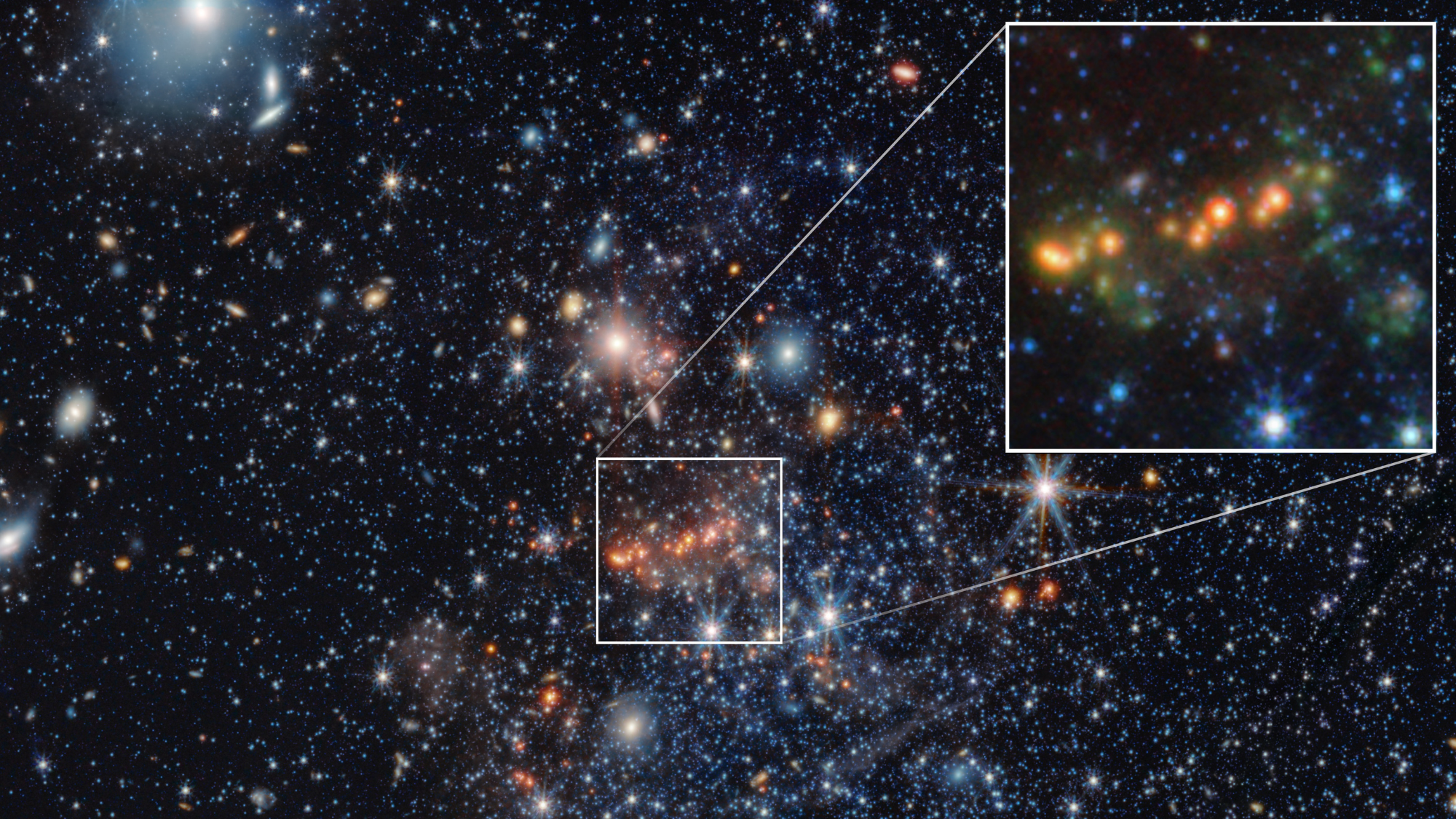
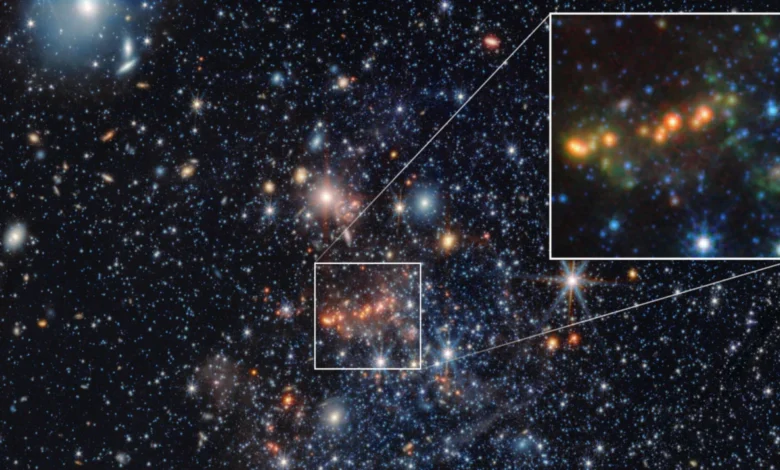
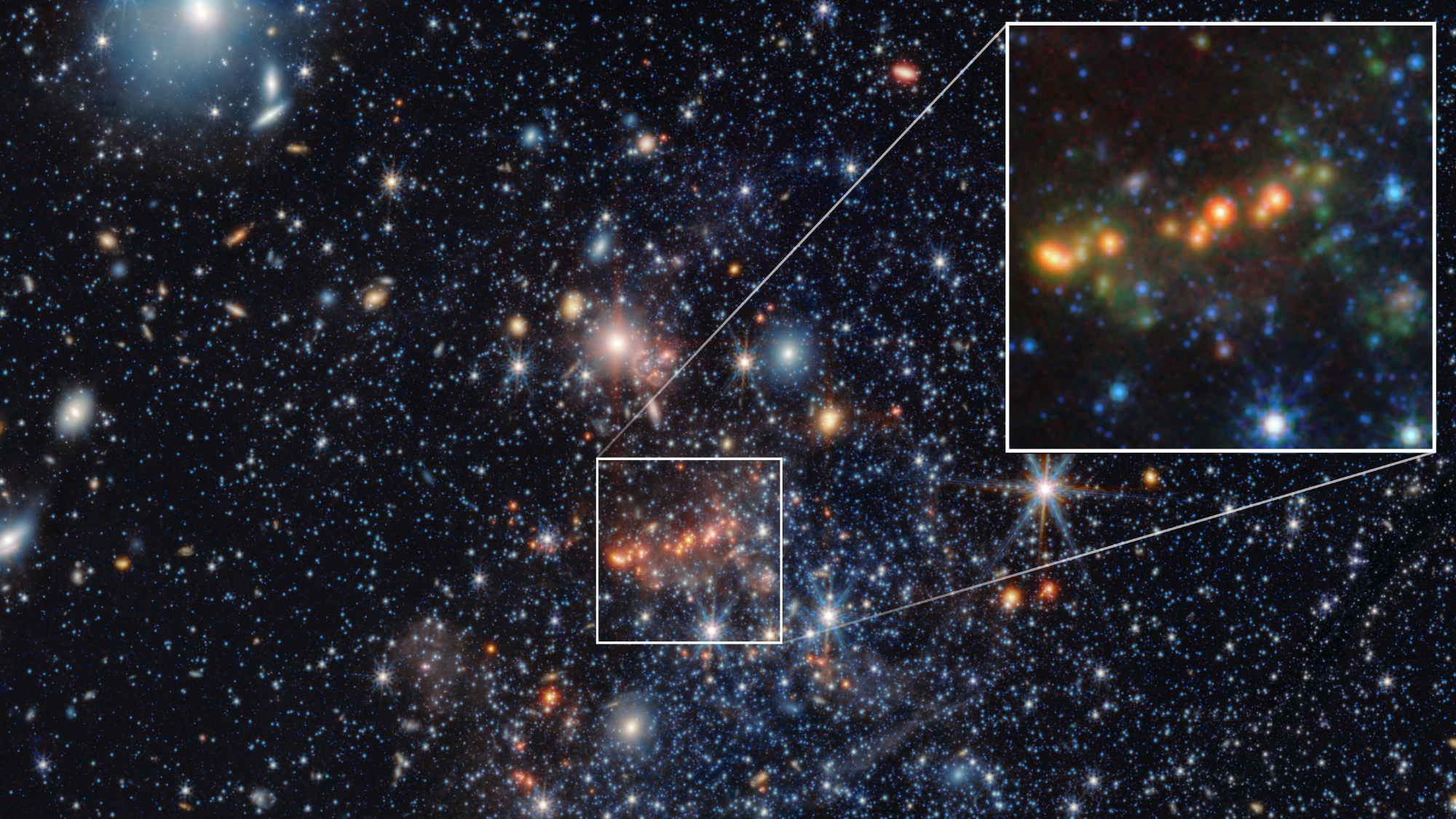
Gavetti and his team leveraged the unprecedented resolution and sensitivity of JWST’s NIRCam and MIRI to map the entire population of AGB stars within Sextans A. Their detailed observations yielded a crucial insight: while the vast majority – approximately 90% – of the AGB stars they studied were not enveloped in significant dust shells, a distinct population of around 20 AGB stars stood out. These particular stars were found to be deeply embedded within thick envelopes of dust, unequivocally identifying them as prolific "dust factories."
Further analysis of these dust-enshrouded stars provided even more specific data. The researchers determined that these active dust producers had formed between 2 billion and 3 billion years ago. Crucially, they originated from stars with an initial mass approximately 1.5 times that of our Sun. This finding is highly significant because it pinpoints a specific type of star – intermediate-mass AGB stars with a particular initial mass – as a primary candidate for early universe dust production. This discovery suggests that even in environments with very low metallicity, such stars were capable of efficiently manufacturing and expelling significant quantities of dust into the interstellar medium.
Implications for Cosmic Evolution and Future Research
This research represents a major leap forward in our understanding of how the universe transitioned from its pristine, metal-poor state to the chemically rich cosmos we observe today. By identifying these specific AGB stars as crucial early dust factories, the study helps refine theoretical models of galaxy evolution, particularly concerning the chemical enrichment and dust budgets of nascent galaxies. The data provides empirical evidence that can be directly compared with simulations, allowing astronomers to test and improve their understanding of stellar evolution in metal-poor environments.
Flavia Dell’Agli, another team member from INAF, underscored the transformative impact of the JWST. "The JWST allows us to observe in unprecedented detail environments that until a few years ago were beyond our reach," Dell’Agli remarked. "The value of these data lies not only in the images, but in the ability to compare them with theoretical models and verify how correctly they describe the evolution of stars." This synergy between cutting-edge observation and theoretical modeling is essential for pushing the boundaries of astrophysical knowledge.
The implications of this discovery extend beyond merely enriching the interstellar medium. Cosmic dust plays a critical role in the subsequent formation of stars and planets. Dust grains act as cooling agents in molecular clouds, facilitating their collapse under gravity to form new stars. They also serve as condensation nuclei for the formation of planets in protoplanetary disks around young stars. Therefore, understanding the origins of this early dust directly informs our comprehension of how the first planetary systems, and potentially the first abodes for life, came into existence.
This groundbreaking study, published on Monday, July 20, in The Astrophysical Journal, opens new avenues for future research. Astronomers will now seek to apply these findings to more distant, truly primordial galaxies observed directly by JWST, attempting to detect similar dust-producing AGB populations. Further observations of other metal-poor dwarf galaxies will also be vital to confirm and generalize these findings. The universe’s grand narrative of chemical enrichment, from the simplicity of hydrogen and helium to the complexity of life-sustaining elements, is slowly but surely being pieced together, one star and one galaxy at a time, thanks to instruments like the James Webb Space Telescope. The journey to fully map the cosmic supply chain of elements continues, with Sextans A providing a crucial guidepost from the past.