
Trump Asks Us Supreme Court Allow Mass Federal Layoffs
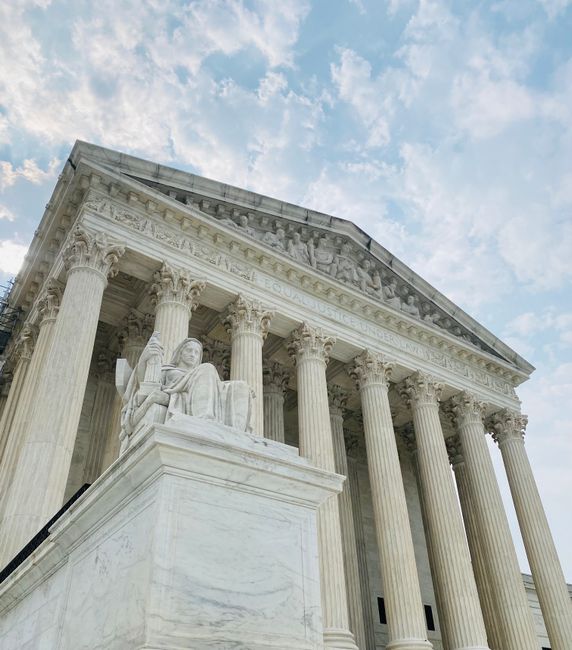
Donald Trump Seeks Supreme Court Green Light for Mass Federal Layoffs, Raising Alarm Over Labor Rights and Government Functionality
The question of whether former President Donald Trump can initiate mass federal layoffs, bypassing traditional civil service protections, has landed before the U.S. Supreme Court, igniting a contentious debate with profound implications for federal employees, government operations, and the very structure of public service. At the heart of this legal battle lies a challenge to a policy that, if upheld by the highest court, could fundamentally alter the employment landscape for millions of federal workers, potentially granting the executive branch unprecedented power to dismiss large swathes of the federal workforce without the established due process safeguards. This legal maneuver, rooted in a reinterpretation of presidential authority and a desire to reshape the federal bureaucracy, has drawn sharp criticism from labor unions, government watchdogs, and civil rights advocates who warn of a dismantling of experienced civil service and a chilling effect on governmental competence.
The legal impetus for this potential wave of federal layoffs stems from actions taken during the Trump administration, specifically the establishment of a new category of federal employees designated as "Schedule F." This designation, created by executive order in October 2020, aimed to reclassify tens of thousands of federal employees, particularly those in policy-making or sensitive positions, into a new employment category. Crucially, Schedule F would remove these employees from the protections afforded by the traditional competitive service, including protections against arbitrary dismissal, the requirement for just cause in disciplinary actions, and established grievance procedures. The stated rationale behind Schedule F was to enhance presidential accountability and ensure that the federal workforce was more responsive to the policy directives of the elected administration. Proponents argued that the existing civil service system, established in the late 19th century to combat patronage and political cronyism, had become too rigid and insulated, hindering the ability of presidents to implement their agendas effectively. They posited that a more flexible system would allow for quicker removal of underperforming or politically misaligned employees, thereby streamlining government operations and improving efficiency.
However, the creation of Schedule F was immediately met with fierce opposition. Critics argued that it was an unconstitutional overreach of executive power, designed not to improve efficiency but to politicize the federal workforce and purge perceived opponents. The core legal argument against Schedule F centers on the Administrative Procedure Act (APA) and the Civil Service Reform Act (CSRA). Opponents contend that the executive order, by fundamentally altering the employment status of a vast number of federal workers without explicit congressional authorization and bypassing established statutory protections, violated these landmark pieces of legislation. The APA generally requires federal agencies to follow specific rulemaking procedures, including public notice and comment periods, before implementing significant policy changes that affect the public or regulated entities. While the precise application of the APA to internal personnel matters is complex, critics argue that the sweeping nature of Schedule F and its potential impact on the functioning of government warranted such procedural safeguards. The CSRA, enacted in 1978, codified many of the protections for federal employees, establishing a comprehensive framework for personnel management, including adverse action procedures and appeals processes. The reclassification of employees under Schedule F was seen by many as a direct attempt to circumvent these protections, effectively dismantling the merit-based system that has been a cornerstone of federal employment for over a century.
The legal challenge to Schedule F has wound its way through the federal court system, with lower courts issuing conflicting rulings. A significant victory for those opposing Schedule F came in November 2023 when a federal judge in Washington D.C. issued a preliminary injunction blocking the implementation of the policy. This injunction was based on the argument that the executive order likely violated the APA because it was enacted without the required notice-and-comment rulemaking process. The judge’s decision highlighted concerns that the order represented a significant policy change with broad implications, thus necessitating public input. This ruling, however, was appealed, leading the case to the Supreme Court. The Supreme Court’s decision to hear the case signifies the gravity of the legal questions involved and the potential for a precedent-setting ruling on the scope of presidential power over the federal workforce. The arguments before the Supreme Court are expected to delve deep into the interpretation of presidential authority, the separation of powers, and the balance between executive discretion and the protection of civil servants.
The legal arguments presented by the Trump campaign and its allies at the Supreme Court are likely to emphasize the broad inherent powers of the President as the chief executive. They will likely argue that the President has the ultimate authority to manage the executive branch and ensure its loyalty and responsiveness. The creation of Schedule F, from this perspective, is a legitimate exercise of that authority, aimed at achieving efficient and effective governance. Lawyers for the former president may contend that the CSRA and other civil service laws were not intended to create an unassailable bureaucracy, but rather to establish a framework for professional management that the President, as the head of the executive branch, can refine and adapt. They might also argue that the APA’s procedural requirements are not applicable to internal personnel decisions of this nature, especially when framed as an exercise of presidential constitutional authority. The concept of "at-will" employment, often associated with the private sector, might be invoked metaphorically to underscore the idea that the executive branch should have greater flexibility in staffing to align with the President’s vision.
Conversely, the arguments against Schedule F will likely focus on the statutory protections established by Congress and the potential for abuse of power. Attorneys for the opposing side will emphasize that Congress, through legislation like the CSRA, has deliberately created a system designed to insulate federal employees from political reprisal and to ensure a professional, non-partisan civil service. They will argue that the executive order represents an end-run around these carefully crafted legislative protections, effectively undermining the merit system principles that are fundamental to good governance. The argument that Schedule F would lead to a politicized and less competent federal workforce will be central. Critics will point to the potential for mass firings based on political affiliation or dissent rather than performance, leading to a loss of institutional knowledge and expertise. The chilling effect on whistleblowers and those who might need to provide objective advice to policymakers, fearing for their jobs, will also be a significant concern raised. Furthermore, the precedent set by such a ruling could have far-reaching implications for the independence of various federal agencies and their ability to carry out their statutory mandates without undue political interference.
The potential consequences of the Supreme Court allowing mass federal layoffs under a policy like Schedule F are significant and multifaceted. For federal employees, the immediate impact would be a drastic reduction in job security. The established protections against arbitrary dismissal, which have long been a hallmark of federal service, could be significantly weakened or eliminated for a large segment of the workforce. This could lead to widespread fear and uncertainty, potentially driving experienced and talented individuals away from public service. The ability to recruit and retain a high-caliber workforce could be severely hampered if the prospect of politically motivated terminations becomes a reality. From a governmental functionality perspective, the mass dismissal of experienced employees could lead to a significant disruption in services. The loss of institutional memory and specialized knowledge could impair the effectiveness of agencies tasked with critical functions, from national security to environmental protection to economic regulation. The argument that Schedule F would lead to a more efficient government is contested, with many believing that the disruption caused by large-scale dismissals and the subsequent need to rehire and retrain would be profoundly inefficient and costly.
Moreover, the broader implications for the rule of law and democratic governance are substantial. A federal workforce that is perceived as beholden to the political whims of the executive, rather than dedicated to impartial public service, could erode public trust in government institutions. The principle of a professional, merit-based civil service is designed to ensure continuity and stability in government operations, regardless of changes in political administration. Allowing for mass layoffs without robust procedural safeguards could undermine this principle, leading to a more politicized and less stable government. The debate also touches upon the fundamental question of the balance of power between the executive and legislative branches. Congress has enacted laws to govern the federal workforce, and a ruling that significantly expands presidential power to override these laws could have lasting effects on the separation of powers.
The Supreme Court’s decision in this case will be closely watched by legal scholars, labor organizations, government employees, and the public at large. It has the potential to reshape the federal employment landscape for decades to come, influencing the nature of public service, the relationship between the executive branch and its employees, and the overall effectiveness and integrity of the federal government. The arguments presented will illuminate fundamental questions about presidential authority, congressional intent in civil service reform, and the enduring principles of meritocracy and due process in public employment. The outcome will undoubtedly have a profound and lasting impact on the future of the federal workforce and the machinery of American governance. The intricacies of the legal arguments, the potential for broad policy shifts, and the underlying principles of fair employment practices make this case one of the most significant labor and administrative law challenges to reach the Supreme Court in recent memory. The nation awaits a decision that will define the boundaries of executive power in managing the vast and vital federal bureaucracy.
