
Cfr President Michael Froman Interview
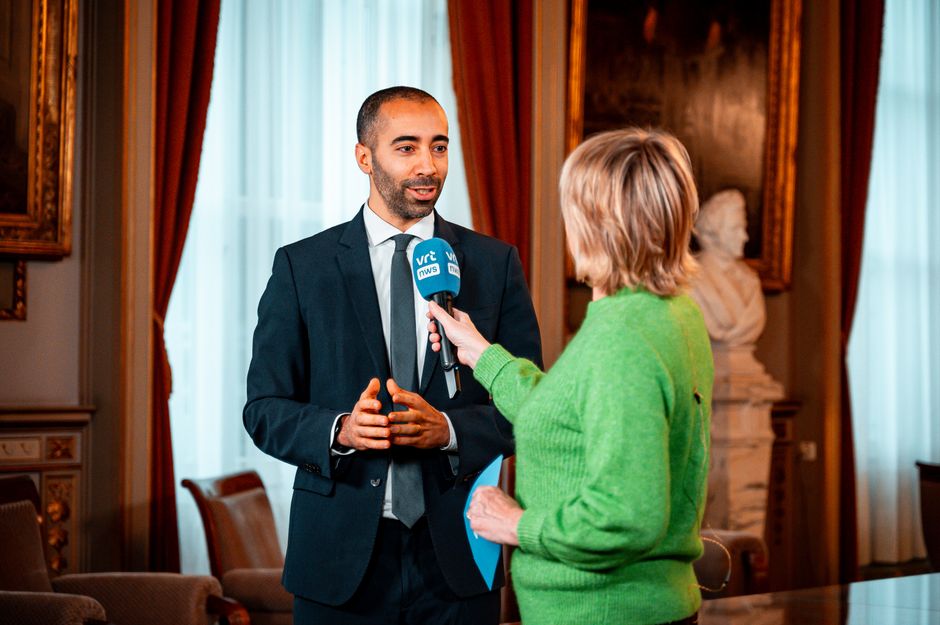
CFR President Michael Froman’s Insights: Navigating Global Economic and Geopolitical Complexities
Council on Foreign Relations (CFR) President Michael Froman’s recent engagements offer a critical lens through which to understand the evolving landscape of international economics and geopolitics. His discussions, often framed within the context of CFR’s influential convening power and research agenda, highlight key challenges and opportunities facing the United States and the global community. Froman’s perspective, shaped by his extensive experience in government and international finance, consistently emphasizes the interconnectedness of economic stability, democratic governance, and national security. This analysis delves into the core themes emerging from his public statements and interviews, focusing on areas such as the future of globalization, the strategic competition with China, the imperative of international cooperation, and the role of technology in shaping global affairs.
A central pillar of Froman’s discourse revolves around the complex and often contested nature of globalization. While acknowledging the dislocations and inequalities that have accompanied its rise, he often articulates a pragmatic vision for its future, one that seeks to harness its benefits while mitigating its drawbacks. This involves a recognition that globalization is not a monolithic force but a multifaceted phenomenon shaped by policy choices and technological advancements. Froman consistently points to the need for domestic policies that ensure a more equitable distribution of globalization’s gains, including investments in workforce development, education, and social safety nets. He argues that a failure to address these domestic concerns can fuel protectionist sentiments and undermine public support for open international engagement. Furthermore, he highlights the evolving nature of global supply chains, their resilience, and the increasing importance of diversification in the face of geopolitical risks. His emphasis on this aspect underscores the shift from a purely efficiency-driven model of globalization to one that prioritizes security and stability, a departure from the trends of the late 20th and early 21st centuries. This recalibration of globalization’s trajectory is not about a complete reversal but a strategic adaptation to a more volatile and multipolar world order.
The strategic competition with China emerges as a recurring and significant theme in Froman’s analyses. He consistently frames this relationship not as an inevitable conflict, but as a complex challenge requiring a sophisticated and multifaceted approach. Froman’s insights often pivot on the economic dimensions of this competition, particularly concerning trade practices, intellectual property rights, and technological dominance. He advocates for a strategy that combines assertive measures to counter unfair competition with a continued, albeit carefully managed, engagement in areas of mutual interest. This nuanced perspective rejects simplistic narratives of decoupling and instead emphasizes the need for a strategic recalibration of the U.S.-China economic relationship. Key to this recalibration, in Froman’s view, is the strengthening of alliances and partnerships, creating a united front to address China’s assertive economic behavior. He stresses the importance of reinforcing international norms and institutions, arguing that a rules-based order is essential for maintaining global economic stability and preventing a descent into a more fragmented and protectionist world. His articulation often includes the need for significant investments in American innovation and competitiveness, ensuring that the U.S. remains at the forefront of technological advancement and possesses the economic resilience to navigate this competitive landscape effectively.
Froman’s extensive experience in international diplomacy and finance invariably leads him to emphasize the indispensable role of international cooperation in addressing global challenges. He frequently articulates a strong defense of multilateral institutions, such as the World Trade Organization (WTO) and the International Monetary Fund (IMF), as crucial platforms for fostering stability and shared prosperity. He acknowledges the imperfections and areas for reform within these institutions but consistently argues that their erosion or abandonment would lead to a more dangerous and less predictable world. His discussions often highlight the interconnected nature of contemporary threats, from climate change and pandemics to economic instability and cyber warfare, arguing that no single nation can effectively address these issues in isolation. This necessitates a recommitment to diplomacy, dialogue, and collective action. Froman’s advocacy for strengthened international cooperation is not a call for a return to a past era of global governance but a forward-looking vision that recognizes the evolving nature of global challenges and the necessity of adapting cooperative frameworks to meet them. This includes fostering new forms of cooperation, perhaps through flexible coalitions or issue-specific partnerships, to tackle emerging threats effectively.
The transformative impact of technology on global economics and geopolitics is another area that Froman frequently addresses. He views technological innovation as a double-edged sword, capable of driving unprecedented growth and connection, but also of exacerbating existing inequalities and creating new vulnerabilities. Froman’s insights often focus on the strategic implications of emerging technologies, such as artificial intelligence, quantum computing, and biotechnology. He stresses the importance of responsible innovation, emphasizing the need for robust ethical frameworks, transparent governance, and international norms to guide the development and deployment of these powerful tools. Froman’s discussions often touch upon the digital divide, both within and between nations, and the imperative of ensuring equitable access to technological benefits. He also highlights the growing threat of cyber warfare and the need for enhanced cybersecurity cooperation to protect critical infrastructure and sensitive data. Furthermore, he often discusses the role of technology in shaping the future of work, underscoring the need for proactive measures to equip workforces with the skills necessary to adapt to a rapidly changing economic landscape.
In examining Froman’s pronouncements, a consistent thread of pragmatism and a deep understanding of the complexities of international relations emerge. He eschews ideological purity in favor of evidence-based analysis and a focus on tangible outcomes. His advocacy for a robust and engaged America on the global stage is underpinned by a belief that U.S. leadership, when exercised effectively and in concert with allies, is essential for promoting a stable and prosperous international order. This leadership, in Froman’s view, is not about unilateral action but about the strategic deployment of economic, diplomatic, and military power in a manner that advances shared interests and upholds international norms. He consistently emphasizes the importance of investing in American institutions, both domestically and internationally, to maintain its competitive edge and its capacity to influence global events. This includes fostering a dynamic domestic economy, strengthening its democratic institutions, and actively participating in and reforming international organizations.
The future of global economic governance is a critical concern for Froman. He often advocates for reforms to international financial institutions to better reflect the changing global economic landscape and to address emerging challenges, such as climate finance and sovereign debt. His remarks frequently highlight the need for greater inclusivity in global economic decision-making, ensuring that developing countries have a stronger voice and a greater stake in the international economic system. Froman’s perspective on this issue is rooted in the understanding that a more equitable global economic system is not only morally imperative but also strategically beneficial, fostering greater stability and reducing the risk of global economic crises. He often points to the need for innovative financial mechanisms and partnerships to mobilize private capital for public good, particularly in areas like sustainable development and infrastructure investment.
Moreover, Froman’s analysis often underscores the inextricable link between economic policy and national security. He argues that economic strength is a cornerstone of national security, providing the resources and resilience necessary to address a wide range of threats. Conversely, economic vulnerabilities, such as overreliance on adversarial states for critical goods or the erosion of domestic industrial capacity, can pose significant national security risks. This perspective informs his calls for strategic investments in key industries, supply chain resilience, and technological innovation, all of which he views as essential for safeguarding U.S. interests in an increasingly competitive world. Froman’s emphasis on this nexus highlights a strategic understanding that economic policy is not merely about growth and prosperity, but about power, influence, and the ability to shape the global environment.
In conclusion, CFR President Michael Froman’s public engagements offer a vital roadmap for navigating the intricate challenges of the 21st century. His emphasis on a modernized and resilient globalization, a strategic and nuanced approach to competition with China, the imperative of international cooperation, and the responsible development of technology provides a framework for understanding the complex interplay of economics and geopolitics. Froman’s consistent advocacy for a pragmatic, evidence-based approach, coupled with a deep commitment to American leadership within a multilateral framework, positions his insights as essential for policymakers, business leaders, and informed citizens alike. His perspective reinforces the understanding that economic prosperity, democratic values, and global security are not separate pursuits but deeply intertwined elements of a stable and flourishing international order. The ongoing dialogue fostered by the Council on Foreign Relations, with Froman at its helm, remains a critical platform for grappling with these complex issues and charting a course towards a more secure and prosperous future.
