
Auto Companies Face Shortages Due Chinas Rare Earth Restrictions
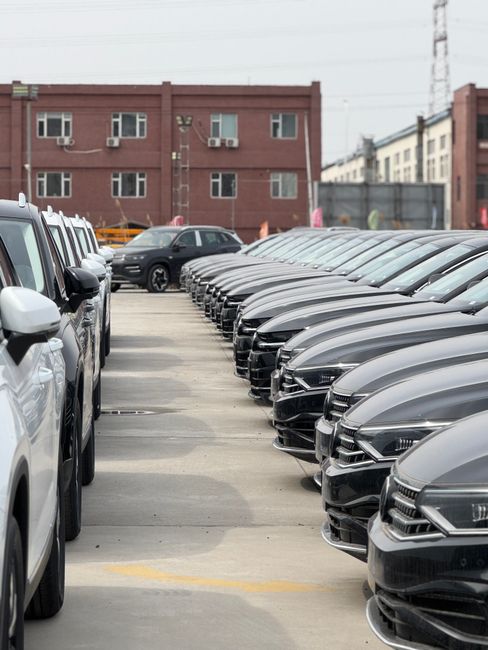
China’s Rare Earth Grip: How Auto Companies Face Mounting Shortages Due to Restrictive Policies
The global automotive industry is teetering on the precipice of a significant crisis, not from a sudden surge in demand or a widespread production halt, but from a strategic chokehold exerted by China on its crucial supply of rare earth elements. These 17 metallic elements, often referred to as "the building blocks of modern technology," are indispensable to the manufacturing of electric vehicles (EVs) and a growing number of advanced automotive components. As China, the world’s dominant producer and processor of rare earths, tightens its export controls and prioritizes domestic consumption, auto manufacturers worldwide are grappling with escalating shortages, soaring prices, and the looming threat of production line stagnation. This geopolitical leverage, wielded with increasing assertiveness by Beijing, is forcing a fundamental re-evaluation of global supply chains and sparking an urgent scramble for alternative sources and technological solutions.
The dependency on rare earths is not a hypothetical concern; it is an immediate and tangible reality for the automotive sector. Electric motors, the heart of every EV, rely heavily on powerful permanent magnets, often made from neodymium, praseodymium, and dysprosium – all rare earth elements. These magnets are crucial for achieving the high power density and efficiency demanded by modern electric powertrains. Beyond the motor, rare earths find their way into catalytic converters, crucial for reducing emissions in internal combustion engine vehicles, as well as in advanced driver-assistance systems (ADAS) such as radar and lidar, which are becoming increasingly standard in new vehicles. The sheer volume of these applications within a single automobile underscores the critical nature of a consistent and affordable rare earth supply. As the automotive world accelerates its transition towards electrification, the demand for these specialized minerals is projected to skyrocket, amplifying the impact of any supply disruption.
China’s preeminence in the rare earth market is a decades-long phenomenon, cultivated through strategic investment, a more lenient regulatory environment for mining and processing compared to many Western nations, and a deliberate focus on building a comprehensive industrial ecosystem around these critical materials. For years, China has accounted for the vast majority of global rare earth mine production and, even more significantly, for an even larger share of the world’s rare earth processing and refining capacity. This dominance means that even if other countries were to ramp up mining operations, they often lack the sophisticated downstream processing capabilities to turn raw ore into usable magnetic materials or alloys. This vertical integration has granted China unparalleled control over the entire rare earth supply chain, from extraction to finished product.
Recent policy shifts by the Chinese government have signaled a departure from its previous, more open export policies. Measures such as imposing export quotas, increasing export tariffs, and prioritizing domestic demand for its rapidly expanding EV industry and high-tech sectors are now a reality. The stated justifications often revolve around national security, resource conservation, and the desire to retain a technological edge. However, the effect is undeniable: reduced availability of rare earths on the international market, leading to price volatility and outright shortages. These policies are not arbitrary; they are a deliberate exercise of economic power designed to benefit China’s strategic industries and to exert influence on the global stage. The automotive industry, a significant consumer of these materials, finds itself caught in the crossfire of these geopolitical maneuvers.
The consequences for the auto industry are multifaceted and severe. Firstly, the most direct impact is on production volumes. Without sufficient rare earth magnet precursors, manufacturers simply cannot build electric motors at the scale required to meet sales targets. This translates into extended lead times for EVs, customer frustration, and lost revenue. Several automakers have already publicly acknowledged the impact of rare earth shortages on their production schedules, with some being forced to temporarily halt or slow down assembly lines. This ripple effect extends beyond EVs, impacting the production of conventional vehicles equipped with advanced emission control systems or ADAS.
Secondly, the scarcity of rare earths has driven prices to unprecedented levels. The cost of key rare earth oxides has seen dramatic increases, directly impacting the manufacturing cost of vehicles. This price surge presents a difficult dilemma for automakers: absorb the increased costs, thereby reducing profit margins, or pass them onto consumers, potentially making EVs less affordable and hindering the transition to sustainable transportation. For an industry already navigating the high investment costs associated with electrification, this adds another significant financial burden. The economic viability of producing certain high-performance EVs or those with advanced autonomous features could be jeopardized if rare earth prices remain elevated or continue to climb.
Thirdly, the uncertainty surrounding future rare earth availability fosters a climate of strategic instability. Automakers are finding it increasingly difficult to secure long-term supply contracts with predictable pricing and guaranteed volumes. This lack of visibility makes long-range production planning and investment decisions extremely challenging. The ability to confidently forecast and procure essential components is a cornerstone of efficient manufacturing, and the current rare earth situation undermines this fundamental requirement. This uncertainty also makes it difficult for new players to enter the EV market or for existing ones to scale up their operations, potentially stifling innovation and competition.
In response to these mounting pressures, the global automotive industry is embarking on a multi-pronged strategy. A primary focus is on diversifying supply chains. This involves actively seeking out and investing in rare earth mining and processing operations outside of China. Countries like Australia, the United States, Canada, and certain European nations are reviewing their own rare earth reserves and exploring ways to revitalize or establish domestic mining and refining capabilities. However, this is a long and complex undertaking. Establishing new mines can take years, and building the sophisticated processing infrastructure to rival China’s capacity requires substantial investment and expertise. Furthermore, environmental regulations and public perception surrounding mining can pose additional hurdles.
Another crucial avenue of response is technological innovation. Automakers and their suppliers are investing heavily in research and development to reduce their reliance on rare earth magnets altogether or to develop alternatives that utilize less critical materials. This includes exploring different types of electric motor designs, such as induction motors or switched reluctance motors, which can operate without permanent magnets or with significantly reduced magnet content. Another area of focus is the development of new magnetic materials that use more abundant elements or that are easier to recycle. Furthermore, advancements in recycling technologies for rare earth elements from end-of-life vehicles are gaining prominence, aiming to create a circular economy for these valuable resources. The ability to efficiently extract and reuse rare earths from discarded EVs could significantly alleviate future supply pressures.
The geopolitical implications of China’s rare earth policies are far-reaching. The situation highlights the vulnerability of global industries to supply chain disruptions stemming from concentrated resource control. It has spurred calls for greater international cooperation and strategic stockpiling of critical minerals by governments. The United States, for instance, has been actively working to re-establish its domestic rare earth processing capabilities and to secure supply agreements with allied nations. The European Union has also identified rare earths as a strategic priority and is implementing policies to boost domestic production and reduce dependence on single sources. This geopolitical dimension underscores that the rare earth challenge is not solely an industrial problem but a matter of national and economic security for many countries.
The long-term outlook for the automotive industry’s rare earth supply remains uncertain. While efforts to diversify and innovate are underway, the transition will be gradual and fraught with challenges. China’s continued dominance in the market, coupled with its strategic policy objectives, means that supply constraints and price volatility are likely to persist for the foreseeable future. Automakers will need to navigate this complex landscape with agility, investing in both immediate solutions and long-term strategies to secure their future production capabilities. The current crisis serves as a stark reminder of the interconnectedness of global supply chains and the profound impact that resource control can have on technological advancement and economic stability. The automotive industry’s ability to overcome this challenge will be a testament to its resilience, adaptability, and commitment to innovation. The era of readily available and predictable rare earth supply, once taken for granted, is clearly over, forcing a fundamental recalibration of how vehicles are designed, manufactured, and powered.
