
Ecb Cut Rates Again Case Builds Summer Pause
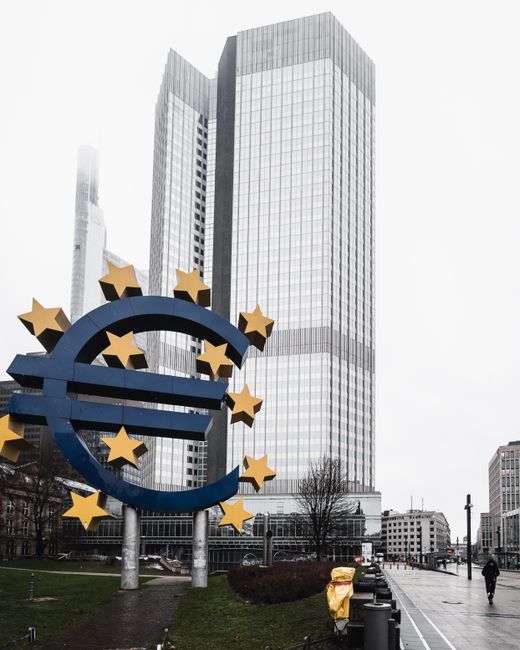
ECB Cuts Rates Again: Case Builds for Summer Pause
The European Central Bank (ECB) has once again signaled its intent to ease monetary policy, with a widely anticipated interest rate cut confirmed. This move, however, is not necessarily a precursor to an aggressive loosening cycle. Instead, it sharpens the focus on a potential summer pause, a scenario gaining traction as economic data presents a mixed picture across the Eurozone. The central bank’s decision-making process is increasingly influenced by diverging inflation trends, the resilience of the labor market, and the ongoing geopolitical uncertainties that continue to cloud the economic outlook. Understanding the nuances behind this latest cut and the rationale for a subsequent pause is crucial for investors, businesses, and policymakers navigating the complex Eurozone economic landscape.
The ECB’s decision to lower its key interest rates reflects a persistent commitment to achieving its 2% inflation target. While headline inflation has moderated significantly from its peaks, core inflation, which excludes volatile energy and food prices, has proven stickier. This persistence has been a key concern for the ECB, prompting a cautious approach to further rate reductions. The latest cut can be interpreted as a measured response to this disinflationary trend, aiming to support economic activity without reigniting inflationary pressures. The central bank’s forward guidance, or lack thereof regarding the pace and magnitude of future cuts, underscores this delicate balancing act. Markets are now dissecting every statement for clues about the ECB’s future intentions, with the possibility of a sustained period of holding rates steady after this initial reduction becoming increasingly plausible.
Several factors are contributing to the growing expectation of a summer pause. Firstly, while inflation is declining, it is not yet uniformly at the target level across all member states. Certain countries, particularly in Southern Europe, continue to experience higher inflation rates due to factors like services inflation and wage pressures. The ECB’s mandate is for the entire Eurozone, meaning that localized inflationary dynamics can influence the broader policy stance. A rapid series of cuts could risk exacerbating these regional disparities, leading to unintended consequences. The central bank is keenly aware of the heterogeneity within the Eurozone economy and will likely tread carefully to avoid creating new imbalances.
Secondly, the Eurozone labor market has demonstrated remarkable resilience. Despite the slowdown in economic growth and the higher interest rate environment, unemployment rates remain at or near record lows. Wage growth, while showing signs of moderation, continues to be a significant factor for services inflation. The ECB will be closely monitoring wage settlements and their pass-through to prices. A robust labor market can support consumer spending, but if coupled with persistent wage pressures, it can also contribute to sticky inflation. This is a crucial reason why a pause might be necessary – to assess the impact of current wage trends on the inflation outlook before committing to further rate reductions.
Thirdly, geopolitical risks remain a significant wildcard. The ongoing war in Ukraine and broader geopolitical tensions continue to disrupt supply chains and influence energy prices, albeit to a lesser extent than in previous years. Any escalation or new geopolitical shock could quickly alter the inflation trajectory, necessitating a reassessment of monetary policy. The ECB, like other central banks, operates under conditions of considerable uncertainty, making a pause a prudent strategy to allow for greater clarity on these external risks before embarking on further policy adjustments. This allows the ECB to be more agile and responsive to unforeseen developments.
The economic outlook for the Eurozone presents a bifurcated picture. Manufacturing activity, particularly in Germany, has shown signs of stagnation and even contraction in some sectors, weighed down by global demand weakness and higher input costs. However, the services sector has generally proven more robust, supported by pent-up demand and the reopening of economies post-pandemic. This divergence creates a complex challenge for the ECB. A rate cut is intended to stimulate economic activity, but its impact might be more pronounced in certain sectors than others. The central bank will be looking at a range of indicators to gauge the breadth and depth of the economic recovery, and the presence of persistent weakness in key manufacturing hubs could temper expectations for a swift return to robust growth.
Furthermore, the transmission mechanism of monetary policy needs time to fully take effect. The impact of previous rate hikes is still working its way through the economy, influencing borrowing costs for businesses and consumers. Financial conditions have tightened, and the ECB will want to observe the full impact of these tighter conditions before easing further. A pause allows for a more thorough assessment of how the economy is responding to the cumulative effect of past policy decisions. This observational period is critical for ensuring that future policy actions are well-calibrated and avoid unintended consequences.
The debate surrounding a potential summer pause also hinges on the ECB’s inflation forecasting models. While headline inflation has fallen, the path for core inflation is less certain. Projections for core inflation will be closely scrutinized in upcoming ECB meetings. If forecasts suggest that core inflation will remain above target for an extended period, the justification for a prolonged pause will be strengthened. The ECB’s credibility is on the line, and it is unlikely to compromise its inflation target prematurely. The internal discussions within the Governing Council are likely to be intense, with differing views on the balance of risks between inflation and economic growth.
Moreover, the ECB’s communication strategy plays a significant role in shaping market expectations. The central bank has been at pains to emphasize its data-dependent approach, meaning that future policy decisions will be guided by incoming economic statistics. This data dependency, coupled with the current mixed economic signals, naturally lends itself to periods of policy recalibration and pauses. The absence of a strong commitment to a specific pace of cuts suggests a willingness to adapt to evolving circumstances. The market’s interpretation of this communication will be key.
The concept of a "summer pause" is not a formal monetary policy term but rather a market observation of potential policy inertia during the typically slower summer months, exacerbated by the ECB’s current data-dependent and cautious stance. It implies that after this initial rate cut, the ECB might hold its policy rate steady throughout the summer period, reassessing the economic landscape before considering further adjustments in the autumn. This allows for a period of observation and data collection without the immediate pressure to make further rate decisions.
The implications of a potential summer pause are manifold. For businesses, it suggests a continued period of elevated borrowing costs, albeit lower than at the peak of the tightening cycle. This could influence investment decisions and long-term planning. For consumers, it means that the cost of credit will likely remain relatively stable over the summer, impacting mortgage rates and loan repayments. For financial markets, it signals a period of relative stability in interest rate expectations, although underlying market sentiment will continue to be driven by inflation data and broader economic developments. The absence of aggressive easing could also mean that the Euro might find some support, as the interest rate differential with other major economies might narrow less dramatically than if the ECB were to embark on a rapid cutting cycle.
The ECB’s forward-looking statements are critical. Investors will be paying close attention to any hints about the duration of this potential pause and the conditions that would trigger further rate cuts or a reversal of policy. The Governing Council’s assessment of the balance of risks to inflation and growth will be the ultimate determinant. The nuanced approach taken by the ECB, acknowledging both disinflationary pressures and persistent core inflation, as well as the resilience of the labor market against a backdrop of geopolitical uncertainty, underscores the strategic thinking behind this latest rate cut and the growing probability of a subsequent summer pause. The economic narrative for the Eurozone in the coming months will likely be characterized by careful observation and a data-driven recalibration of monetary policy.
