Massive Oil and Gas Expansion in Democratic Republic of the Congo Threatens Pristine Rainforests and Endangered Great Apes

The Democratic Republic of the Congo (DRC) has moved forward with a controversial and expansive plan to open more than half of its landmass to oil and gas exploration, a decision that environmentalists warn could lead to an ecological catastrophe of global proportions. According to a comprehensive new report titled "Forests to Frontlines: Oil Expansion Threats in the DRC," published by Earth Insight in collaboration with several regional and international partners, the Congolese government is currently auctioning 52 oil blocks in addition to three previously awarded concessions. This initiative effectively places 306 million acres of intact tropical forest and vital wildlife habitat under the shadow of industrial extraction, threatening approximately 64 percent of the country’s pristine forest cover.
The DRC stands as one of the most ecologically significant nations on the planet, housing the vast majority of the Congo Basin, which is the world’s second-largest tropical rainforest after the Amazon. This region is not only a bastion of biodiversity but also a critical component of the Earth’s climate regulation system. The government’s pivot toward large-scale fossil fuel development marks a significant shift in policy that many experts believe contradicts the country’s stated international commitments to conservation and climate mitigation.
A Critical Sanctuary for Endangered Biodiversity
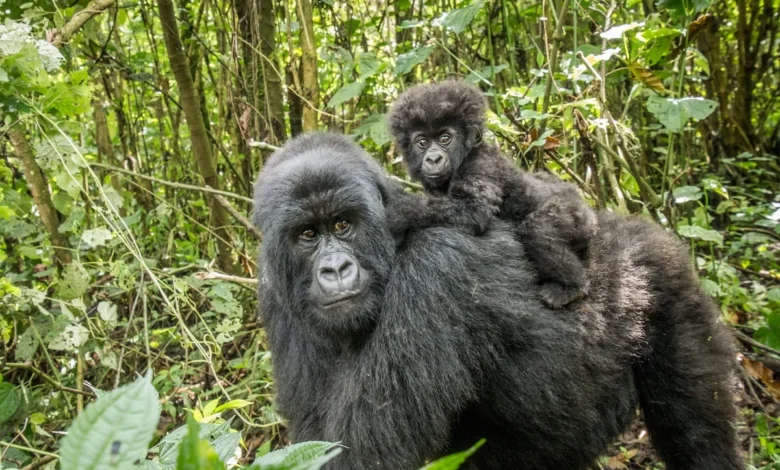
The Congo Basin is a unique sanctuary for several species found nowhere else on Earth. Among the most iconic are the mountain gorillas, eastern lowland gorillas, and bonobos—our closest living relatives. The Earth Insight report highlights that the proposed oil blocks overlap significantly with critical habitats for these great apes. In particular, the Virunga National Park, a UNESCO World Heritage site and the oldest national park in Africa, has long been a flashpoint for conflict between conservation and extraction.
The expansion of oil and gas activities into these areas involves more than just the risk of spills. The development of infrastructure—roads, pipelines, and drilling pads—requires the fragmentation of once-continuous forest canopies. Such fragmentation disrupts migratory paths, increases human-wildlife conflict, and opens previously inaccessible areas to illegal poaching and logging. For species like the eastern lowland gorilla, whose populations have already been decimated by decades of civil unrest and habitat loss, the introduction of industrial oil operations could be the final blow toward extinction.
Beyond the great apes, the DRC’s ecosystems support elephants, endemic bird species, and thousands of unique plant species. These forests are not merely collections of trees; they are complex, interdependent webs of life that provide essential ecosystem services, including water purification, pollination, and local climate cooling.
The Carbon Bomb: Peatlands and Global Climate Stakes
One of the most alarming aspects of the oil licensing round is its intersection with the Cuvette Centrale, the largest tropical peatland complex in the world. Peatlands are highly efficient carbon sinks, and the Cuvette Centrale alone is estimated to store approximately 30 gigatons of carbon—an amount equivalent to roughly three years of total global fossil fuel emissions.
The Earth Insight data reveals that the majority of these peatlands are now designated as part of oil blocks. The process of oil exploration and extraction in these waterlogged terrains requires drainage and land clearing. When peatlands are drained or disturbed, they cease to absorb carbon and instead begin to release their massive stored reserves into the atmosphere. Scientists warn that disturbing the Cuvette Centrale could trigger a "carbon bomb," undermining global efforts to limit warming to 1.5 degrees Celsius under the Paris Agreement.
Humanitarian Concerns and Indigenous Rights
The impact of the government’s auction extends far beyond environmental degradation; it poses a direct threat to the livelihoods and cultural identities of an estimated 39 million people. Many of these individuals belong to forest-based and Indigenous communities who have served as the traditional custodians of the land for generations. These communities rely on the forests and river systems for food, medicine, and spiritual practices.
Pascal Mirindi, a campaign coordinator for Notre Terre Sans Pétrole (Our Land Without Oil), expressed the frustrations of many Congolese citizens regarding the lack of transparency and the apparent contradiction in government policy. Mirindi noted that while the government promotes initiatives like the Kivu-Kinshasa ecological corridor, it simultaneously auctions off the very land that constitutes those corridors. "We are reminding our leaders that the Congolese people are the primary sovereign," Mirindi stated. "We will not remain silent while certain people organize themselves to sell off our future."

The report stresses that the rights of local communities and Indigenous Peoples are often overlooked in the rush for resource extraction. There are concerns that the awarding of oil blocks will lead to land grabs, forced displacements, and the contamination of water sources, which would be devastating for populations that depend on subsistence fishing and farming.
Chronology of the Oil Auction and Policy Shift
The current crisis has been building for several years, reflecting a tension between the DRC’s economic aspirations and its role as a global "green lung."
- July 2022: The DRC government officially launched a licensing round for 30 oil and gas blocks. This move was met with immediate international outcry, as many of the blocks overlapped with protected areas and peatlands.
- 2023-2024: Despite diplomatic pressure from Western nations and environmental groups, the DRC maintained its "right to develop" its resources to alleviate poverty. During this period, the government expanded its technical assessments and prepared for a larger auction.
- 2025: The government significantly escalated its plans, bringing the total to 52 oil blocks and three gas blocks. This expansion now covers 53 percent of the country’s total land area.
- Present Day: International NGOs, including Earth Insight, the Rainforest Foundation UK, and local Congolese coalitions like CORAP, have intensified their calls for a total cancellation of the licensing round, citing the irreversible damage it would cause.
The "Green Corridor" Paradox
A particularly striking finding in the Earth Insight report is the overlap between oil blocks and the recently established Kivu-Kinshasa Green Corridor. This corridor was designed to be a flagship for sustainable development and ecological connectivity. However, the report finds that 72 percent of this corridor intersects with the newly designated oil blocks.
This overlap calls into question the credibility of the DRC’s climate solutions. By allowing fossil fuel exploration in a designated green zone, the government risks delegitimizing its conservation efforts and losing access to international climate finance. The ecological integrity of the corridor is compromised when the underlying land is slated for heavy industrial use.
Economic Justification vs. Long-term Sustainability
The Congolese government, led by various ministers over the last three years, has defended the auctions as a necessary step toward economic sovereignty. The DRC remains one of the world’s poorest countries despite its immense mineral and natural wealth. Officials argue that it is hypocritical for Western nations—many of whom built their wealth on fossil fuels—to tell the DRC to leave its oil in the ground without providing substantial financial compensation.
However, many economists and analysts point to the "resource curse" that has historically plagued the DRC. In many cases, large-scale extraction of oil and minerals has led to increased corruption, civil conflict, and environmental ruin rather than broad-based social progress. The Earth Insight report argues that the potential short-term revenue from oil blocks cannot outweigh the long-term loss of biodiversity, ecosystem services, and climate stability.
Anna Bebbington, a research manager at Earth Insight, highlighted the global implications: "Oil and gas development in these fragile ecosystems would have devastating impacts on biodiversity, communities, land rights and the global fight against climate change."
Broader Impact and Global Implications
The situation in the DRC is a litmus test for global environmental governance. As the world moves toward a transition to renewable energy, the expansion of fossil fuel frontiers into the heart of the world’s most sensitive rainforests represents a significant step backward.
The Earth Insight report proposes a series of urgent recommendations to avert this outcome:
- Immediate Cancellation: The DRC government and its international partners should cancel the 2025 licensing round and implement a permanent moratorium on hydrocarbon expansion in sensitive ecosystems.
- Upholding Rights: Legal frameworks must be strengthened to ensure that the Free, Prior, and Informed Consent (FPIC) of Indigenous Peoples and local communities is a prerequisite for any land-use decisions.
- Financial Realignment: International donors and financing institutions must align their support with the DRC’s biodiversity and climate commitments. This could include debt-for-nature swaps or increased funding for the Central African Forest Initiative (CAFI).
- Transparent Governance: There must be a guarantee of meaningful participation for civil society in environmental monitoring and decision-making to ensure transparency and accountability.
The fate of the Congo Basin rests on whether the DRC can find a path to development that does not involve the destruction of its most valuable natural assets. As the auction proceeds, the eyes of the international community remain fixed on Kinshasa, waiting to see if the "second lung" of the Earth will be preserved or paved over for the sake of oil.