Smart Returns to Urban Roots with the All-New #2 Electric Two-Seater Ahead of Paris Motor Show Debut

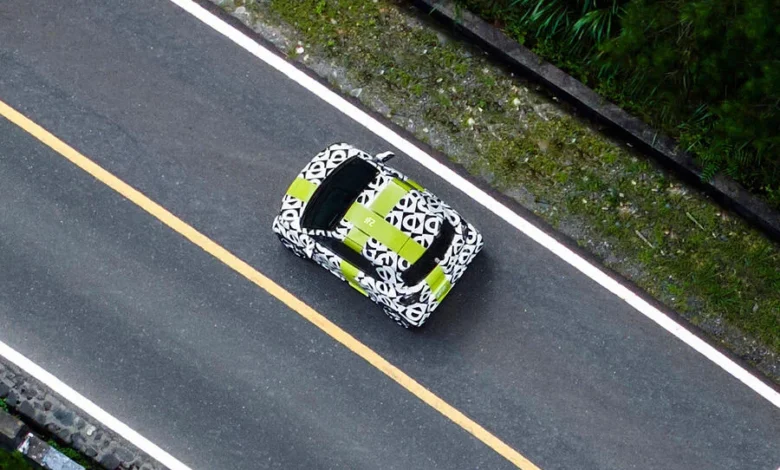
The automotive industry is preparing for a significant milestone in urban mobility as Smart, the joint-venture manufacturer co-owned by Geely and Mercedes-Benz, readies the final production version of its new #2 model. Set to be officially unveiled at the Paris Motor Show in October, the Smart #2 represents a strategic return to the brand’s foundational identity: the ultra-compact, two-seater city car. Following a period of diversification that saw the brand launch larger electric crossovers like the #1, the #3, and the recently announced #5, the #2 is positioned as the spiritual and technical successor to the iconic Smart Fortwo. With a scheduled arrival in UK dealerships by 2025, the vehicle aims to redefine the premium micro-car segment through what the company describes as "uncompromised urban capability."
A Strategic Pivot Back to the Micro-Car Segment
The introduction of the Smart #2 marks a pivotal moment in the brand’s modern history. For years, the Smart brand was synonymous with the Fortwo, a vehicle that revolutionized city parking and urban navigation upon its debut in the late 1990s. However, as the automotive market shifted toward SUVs and crossovers, Smart followed suit under its new joint-venture structure. The #1 and #3 models moved the brand into the competitive B-SUV and C-segment markets, while the upcoming #5 represents the largest vehicle ever to wear the Smart badge.
Despite this expansion, the company has maintained that its core mission remains rooted in solving urban congestion. The #2 is the physical manifestation of that commitment. Unlike its predecessor, the EQ Fortwo, which utilized a modified internal combustion engine (ICE) platform, the #2 is built from the ground up as a dedicated electric vehicle (EV). This shift allows for a more efficient use of space, better weight distribution, and the integration of advanced battery technology that was previously impossible in such a small footprint.
Engineering and the Bespoke Electric Compact Architecture
At the heart of the Smart #2 is the ‘Electric Compact Architecture’ (ECA), a bespoke platform developed by the Chinese automotive giant Geely. This architecture is specifically engineered to handle the unique stresses and packaging requirements of micro-mobility vehicles. While Geely has provided the engineering muscle and manufacturing infrastructure, the aesthetic and ergonomic direction of the #2 remains firmly under the stewardship of Mercedes-Benz’s design team.
The collaborative effort has resulted in a vehicle that prioritizes agility. One of the most striking technical specifications confirmed by the manufacturer is the vehicle’s turning circle of just 6.95 meters. For context, most standard hatchbacks require over 10 meters to complete a U-turn. This maneuverability is a direct result of the "wheels-at-the-corners" design philosophy, which pushes the axles to the absolute extremities of the chassis, minimizing overhangs and maximizing the wheelbase relative to the car’s overall length.
Dimensions and Market Positioning
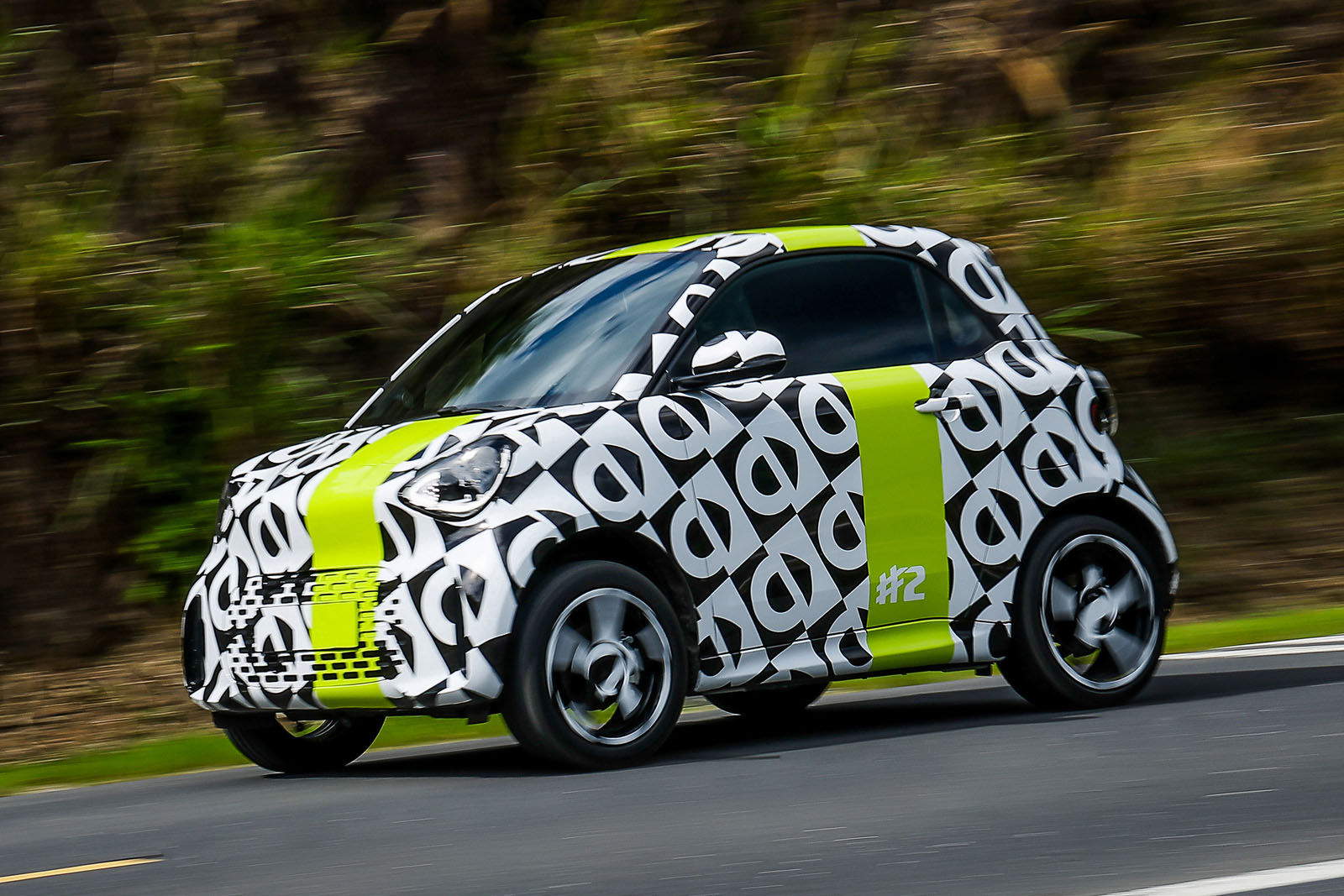
The Smart #2 prototype, recently seen in testing, measures approximately 2,792mm in length. This is roughly 100mm longer than the final generation of the Fortwo but significantly shorter than any other full-fledged electric passenger car currently on the market. By maintaining a length under 2.8 meters, the #2 reclaims its title as the shortest electric car in production, undercutting the Fiat 500e by nearly a full meter.
It is important to distinguish the Smart #2 from the burgeoning "quadricycle" market. Vehicles such as the Citroën Ami, the Opel Rocks Electric, and the Micro Microlino operate under different regulatory standards, often featuring limited top speeds, reduced safety requirements, and Spartan interiors. The Smart #2, by contrast, is a M1-category passenger car. This means it must meet rigorous global crash-test standards and offer performance levels suitable for highway use, thereby positioning it as a premium alternative to the minimalist quadricycles.
Performance, Range, and Charging Capabilities
While full technical specifications are being held for the Paris Motor Show, Smart has released several key performance indicators that suggest the #2 will be more than a "neighborhood electric vehicle." The company has confirmed a target range of 186 miles (approximately 300 kilometers) on a single charge. This figure is a substantial improvement over the previous EQ Fortwo, which struggled to reach 80 miles in real-world conditions.
Charging efficiency is another area where the #2 seeks to lead its segment. The vehicle will be capable of charging its battery from 10% to 80% in less than 20 minutes when using a DC fast charger. Furthermore, the inclusion of vehicle-to-load (V2L) capability allows the car to act as a mobile power bank, enabling owners to power external devices, such as laptops or camping equipment, directly from the vehicle’s main traction battery. This feature, typically reserved for larger EVs, highlights Smart’s intention to move the entry-level model upmarket.
Interior Innovation: The Return of the Bench Seat
The interior of the Smart #2 represents a radical departure from both the original Fortwo and the current #1 and #3 crossovers. Smart designers have focused on "brilliantly maximizing interior space," a goal achieved largely through the elimination of the traditional center console.
One of the most notable features is the replacement of individual front seats with a contoured bench seat. Smart claims this design choice frees up significant lateral space and creates a more "social" atmosphere within the cabin. While the original Smart cars were noted for their functional but often plastic-heavy interiors, the #2 aims for a premium aesthetic. The cabin will feature a "reduced to essence" minimalist layout, utilizing high-quality materials including leather upholstery and translucent surfaces. A two-tone gold and black paint scheme, seen on the concept version, is expected to be offered as a high-end trim option to cultivate a luxury feel.
Chronology of Development: From Concept to Production
The journey of the Smart #2 has been a rapid progression from an experimental concept to a production-ready vehicle:
- Early 2020: Geely and Mercedes-Benz finalize their 50/50 joint venture, Smart Automobile Co., Ltd., based in Ningbo, China.
- 2022-2023: Smart launches the #1 and #3, establishing a new design language and moving the brand into the premium EV space.
- April 2024: The Smart Concept #2 is unveiled at the Beijing Auto Show, showcasing the return to the two-seater format.
- July 2024: Camouflaged prototypes of the #2 are spotted undergoing rigorous urban and cold-weather testing in Europe and China.
- October 2024: Scheduled world debut of the production-ready Smart #2 at the Paris Motor Show.
- Early 2025: Official market launch and start of deliveries in China and select European markets, including the UK.
Official Perspectives and Industry Reactions
Smart executives have been vocal about the importance of the #2 in maintaining the brand’s heritage. A spokesperson for the brand noted that the #2 "elevates the city car beyond mere utility," suggesting that the vehicle is aimed at affluent urbanites who value both sustainability and style. "The #2 is not just a replacement for the Fortwo; it is a reinvention of what a compact car can be when it is unburdened by the limitations of internal combustion packaging," the company stated during a recent press briefing.
Industry analysts suggest that the success of the #2 will depend heavily on its pricing strategy. With the Fiat 500e starting at a premium price point, Smart has an opportunity to capture the market for high-end micro-EVs. However, the challenge remains in convincing consumers to pay a premium for a two-seater when larger, four-seat EVs are available for similar prices.
Broader Impact and Market Implications
The launch of the Smart #2 comes at a time when cities worldwide are implementing stricter emissions regulations and congestion charges. In London, the expansion of the Ultra Low Emission Zone (ULEZ) and similar schemes in Paris and Berlin have created a surge in demand for small, zero-emission vehicles. The #2’s compact footprint also addresses the growing "kerbside tension" in major metropolises, where parking space is at a premium.
Furthermore, the Smart #2 serves as a litmus test for the Geely-Mercedes partnership. While the #1 and #3 were designed to build volume and brand awareness, the #2 is the ultimate test of whether the duo can maintain the "soul" of the original Smart brand while utilizing modern Chinese EV platforms. If the #2 succeeds, it could pave the way for a new generation of ultra-efficient, premium city cars that prioritize urban footprint over sheer battery size.
As the Paris Motor Show approaches, the automotive world will be watching to see if Smart can once again capture the "city car" zeitgeist. By combining 186 miles of range, rapid charging, and a footprint that defies modern automotive bloat, the Smart #2 is positioned to be more than just a car; it is a statement on the future of the urban landscape. With its blend of Mercedes-Benz luxury and Geely’s technical efficiency, the #2 may well prove that in the future of city driving, less is indeed more.