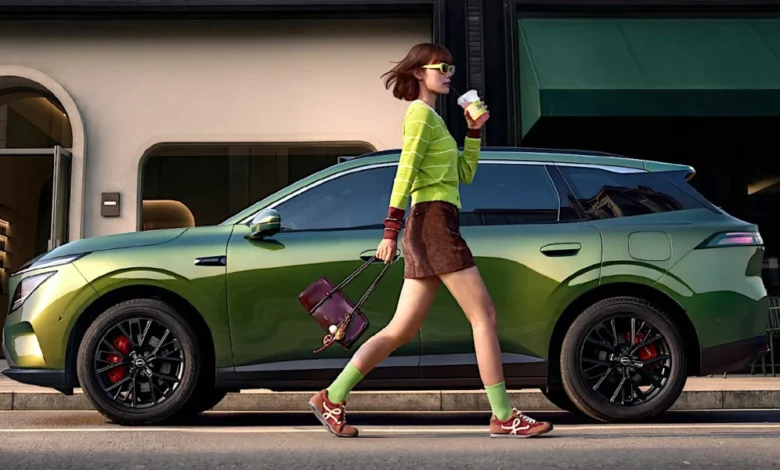
Dongfeng Nissan has officially opened the pre-sale order books for its highly anticipated NX7 plug-in hybrid electric vehicle (PHEV) in China, marking a significant milestone in the joint venture’s electrification strategy. Positioned aggressively in the world’s largest automotive market, the NX7 combines a massive battery pack for extended electric-only driving with an internal combustion engine to alleviate range anxiety, all at a remarkably competitive starting price point. As traditional legacy automakers face intensifying pressure from domestic Chinese electric vehicle manufacturers, the introduction of the NX7 underscores a strategic pivot toward advanced, high-value hybrid powertrains designed to capture market share from both pure-play EV brands and conventional internal combustion engine competitors.
Main Facts and Pricing Structure
The Dongfeng Nissan NX7 enters the market with a starting pre-sale price of approximately 129,900 yuan, roughly translating to $20,000 USD. For this price, consumers receive a generously proportioned crossover that matches the physical footprint of the globally popular Tesla Model Y, measuring nearly identical in overall length.
At the core of the NX7’s powertrain is a robust 40.9 kWh lithium iron phosphate (LFP) battery pack, which delivers an impressive all-electric range of up to 320 kilometers (approximately 198 miles) under standard testing cycles. Working in tandem with the battery is a 1.5-liter naturally aspirated internal combustion engine producing 98 horsepower, paired with a 228-horsepower electric drive motor. Together, the system enables an astonishing combined driving range of up to 1,666 kilometers (roughly 1,035 miles) on a single tank of fuel and a fully charged battery.

Chronology and Development Background
The journey toward the NX7 reflects a broader transformation within Nissan’s global product roadmap. When Nissan originally pioneered the mass-market electric vehicle segment with the introduction of the first-generation LEAF, the vehicle featured a modest 24 kWh lithium-ion battery pack offering roughly 70 miles of range. While groundbreaking for its time, the first-generation LEAF faced adoption hurdles in markets like North America, where consumer demand heavily favored larger crossover SUVs capable of undertaking long-distance journeys without frequent charging stops.
Recognizing the evolving demands of the global consumer base, Nissan has steadily refined its alternative-fuel offerings. Over the subsequent decade, the automaker introduced various iterations of hybrid and electric technologies, including its proprietary e-Power systems, which utilize a gasoline engine exclusively to generate electricity for electric drive motors. However, these traditional hybrids still relied entirely on fossil fuels and lacked external plug-in capabilities.
The development of the NX7 represents a convergence of Dongfeng Motor Corporation’s localized engineering prowess and Nissan’s global manufacturing standards. Designed primarily to cater to the sophisticated preferences of Chinese tech-forward consumers, the NX7 project accelerated through late 2025 and early 2026, culminating in the official pre-sale launch in November 2026. The vehicle is scheduled to make its formal public debut at the upcoming Guangzhou Auto Show, where final production specifications and trim-level breakdowns will be detailed.
Powertrain Engineering and Operating Versatility

While specifications confirm the presence of the 1.5-liter internal combustion engine, the 228-hp electric motor, and the 40.9 kWh LFP battery, automotive analysts have closely examined Dongfeng’s underlying hybrid architecture patents to understand the vehicle’s dynamic capabilities.
Dongfeng’s proprietary hybrid technology outlines a versatile four-mode operating system. Depending on real-time driving conditions, power demands, and battery state of charge, the NX7 can operate as a series hybrid, a parallel hybrid, a direct engine drive vehicle, or function primarily to generate electricity. This multi-mode flexibility allows the internal combustion engine to act as an onboard generator, supply direct mechanical torque to the wheels, or work synergistically alongside the electric motor.
This engineering approach addresses the fundamental compromise of traditional plug-in hybrids. By offering nearly 200 miles of battery-electric range, the NX7 functions essentially as a pure electric vehicle for daily commuting, school runs, and local errands—effectively eliminating tailpipe emissions for the vast majority of annual driving days. Conversely, for long-distance cross-country travel, the integrated fuel system and multi-mode hybrid capability provide an immediate safety net, removing the necessity to locate functional public fast-chargers along rural transit corridors.
Interior Technology and Cabin Comfort
Beyond its mechanical attributes, the Dongfeng Nissan NX7 places heavy emphasis on cabin digitalization and passenger ergonomics, aligning with the expectations of the modern Chinese consumer market.

Higher-tier trims of the NX7 feature a commanding digital cockpit anchored by a massive 55-inch augmented-reality head-up display (AR-HUD). This system is driven by Qualcomm’s high-performance Snapdragon 8295P automotive-grade processor, ensuring swift graphic rendering and seamless multitasking capabilities. The vehicle runs on Nissan OS 3.0 and incorporates an advanced, AI-powered natural language voice assistant developed in partnership with iFlytek. According to manufacturer specifications, the voice assistant is capable of processing complex conversational commands, retaining user preferences across multiple driving sessions, and utilizing facial recognition to automatically adjust climate, seating, and infotainment settings for individual occupants.
Seat comfort has also received significant engineering attention in flagship models. The NX7 introduces what Nissan terms "AI Zero-Pressure Cloud Blanket" seats. These advanced seating systems utilize integrated sensors and dynamic air-cushion arrays to continuously adjust contour support, mitigating fatigue during extended journeys. Furthermore, the seats incorporate comprehensive heating, ventilation, and a 12-point therapeutic massage function. For resting during charging stops or long road trips, the front seats can fully recline to create a flat, bed-like configuration.
To further distinguish the vehicle in a crowded crossover segment, Dongfeng Nissan has equipped the NX7 with practical lifestyle amenities, including an integrated onboard refrigerator. Additionally, the vehicle features a specialized motion-sickness prevention system. Nissan asserts that this proprietary technology utilizes dynamic cabin adjustments and visual cues to reduce passenger motion sickness by up to 83 percent, addressing a common discomfort associated with regenerative braking and heavy battery weight in electric and hybrid vehicles.
Broader Industry Implications and Market Impact
The launch of the Dongfeng Nissan NX7 carries profound implications for both the Chinese domestic automotive landscape and the broader global automotive industry.

In China, foreign joint ventures have faced intense competitive pressures from domestic electric vehicle and plug-in hybrid manufacturers, who have rapidly captured market share through aggressive pricing, rapid software iteration, and advanced in-cabin technology. By pricing the NX7 aggressively near the 129,900 yuan threshold while offering a specifications sheet that rivals or exceeds domestic competitors, Dongfeng Nissan signals its intent to aggressively defend and expand its market position.
For international markets, the NX7 serves as an intriguing indicator of future product strategy. As automotive markets outside of China—particularly North America and Europe—grapple with the realities of slowing pure-electric vehicle adoption rates, inadequate public charging infrastructure, and consumer resistance to range limitations, long-range plug-in hybrids are increasingly viewed as a viable transitional technology. Vehicles capable of providing substantial all-electric daily driving ranges combined with the absolute convenience of liquid fuel for long-distance travel offer a pragmatic bridge for hesitant consumers.
Whether vehicles sharing the NX7’s architecture or philosophy will eventually find their way to Western markets remains a subject of intense speculation among industry analysts. However, the engineering convergence demonstrated by Dongfeng Nissan—pairing high-capacity LFP batteries, advanced Qualcomm computing hardware, and flexible multi-mode hybrid powertrains at an accessible price point—establishes a competitive benchmark that legacy automakers globally will be forced to address in the coming years.
Related posts: