Toyota Fuji Speedway Prototype Sparking Rumors of Celica and MR2 Revival with Mid-Engined All-Wheel Drive Configuration.

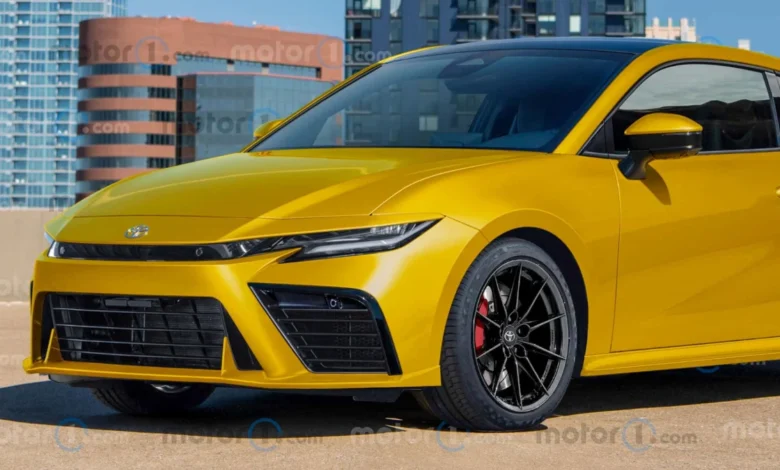
A mysterious new prototype has been captured undergoing high-speed testing at Japan’s iconic Fuji Speedway, fueling intense speculation that Toyota is nearing the completion of its next high-performance sports car. The footage, which surfaced on social media via user @You_SuiKoyoAZ, offers a rare glimpse into a project that has remained largely shrouded in secrecy. While the clip is brief, it provides critical evidence regarding the vehicle’s mechanical layout, exhaust note, and potential transmission, suggesting that Toyota is preparing to revive one of its most storied nameplates—either the Celica or the MR2—under its increasingly autonomous Gazoo Racing (GR) performance division.
The sighting at Fuji Speedway marks a significant escalation in the vehicle’s development cycle. Unlike previous sightings of a camouflaged prototype testing on gravel rally stages, this version appears optimized for tarmac, featuring a low-slung, two-door coupe silhouette that aligns with modern sports car proportions. Observers noted a distinct, "burbly" exhaust note that indicates a high-output internal combustion engine, while the rhythmic cadence of the car’s acceleration through turns suggests the inclusion of a traditional manual transmission. This detail is particularly significant for the enthusiast market, where Toyota has consistently sought to maintain a mechanical connection between driver and machine, as seen in the GR Supra and GR Corolla.
Visual and Auditory Indicators from the Fuji Prototype
The prototype observed at Fuji Speedway exhibits several design cues that link it to Toyota’s current design language while introducing aggressive aerodynamic features. The vehicle’s front fascia is characterized by slim, downturned LED headlights and a prominent hood vent, likely designed to manage airflow and cooling for a high-performance powertrain. At the rear, the taillight assembly mirrors the sharp, angular aesthetic found on the current GR86 and Supra, providing a cohesive look for the Gazoo Racing lineup.
However, the most debated aspect of the footage is the placement of the engine. The proportions of the coupe—specifically the length of the rear deck and the positioning of the cabin—hint at a mid-engined layout. This has led many industry analysts to believe the car is the spiritual successor to the MR2, which was known for its mid-ship, rear-drive configuration. Conversely, the rumor of an all-wheel-drive (AWD) system suggests a revival of the Celica GT-Four legacy. If the car indeed combines a mid-engine placement with AWD, it would represent a significant engineering feat, placing it in a rarefied category of sports cars.
The Technical Evolution: Toyota’s New 2.0-Liter Powerplant
Central to the development of this mystery prototype is Toyota’s next-generation 2.0-liter turbocharged four-cylinder engine. This powerplant is part of a broader collaboration announced in mid-2024 between Toyota, Subaru, and Mazda, aimed at developing carbon-neutral internal combustion engines that can operate on synthetic fuels and accommodate hybrid electrification.
According to technical insiders, this new 2.0-liter engine is being designed to surpass the performance of the current 1.6-liter three-cylinder engine found in the GR Yaris and GR Corolla. Preliminary reports suggest the road-going version of the new sports car will produce approximately 400 horsepower in its standard trim. However, a high-performance variant equipped with a larger turbocharger and optimized cooling is rumored to be in development, with output figures potentially reaching as high as 600 horsepower. This would elevate the vehicle beyond the "entry-level" sports car category, positioning it as a legitimate competitor to established performance icons like the Porsche 718 Cayman and the Lotus Emira.
Electrification is also expected to play a role in the car’s performance profile. While the prototype heard at Fuji Speedway was clearly powered by an internal combustion engine, Toyota is likely to employ a "performance hybrid" system. Such a system would use electric motors to provide instantaneous torque and fill the gaps in power delivery during gear shifts, all while helping the vehicle meet increasingly stringent global emission standards.
The Legacy of the Three Brothers: Reviving the Celica and MR2
The potential return of the Celica or MR2 fits into a long-term strategic vision championed by Toyota’s Chairman, Akio Toyoda. For years, Toyoda has expressed a desire to reunite the "Three Brothers"—the trio of sports cars that defined Toyota’s performance image in the 1980s and 1990s: the Supra, the Celica, and the MR2.
With the Supra and the GR86 (the spiritual successor to the AE86) already in production, the "third brother" remains the final piece of the puzzle. The Celica, which transitioned from rear-wheel drive to front- and all-wheel drive over its seven generations, holds a special place in rally history. The MR2, on the other hand, remains Toyota’s most famous mid-engine experiment. By developing a vehicle that potentially blends the mid-engine balance of the MR2 with the AWD grip of the Celica GT-Four, Toyota could create a halo car that honors both legacies simultaneously.
Gazoo Racing as a Standalone Performance Entity
The development of this new prototype coincides with a strategic shift in how Toyota markets its performance vehicles. There are growing indications that Gazoo Racing is being positioned as a standalone brand, similar to how Mercedes-AMG or BMW M operate. This move would allow GR to develop bespoke chassis and engines that are not necessarily shared with Toyota’s mainstream commuter vehicles.
The mystery prototype spotted at Fuji Speedway may not even wear a Toyota badge when it reaches production. Instead, it could be the flagship model for the GR brand, showcasing the division’s engineering prowess in both internal combustion and hybrid technologies. This independence allows for more radical design choices—such as the rumored mid-engine AWD layout—that might be considered too niche for the broader Toyota brand.
Motorsports Integration and the World Rally Championship Pipeline
Toyota’s development philosophy under the GR banner is rooted in the "Win on Sunday, Sell on Monday" mantra. The prototype previously seen on rally stages suggests that this new sports car is being developed with the World Rally Championship (WRC) in mind.
Current WRC regulations are evolving, and Toyota is keen to maintain its dominance in the series. If this prototype is indeed the precursor to a new rally contender, it would explain the inclusion of an AWD system. A WRC-spec version of the car could debut as early as 2027, serving as a high-stress testing ground for the technologies that will eventually make their way into the production version. Historically, Toyota used the Celica GT-Four to dominate the WRC in the early 1990s, and a return to those roots would provide a powerful marketing narrative for a new performance coupe.
Market Context and the Future of the Internal Combustion Engine
Toyota’s decision to invest heavily in a new 2.0-liter turbocharged engine and a dedicated sports car platform comes at a time when many competitors are pivoting exclusively to electric vehicles (EVs). While Toyota is also developing an EV lineup, the company remains a vocal proponent of a "multi-pathway" approach to carbon neutrality.
By developing high-performance internal combustion engines that can run on carbon-neutral fuels, Toyota is hedging its bets against a purely electric future. This strategy appeals to automotive enthusiasts who prioritize the sensory experience of a sports car—the sound of the exhaust, the mechanical feel of a gearbox, and the lightweight agility that remains difficult to achieve with heavy battery packs. The Fuji Speedway prototype is a physical manifestation of this commitment to the enthusiast market.
Projected Timeline and Production Milestones
While Toyota has not officially confirmed the name or the release date of the vehicle, the frequency and nature of recent sightings suggest a structured timeline. The transition from rally stage testing to high-speed track testing at Fuji indicates that the chassis and powertrain are nearing a state of maturity.
If Toyota follows its traditional development cycle, a concept version of the car could appear at a major international auto show within the next 18 months. This would likely be followed by a WRC debut in 2027. The road-going production model would then follow shortly after, likely arriving in showrooms as a 2027 or 2028 model.
The automotive world will be watching closely as more details emerge. Whether it carries the Celica name, the MR2 badge, or an entirely new GR designation, the prototype spotted at Fuji Speedway represents a bold statement from Toyota. In an era of increasing automation and electrification, the sight of a burbly, manual-shifted, mid-engined coupe lapping a racetrack is a clear signal that the era of the Toyota sports car is far from over. For enthusiasts, the return of the "Three Brothers" is no longer just a rumor—it is becoming a high-octane reality.