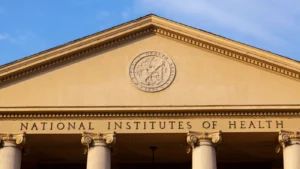
Harvard University and National Research Community Raise Alarms Over Proposed Federal Grant Overhaul and Increased Political Oversight


The Office of Management and Budget (OMB), in coordination with several federal grantmaking agencies, has proposed a sweeping overhaul of the Uniform Guidance, the comprehensive framework that has dictated the administration, review, and oversight of federal grants for more than a decade. This proposed regulatory shift, initially unveiled on May 29, represents one of the most significant changes to the American research ecosystem in the post-World War II era. If implemented, the new rules would fundamentally alter the selection process for federally funded research by granting political appointees a decisive role in funding decisions and expanding the government’s authority to terminate active grants mid-cycle. The proposal has ignited a firestorm of opposition from the academic and scientific communities, drawing nearly 500,000 public comments before the submission window closed on July 13.
The Uniform Guidance serves as the "rules of the road" for more than $1 trillion in annual federal spending. It ensures that taxpayer dollars allocated to research universities, non-profit organizations, and state agencies are used efficiently, ethically, and in alignment with national priorities. Historically, the hallmark of this system has been the merit-based peer-review process, where specialized experts—rather than political figures—evaluate the scientific and technical viability of research proposals. The new OMB proposal threatens to dismantle this meritocracy, replacing it with a system where political considerations could supersede scientific potential. Harvard University, alongside the Harvard Medical School and the T.H. Chan School of Public Health, has submitted extensive formal comments urging the OMB to abandon these changes, citing "dire consequences" for the nation’s innovation enterprise and global competitiveness.
A Chronology of the Regulatory Proposal and Public Response
The timeline of this regulatory move suggests an aggressive push for implementation. Following the May 29 announcement, the OMB provided a relatively brief window for public discourse, which concluded in mid-July. The sheer volume of feedback—approaching half a million individual and institutional responses—reflects the high stakes involved. Federal law requires the OMB to review these comments and either revise the proposed rules or provide a detailed justification for maintaining them before issuing a final rule, which could arrive as early as October 1.
The urgency of the response from institutions like Harvard is rooted in the memory of recent disruptions. In 2025, the research community witnessed a wave of mass federal grant terminations that caused significant administrative and scientific friction. The current proposal seeks to codify and expand the authority that led to those disruptions. John H. Shaw, Harvard’s senior vice provost for research, noted that the proposed document is hundreds of pages long and represents an amalgamation of various executive orders and policy goals pursued by the administration over the last two years. The complexity of the document has required university legal and research teams to conduct exhaustive reviews to understand the full scope of the potential impact on laboratories and clinical trials.
The Shift from Merit-Based Review to Political Discretion
For over 75 years, the United States has maintained its position as a global leader in science and technology by adhering to a decentralized, merit-based funding model. Under the current system, federal agencies such as the National Institutes of Health (NIH) and the National Science Foundation (NSF) set broad national priorities—such as curing cancer or advancing quantum computing—but the specific projects funded within those categories are chosen through rigorous peer review.
The success rate for these grants is notoriously low, often hovering between 10 and 15 percent. This high bar ensures that only the most promising and technically sound projects receive taxpayer support. The OMB’s proposed changes would introduce political appointees into this decision-making chain, allowing for funding to be diverted based on shifting political winds rather than scientific excellence. Critics argue that making research funding political will lead to a "start-stop" cycle that is antithetical to the nature of scientific discovery. Research projects often require years, if not decades, of sustained effort to yield results. If a project’s survival depends on which party holds power or which political appointee is overseeing a department, the long-term stability required for breakthroughs in areas like medicine and national security will vanish.
Expanded Authority to Terminate Active Grants
One of the most controversial aspects of the OMB proposal is the expansion of federal agencies’ authority to suspend or terminate grants already underway. Currently, grants can be terminated "for cause"—such as financial mismanagement or ethical violations. The new rules would broaden this power, allowing for midstream terminations based on changing administrative priorities.

This creates a climate of profound fiscal and professional uncertainty. Research universities like Harvard make multi-year commitments to faculty, students, and staff based on the expectation that an awarded grant will be honored for its full term, typically three to five years. If the government can cancel a grant at any moment for non-technical reasons, universities may be forced to become more risk-averse. This could result in hiring fewer postdoctoral fellows, admitting fewer graduate students, and avoiding high-risk, high-reward research projects that are essential for major innovations. Furthermore, if a project is 25 percent complete and then abruptly canceled, the initial investment of taxpayer money is essentially wasted, as the research never reaches the stage where it can provide societal benefits or clinical applications.
The Role of Indirect Costs in Research Infrastructure
The OMB proposal also targets "indirect costs," a frequently misunderstood but vital component of research funding. Indirect costs cover the essential infrastructure that makes research possible: laboratory facilities, high-speed computing, utilities, environmental health and safety compliance, and the administrative staff who ensure research adheres to federal laws regarding human subjects and animal welfare.
The proposed guidance suggests that a university’s indirect cost recovery rate could be used as a "thumb on the scale" when deciding which institutions receive funding. Effectively, the government would prioritize institutions with lower indirect costs. However, as Vice Provost Shaw points out, indirect cost rates are a reflection of an institution’s investment in its own infrastructure. Lower rates often correspond to institutions that have less sophisticated facilities or are less willing to invest in the specialized environments required for advanced lab-based research. By incentivizing the "lowest bidder," the government risks steering critical research away from the very facilities best equipped to handle it. This approach prioritizes short-term savings over the long-term quality and safety of the national research enterprise.
Impact on National Competitiveness and Global Talent
The implications of these changes extend far beyond the laboratory. The U.S. research enterprise is a primary driver of the national economy and a pillar of national security. The uncertainty introduced by the OMB proposal threatens to undermine the U.S.’s ability to attract and retain the "best and brightest" talent from around the world. International students and researchers are central to the American innovation engine; if the U.S. research environment becomes unpredictable and politically charged, this talent may choose to pursue their work in other countries, such as those in the European Union or Asia, where research funding is perceived as more stable.
The ripple effects would be felt across the entire ecosystem. Harvard frequently collaborates with smaller research universities, hospitals, and private industry partners across all 50 states. A disruption at a major hub like Harvard or the Harvard Medical School inevitably impacts these partners. In fields like quantum science—which is critical for secure data transmission and national defense—the U.S. is in a global race for dominance. Any policy that slows the pace of American innovation in these sectors provides a direct advantage to geopolitical competitors.
Case Studies: The Danger of Political Interference
To illustrate the potential harm of the proposed rules, Harvard officials pointed to several breakthrough technologies that might never have reached fruition under a politically volatile funding system.
- Gene Editing and CRISPR: The development of therapies for sickle cell anemia and thalassemia required decades of fundamental research. Much of this work began in niche biological studies that had no immediate clinical application. Had these projects been subject to the whims of political appointees who could not foresee their ultimate value, the life-saving treatments now reaching patients might have been canceled years ago.
- Quantum Science: Decades ago, quantum physics was a theoretical field with little perceived "practical" use for the general public. However, sustained federal support through the NSF and the Department of Defense allowed researchers to lay the groundwork for what are now quantum computers and sensors. These technologies are now essential for national security and code-breaking.
- Organ-on-a-Chip and Space Exploration: At Harvard’s Wyss Institute, researchers developed "organ-on-a-chip" technology to study human cell responses to drugs. This technology was recently used on the Artemis mission to study radiation impacts on astronauts. This project required the maintenance of living human cells and precise launch windows. If the grant had been subject to mid-stream termination during the 2025 wave of federal grant cuts, the U.S. would have lost critical data necessary for future deep-space exploration.
Conclusion and Next Steps
As the OMB enters the mandatory review phase for the nearly 500,000 comments received, the academic community remains on high alert. The consensus among research leaders is that the proposed changes to the Uniform Guidance represent a move toward the "politicization of science," a shift that could take decades to reverse. Harvard’s formal stance is that the federal government should honor the consultative process and take the necessary time to refine the guidance in a way that protects the merit-based system.
The outcome of this regulatory battle will determine the trajectory of American innovation for the next generation. Whether the U.S. remains a sanctuary for objective, merit-driven discovery or shifts toward a centralized, politically managed research model remains the central question facing the OMB as it prepares its final ruling this autumn. For the scientists, students, and patients who depend on the stability of federal research, the stakes could not be higher.