Where Black Excellence Meets Generational Refuge: The Enduring Legacy of Martha’s Vineyard and Oak Bluffs

For nearly a century, Martha’s Vineyard—and specifically the historic coastal town of Oak Bluffs—has served as a cultural sanctuary, a socio-economic stronghold, and a generational refuge for Black Americans. While the island is widely recognized today as an elite summer haven for prominent political figures, civil rights icons, and cultural luminaries, its deeper historical roots reveal a century-long narrative of resilience, community-building, and intentional economic autonomy. Amid systemic segregation and racial discrimination that historically barred Black travelers from traditional American resorts, the Vineyard emerged as a rare landscape where Black families could not only vacation safely, but establish permanent roots, build generational wealth, and foster an enduring culture of wellness and belonging.
Historical Foundations: From Maritime Roots to Sanctuary
The history of Black presence on Martha’s Vineyard extends far beyond modern tourism, tracing back centuries to the island’s early maritime and colonial eras. The earliest documented Black residents on the island included enslaved Africans in the 1700s. Following the legal abolition of slavery in Massachusetts in 1783, free Black laborers, sailors, cooks, sailmakers, fishermen, and whalers integrated themselves into the local maritime economy. Over subsequent decades, these individuals established permanent homesteads, acquired property, and laid the groundwork for a burgeoning multicultural community.
By the 19th century, as the Vineyard began to develop into a prominent summer vacation destination, Black families and visitors from across the United States began traveling to the island. This influx accelerated significantly in the late 19th and early 20th centuries, catalyzed by nationwide Jim Crow segregation laws. Restrictive covenants, discriminatory lodging policies, and outright prohibitions prevented Black Americans from staying at mainstream hotels, inns, and beaches.
In response to these systemic barriers, Black residents and forward-thinking entrepreneurs focused their efforts on Oak Bluffs. Here, Black buyers were able to purchase real estate, establish boarding houses, and operate bed-and-breakfasts. This proactive localized economy ensured that Black travelers had secure, welcoming accommodations, transforming Oak Bluffs into the epicenter of a vibrant, self-sustaining summer enclave.
Generational Infrastructure and the Rise of Intentional Communities
The accessibility of property ownership in Oak Bluffs catalyzed a unique socio-cultural ecosystem. Families purchased homes, welcomed extended relatives and friends, and returned summer after summer, institutionalizing traditions that seamlessly spanned generations.
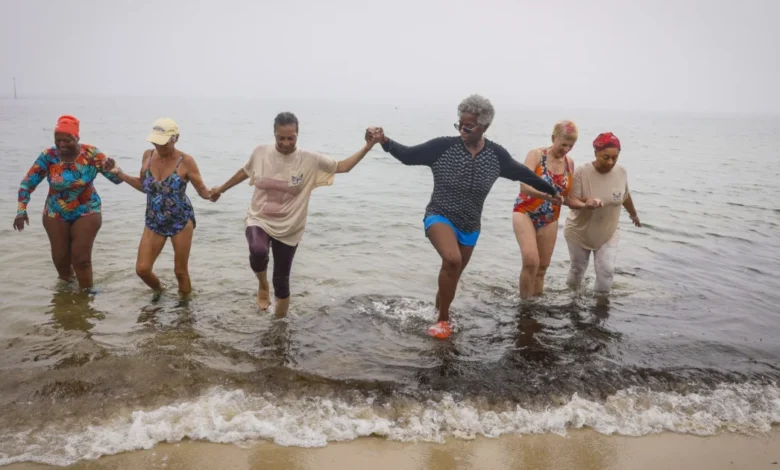
A prime example of this foundational era is rooted in the legacy of the O’Brien sisters, who in 1946 purchased a cottage in the Campgrounds and moved it to the end of Circuit Avenue to operate as a bed-and-breakfast. It was near this site, at the popular stretch of beach known as the Inkwell, that a legendary wellness tradition was born. Nine Black summer workers, constrained by daytime work schedules, began meeting for early morning swims. Over the ensuing eight decades, this modest gathering evolved into the "Polar Bears"—an iconic community-led exercise and fellowship group that continues to convene daily from July 4 through Labor Day at 7:30 a.m.
Simultaneously, local organizations institutionalized community support. In 1946, Jamaican immigrant Lucille Lipman—who arrived in Boston at age 13 before purchasing a home on Tuckernuck Avenue in Oak Bluffs—became a founding member of The Cottagers, Inc., a prominent nonprofit organization of Black women property owners dedicated to philanthropy, civic engagement, and community preservation on the island. Lipman’s entrepreneurial spirit, mirroring that of many contemporaries, extended far beyond real estate acquisition; she rented rooms, hosted travelers from Boston and New York, and introduced visiting families to the possibilities of island homeownership.
Cultural Resonance and Prominent Legacies
As the 20th century progressed, the reputation of Martha’s Vineyard as a safe and intellectually stimulating destination drew some of the most influential Black figures in American history. Prominent leaders, artists, writers, and intellectuals—including Dr. Martin Luther King Jr., Harry Belafonte, and author Maya Angelou—frequented the island. Angelou famously characterized the Vineyard as "a safe place where we can go as we are and not be questioned."
This legacy of intellectual and cultural prominence persists into the 21st century. Contemporary leaders, including former President Barack Obama and First Lady Michelle Obama, maintain a residence on the island, spending every August immersed in its community life. They are joined by a modern generation of cultural icons, athletes, and entertainers, including Spike Lee, Gabrielle Union, Dwyane Wade, Tina Knowles, and Tracee Ellis Ross.
Sociological Significance: The "Third Space" and Psychological Refuge
From a sociological perspective, Martha’s Vineyard functions as a vital "third space"—an environment distinct from the routine pressures of home and professional life where individuals can congregate, decompress, and build social capital.
For Black women in particular, the island provides a psychological refuge from the persistent systemic pressures of navigating predominantly white corporate, academic, and social environments. Cultural observers and long-term visitors note that the unique layout of Oak Bluffs and its surrounding towns allows accomplished Black professionals to step outside the exhausting paradigm of representation, high performance, and perpetual justification. Here, individuals experience the restorative freedom to simply exist, unburdened by external scrutiny.
Preservation, Stewardship, and the Responsibilities of Inheritance
As decades pass, the demographic and economic realities of Martha’s Vineyard continue to evolve. Rising real estate values and gentrification present ongoing challenges to maintaining the historical accessibility that defined the community’s founding era. Consequently, current generations of legacy families emphasize the critical importance of active stewardship.
Modern organizations and community leaders stress that inheriting these historical spaces carries an inherent civic and cultural responsibility. Figures such as Erin Goldson, founder of the Vineyard Icon Awards—an initiative celebrating community contributors while funding local scholarships and non-profits—argue that the preservation of the Vineyard relies on active community care, mentorship, and youth engagement. Preserving the island’s unique social fabric requires intentional efforts to pass down not just property deeds, but the underlying values of mutual aid, historical awareness, and communal accountability.
Broader Economic and Cultural Implications
The enduring success of the Black community on Martha’s Vineyard offers broader implications for modern diversity, equity, and inclusion paradigms. It demonstrates the profound long-term economic and psychological benefits of autonomous community building. By securing land ownership and developing independent institutional frameworks during an era of intense disenfranchisement, early Black homeowners in Oak Bluffs created a permanent blueprint for intergenerational wealth accumulation and cultural preservation.
Ultimately, Martha’s Vineyard stands as a testament to the power of intentional community design. It illustrates that when marginalized groups are afforded the space to cultivate autonomy, safety, and mutual support, the resulting infrastructure can endure for centuries—providing a timeless sanctuary where future generations can rest, connect, and thrive without condition.