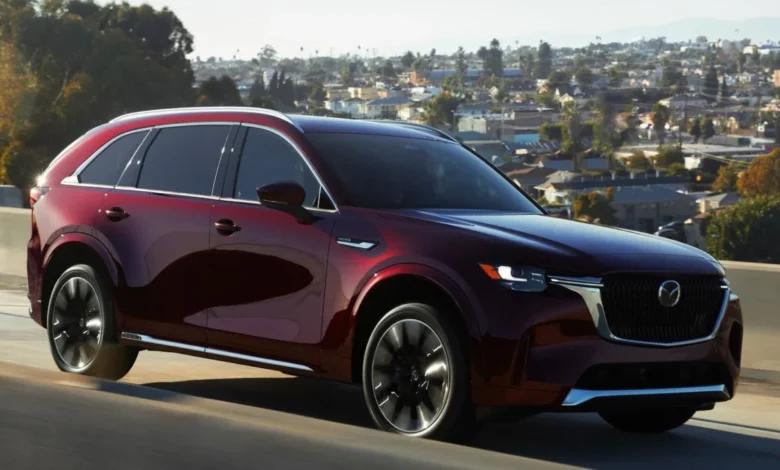
The contemporary automotive landscape is currently defined by a persistent affordability crisis that has fundamentally altered the purchasing habits of the average American family. According to data provided by Kelley Blue Book, the average transaction price for a mid-size SUV has surged to nearly $50,000, creating a significant barrier to entry for consumers who prioritize reliability and utility. While many buyers traditionally gravitate toward Japanese stalwarts like the Honda Pilot or the Toyota Highlander, the high demand for these models often results in minimal depreciation, leaving used-car shoppers with few opportunities for genuine savings. However, a strategic shift in the pre-owned market has emerged, highlighting the Mazda CX-90 and its two-row sibling, the CX-70, as compelling, high-value alternatives that are frequently overlooked by the broader consumer base.
A Chronology of the Mazda Large Product Group
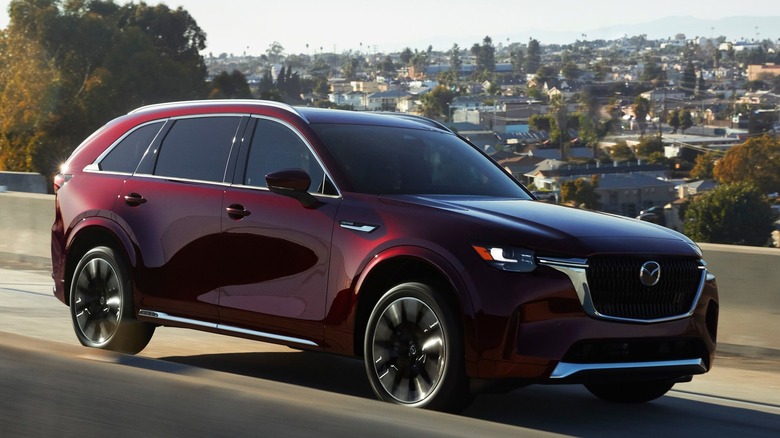
The introduction of the Mazda CX-90 in 2024 marked a pivotal moment for the Hiroshima-based manufacturer. Designed to push the brand further into the premium segment, the CX-90 served as the debut model for Mazda’s new Large Product Group architecture. This platform was engineered specifically to accommodate longitudinal engine layouts and rear-wheel-drive-biased all-wheel-drive systems, a configuration typically reserved for luxury European marques.
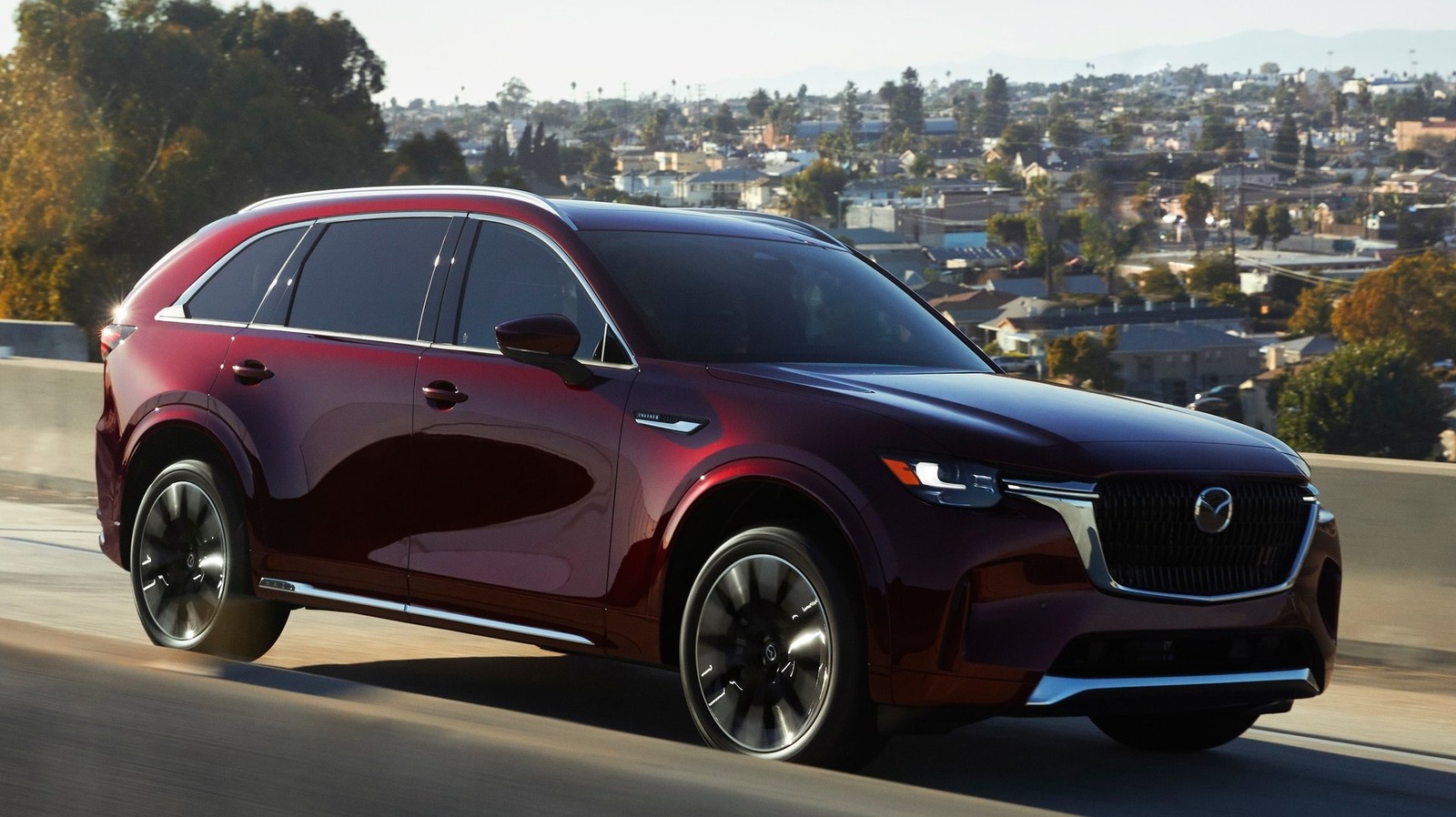
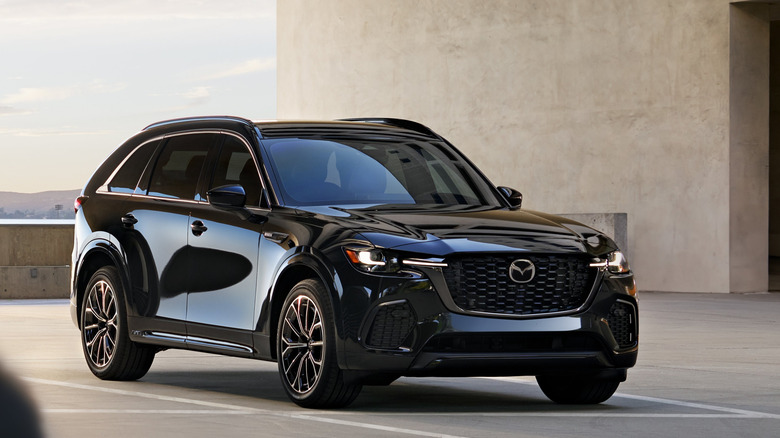
Following the successful rollout of the three-row CX-90, Mazda expanded its portfolio in 2025 with the introduction of the CX-70. While the two models share identical chassis, powertrains, and interior design languages, the CX-70 was marketed as a dedicated two-row "lifestyle" SUV. By eliminating the third row, Mazda was able to offer a slightly more affordable entry point—typically reducing the MSRP by approximately $1,000 compared to a similarly equipped CX-90. This rapid expansion underscored Mazda’s ambition to challenge established luxury competitors while maintaining a footprint in the high-volume mid-size SUV market.
Technical Specifications and Performance Dynamics
Both the CX-70 and the CX-90 distinguish themselves through their mechanical sophistication. The standard internal combustion variants are equipped with a turbocharged 3.3-liter inline-six engine, a rare configuration in a segment dominated by four-cylinder turbos and naturally aspirated V6 engines. This powertrain provides a level of refinement and power delivery that aligns with Mazda’s objective of positioning these vehicles as "sportier" and more upscale than their primary import rivals.
The most notable offering within this lineup, however, is the plug-in hybrid electric vehicle (PHEV) variant. This powertrain utilizes a 2.5-liter four-cylinder engine paired with an electric motor and a 17.8-kWh battery pack. In real-world applications, this setup offers an all-electric range of approximately 26 miles, with a total combined range nearing 490 miles. For families whose daily commute fits within the 20-to-30-mile window, the PHEV provides the ability to operate as a zero-emissions vehicle, while the gasoline engine eliminates the range anxiety often associated with pure battery-electric vehicles (BEVs).
Market Depreciation and the "PHEV Discount"
The current market opportunity for these vehicles is rooted in a specific phenomenon of depreciation. Because the PHEV models are classified as "plug-in" vehicles, they are often grouped by the public with pure electric vehicles. This categorization has inadvertently limited the buyer pool to those who have convenient access to home charging infrastructure. Consequently, these vehicles have experienced a steeper depreciation curve than their internal-combustion-only counterparts.
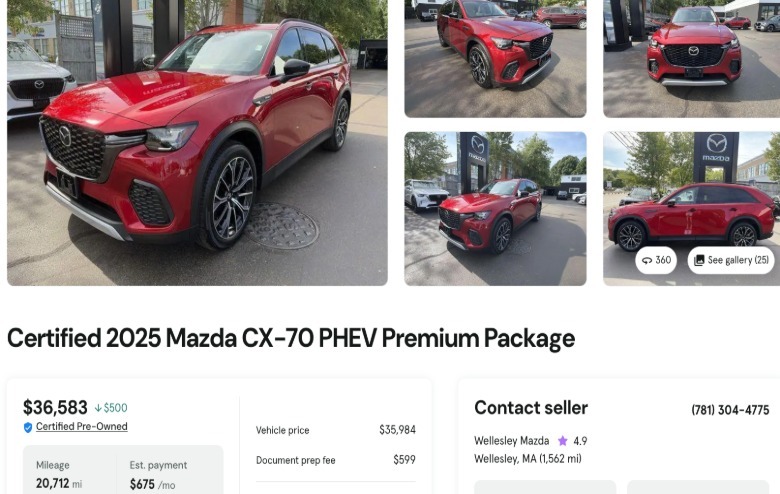
Data aggregated from platforms like Cars.com indicates that there are currently over 1,000 pre-owned CX-90 and CX-70 models available in the United States. A significant portion of this inventory, particularly the PHEV trims, is trading in the mid-$30,000 range. Notably, roughly 20 percent of the available stock is priced below $30,000, representing a significant discount from original MSRPs that frequently exceeded $55,000 when new.
For example, a 2025 Mazda CX-70 PHEV Premium with less than 21,000 miles has been observed on the secondary market for approximately $36,500. Given that the original MSRP for such a vehicle, including destination fees, would have been roughly $56,000, the purchaser realizes a depreciation-driven savings of nearly $20,000 within the first year of ownership. Similarly, 2024 CX-90 PHEV Preferred models, which originally retailed for over $51,000, are now appearing with under 25,000 miles for prices as low as $28,000, effectively offering a well-equipped three-row family vehicle at a nearly 50 percent discount.
Analyzing the Risks and Considerations
While the financial incentives for purchasing a used Mazda PHEV are clear, prospective buyers must consider several operational nuances. The primary "dirty secret" of PHEV ownership is that the vehicle does not strictly require an external power source to function. If a driver is unable to charge the battery, the vehicle defaults to a standard hybrid mode. While the efficiency in this mode is lower than that of a dedicated hybrid vehicle, it remains competitive with traditional gasoline-powered mid-size SUVs.
Furthermore, early production runs of the 2024 model year experienced documented reliability concerns, ranging from software glitches in the infotainment system to minor powertrain calibration issues. Because of these initial manufacturing teething problems, industry experts strongly advise that consumers prioritize vehicles sold under the Mazda Certified Pre-Owned (CPO) program. The CPO designation provides an extended warranty that mitigates the risk of out-of-pocket repair costs, offering a level of security that private-party sales cannot match.
Potential buyers should also evaluate the interior ergonomics. While the CX-90 is a three-row vehicle, the packaging constraints of its rear-wheel-drive architecture result in a third row that is notably tighter than competitors like the Kia Telluride or the Honda Pilot. Families requiring frequent use of the third row for passengers—rather than for occasional or emergency transport—may find the space insufficient.
Broader Implications for the Automotive Industry
The situation surrounding the CX-70 and CX-90 reflects a broader trend in the automotive industry: the decoupling of vehicle capability from perceived market value. As manufacturers pivot toward electrification, consumer sentiment toward "hybrid" technology remains fluid. By failing to distinguish between BEVs, which require consistent charging, and PHEVs, which offer the flexibility of gasoline, the market is creating localized pockets of extreme value for savvy buyers.
For the manufacturer, the current secondary market pricing for the CX-90/70 line is a double-edged sword. On one hand, the rapid depreciation may impact the brand’s residual value standing, which is a key metric for leasing and financing companies. On the other hand, it positions Mazda as an accessible entry point for consumers who have been priced out of the new car market. As more buyers become aware of the mechanical capabilities and relative reliability of these models when compared to the average high-mileage used vehicle, the demand for these units is likely to stabilize, potentially narrowing the current price gap.
Ultimately, the Mazda CX-90 and CX-70 PHEVs serve as a case study in market efficiency. By looking beyond the sticker shock of new-car prices and understanding the nuances of the PHEV powertrain, families can access a level of luxury, performance, and efficiency that was previously unavailable at the sub-$35,000 price point. As the industry continues its transition, vehicles that offer a bridge between traditional internal combustion and pure electrification are likely to remain central to the conversation regarding sustainable and affordable family transportation.