Automotive longevity has long been a primary metric for consumers weighing the total cost of ownership, and a new comprehensive study by iSeeCars has provided definitive data on which vehicles are the most likely to surpass the quarter-million-mile milestone. While the broader automotive industry continues to see advancements in engineering, the latest analysis highlights a clear divide between manufacturers that prioritize high-mileage durability and those that focus on other aspects of the ownership experience. Excluding heavy-duty trucks from the initial analysis, the data reveals a market dominated by Asian manufacturers, specifically Toyota and its luxury division, Lexus, which together account for the vast majority of the top-performing models.
Defining the Quarter-Million Benchmark
For many vehicle owners, reaching 100,000 miles was once considered the hallmark of a "reliable" vehicle. However, as manufacturing processes, materials science, and preventative maintenance schedules have evolved, that benchmark has shifted. Modern vehicles are routinely capable of staying on the road far longer than their predecessors. The iSeeCars report focuses on the 250,000-mile threshold—a distance equivalent to circling the globe ten times. Achieving this level of mechanical endurance requires not just a robust engine and transmission, but a chassis and electrical system capable of resisting degradation over decades of operation.
The data analyzed by iSeeCars is drawn from over 402 million cars sold, providing a statistically significant view of vehicle survivability. By isolating models that have successfully crossed the 250,000-mile mark, researchers have identified a clear hierarchy of reliability that transcends brand reputation, moving instead toward empirical performance.
The Dominance of Toyota and Lexus
The findings underscore the success of Toyota Motor Corporation’s long-standing corporate philosophy, which emphasizes a "Kaizen" or continuous improvement approach to vehicle longevity. In the top 10 list of vehicles most likely to reach 250,000 miles, Toyota and Lexus hold nine of the ten spots.
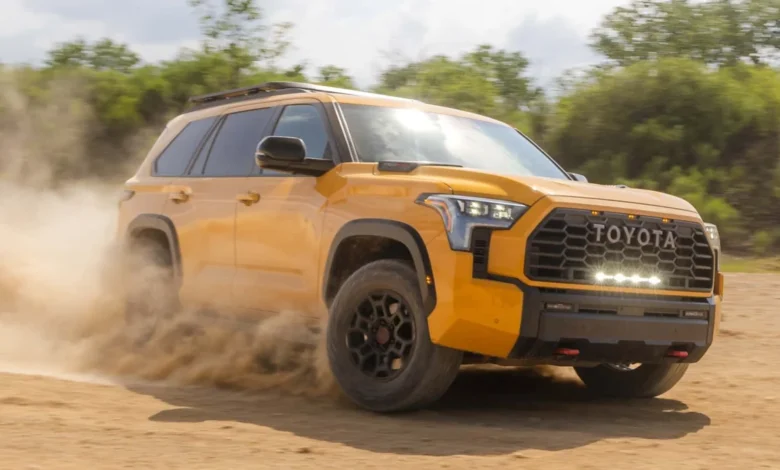
Leading the pack is the Toyota Sequoia, a full-size SUV that boasts a 42.3 percent probability of hitting the 250,000-mile mark. The Sequoia’s performance is followed by the Lexus LS, a flagship sedan that demonstrates that luxury does not necessitate a sacrifice in mechanical lifespan, with a 38.8 percent probability. The iconic Toyota 4Runner, known for its body-on-frame construction and off-road capability, occupies the third position with a 33.1 percent chance.
The remaining spots in the top tier are filled by other stalwarts of the Toyota lineup, including the Tundra, Land Cruiser, and various Lexus SUVs. The only outlier in this top-10 list is the Honda Accord Hybrid, which manages to secure the tenth position with an 18.5 percent chance. This result is particularly noteworthy as it represents one of the few instances where a hybrid powertrain has demonstrated the long-term reliability required to compete with traditional internal combustion engine configurations in high-mileage longevity.
Shifts in the Competitive Landscape
While Toyota and Honda dominate the higher echelons of the list, the data also highlights the emergence of niche vehicles and the impact of design philosophy on durability. The Mercedes-Benz G-Class, an SUV with deep roots in military and utilitarian design, ranks 14th with a 17.4 percent chance of reaching the 250,000-mile milestone. This serves as a testament to the fact that over-engineering for extreme environments can result in exceptional longevity, even in the luxury segment.
In contrast, American automakers have struggled to place passenger vehicles at the top of these rankings. The first domestic model to appear is the Chevrolet Suburban, which ranks 24th with an 11.6 percent chance. Karl Brauer, Executive Analyst at iSeeCars, noted that the Suburban’s inclusion is largely attributed to its robust design and wide range of capabilities, which encourage owners to keep the vehicle in service for longer durations compared to smaller, less utilitarian American offerings.
The Heavy-Duty Truck Exception
When the parameters are adjusted to include heavy-duty trucks, the narrative shifts significantly. American manufacturers, particularly Ram, GMC, and Ford, perform exceptionally well in this category. The Ram 3500 leads the truck-specific rankings with a 31.9 percent probability of reaching 250,000 miles, a figure that would place it firmly in the top five of the overall list if compared against passenger cars.
The heavy-duty truck market relies on engines—often diesel-powered—that are designed for industrial workloads, towing, and extended operation. This explains the high survival rates for the GMC Sierra 3500 HD (26.2 percent) and the Sierra 2500 HD (17.2 percent). Ford’s Super Duty lineup, including the F-350 and F-450, also demonstrates high durability, with survival rates of 15.1 percent and 14.9 percent, respectively. These figures are well above the industry-wide average of 5.4 percent, proving that when vehicles are built for high-stress, high-load environments, they are statistically more likely to endure into the high-mileage territory.
Analyzing the Industry Average
The overall industry average for reaching 250,000 miles stands at a relatively modest 5.4 percent. This baseline serves as a stark reminder that while some vehicles are capable of traveling a quarter-million miles, the vast majority of cars on the road are retired—either through mechanical failure, accident, or economic obsolescence—long before reaching that milestone.
Even vehicles at the "bottom" of the iSeeCars list, such as the Toyota Prius (11.5 percent) and the Honda Odyssey (10.7 percent), are performing at nearly double the industry average. This indicates that even the "less durable" models from manufacturers known for reliability still significantly outperform the market aggregate.
Implications for Consumers and the Market
The implications of this study for the average consumer are significant. As new car prices continue to climb, with many average monthly payments exceeding $800, the importance of vehicle longevity has never been higher. A vehicle that can comfortably reach 250,000 miles effectively lowers the total cost of ownership over a ten-to-fifteen-year horizon.
For the automotive industry, these statistics serve as a marketing tool and a reflection of engineering priorities. Manufacturers that appear at the top of the list often command higher resale values, as the secondary market places a premium on the perceived longevity of the brand. Consumers looking for long-term value are increasingly utilizing this type of data to inform their purchasing decisions, often choosing proven durability over newer, more experimental technology.
Looking Ahead
As the industry shifts toward electrification, a new question arises: how will battery-electric vehicles (BEVs) perform in long-term longevity studies? While the current data set is heavily weighted toward internal combustion engines, the future of the 250,000-mile club will likely involve a new evaluation of battery degradation and the ease of replacing electronic drive components. For now, the legacy of mechanical reliability established by Toyota, Honda, and the heavy-duty truck divisions of American manufacturers remains the gold standard for drivers who intend to keep their vehicles for the long haul.
The takeaway from the iSeeCars data is clear: while every vehicle eventually reaches the end of its road, the design choices made on the assembly line play a critical role in determining whether that road ends at 150,000 miles or 250,000 miles and beyond. For the consumer, the data provides a transparent look at which investments are most likely to pay dividends in years of service.
Related posts: