Unlocking the secrets of the interstellar comet 3I/ATLAS through advanced spectroscopic analysis

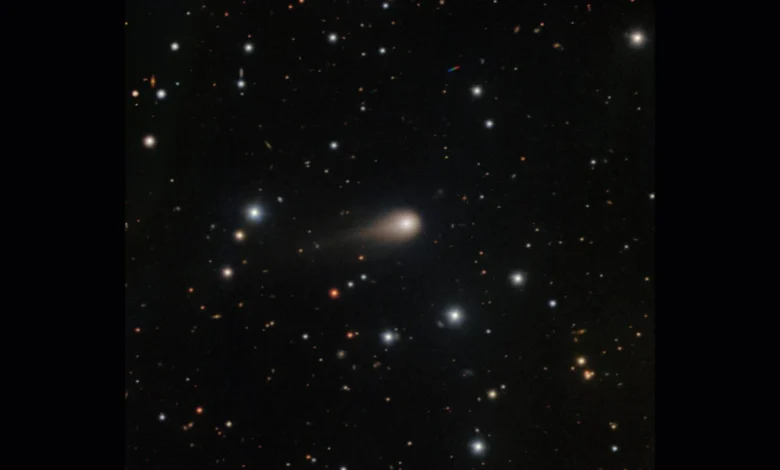
It has been over a year since the interstellar comet 3I/ATLAS first entered our solar system, marking the third time in human history that astronomers have confirmed an object of extrasolar origin traversing our cosmic neighborhood. Since its discovery, the comet has served as a pristine laboratory for planetary science, providing researchers with an unprecedented look at the composition of distant solar systems. Recent findings, published in the Monthly Notices of the Royal Astronomical Society, indicate that the comet is significantly richer in nitrogen than objects native to our own sun’s domain. This chemical signature suggests that 3I/ATLAS originated in an exceptionally frigid environment, far from the influence of its parent star, offering scientists a rare glimpse into the formation dynamics of exoplanetary systems.
A Chronology of Discovery and Observation
The scientific journey of 3I/ATLAS began with a sense of déjà vu for the global astronomical community, which had previously encountered interstellar visitors in the form of 1I/‘Oumuamua in 2017 and 2I/Borisov in 2019. When 3I/ATLAS was first detected, it triggered a worldwide observational campaign. Unlike its predecessors, which provided limited data due to their rapid trajectory or distance, 3I/ATLAS remained within a range that allowed for more sustained and sophisticated study.
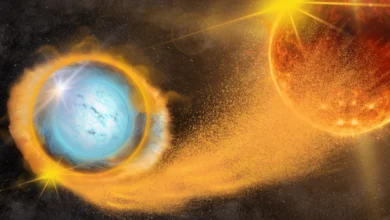
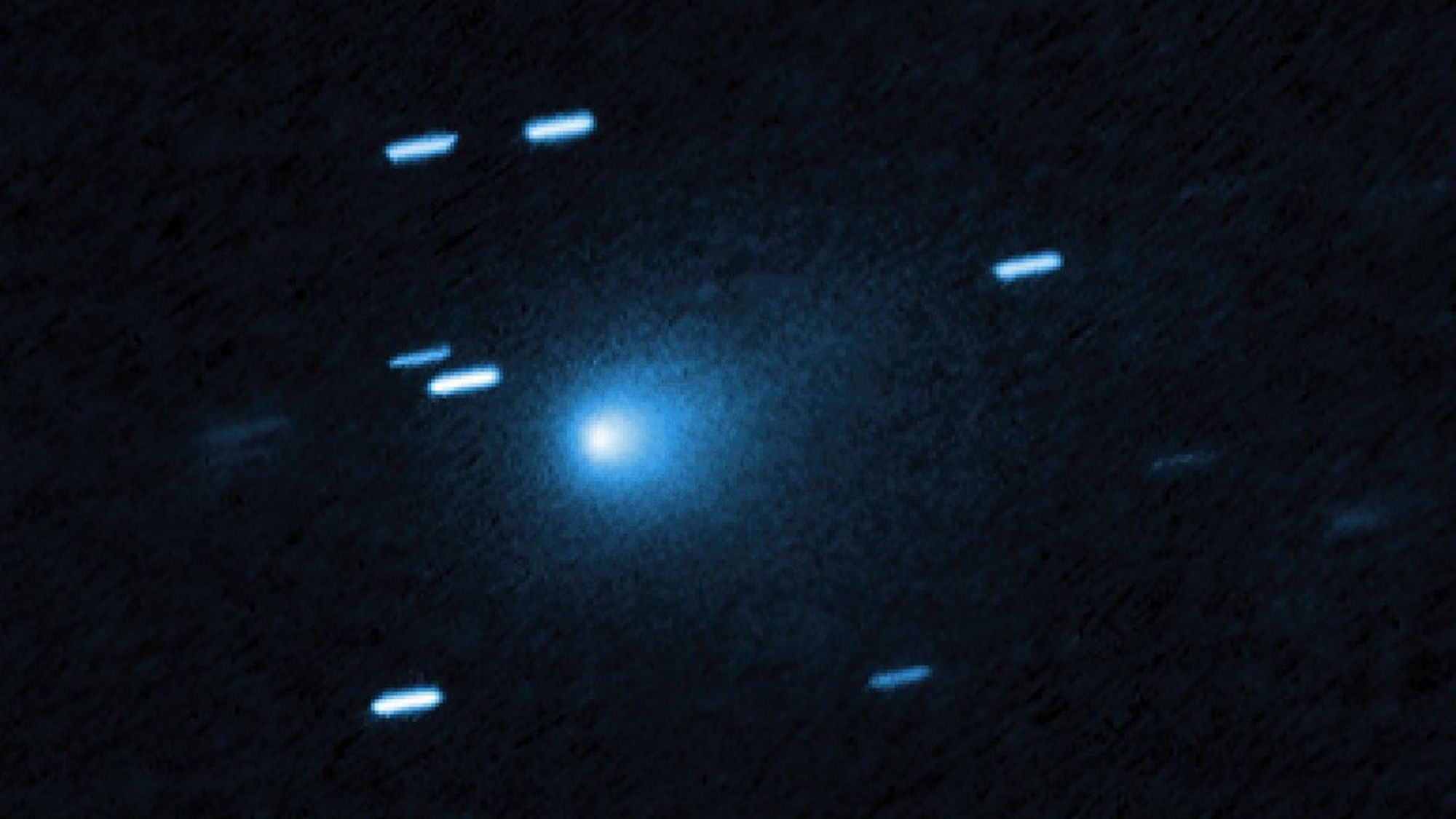
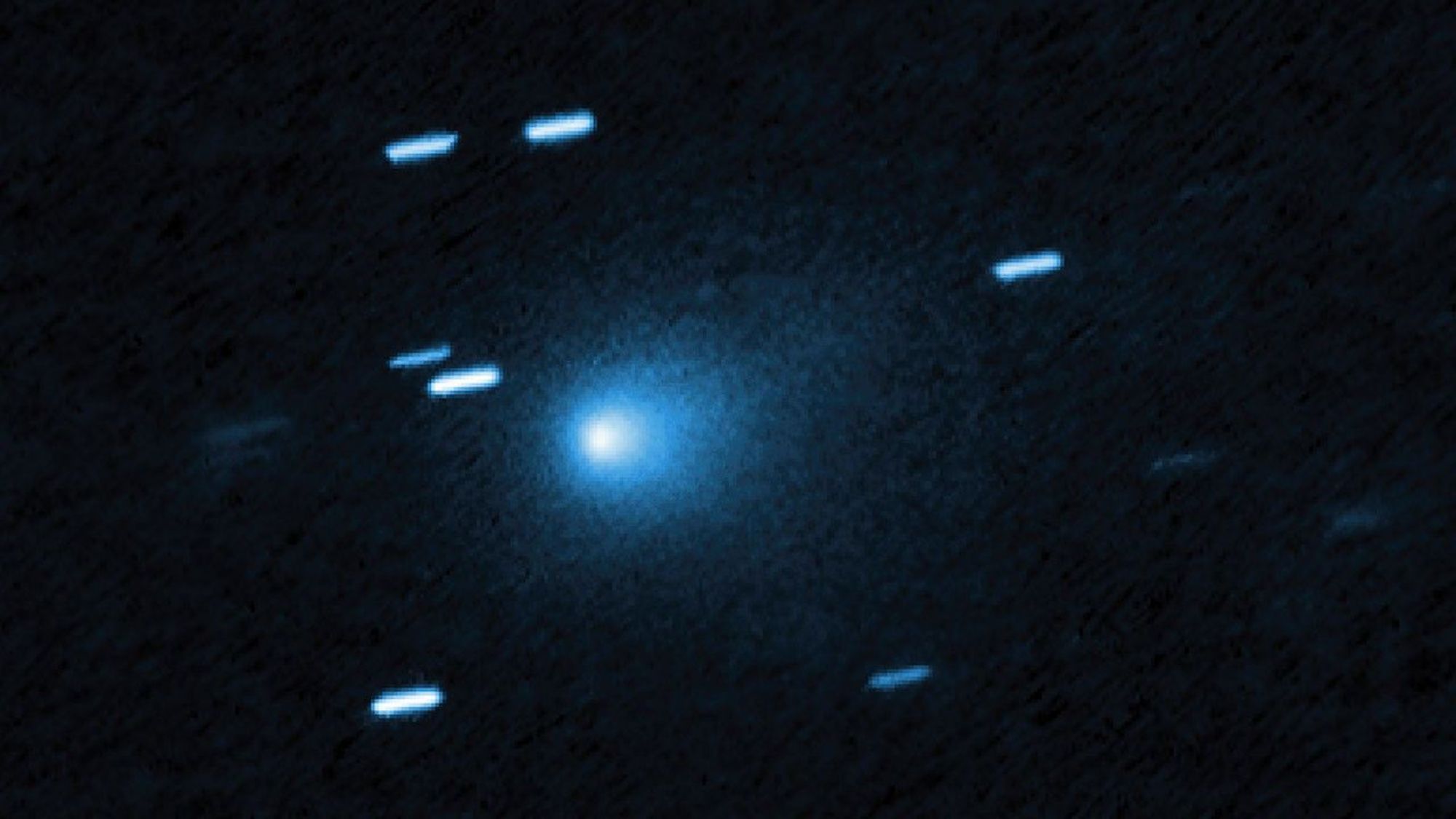
By July 21, 2025, the Hubble Space Telescope was positioned to capture high-resolution imagery of the object as it sat approximately 277 million miles from Earth. The images revealed a distinct, teardrop-shaped cocoon of dust—a coma—streaming away from a solid, icy nucleus. This visual evidence confirmed that the comet was undergoing active sublimation, releasing gas and dust as the sun’s radiation heated its surface. While the imagery provided the structural context, the true breakthrough came from ground-based spectroscopic analysis, which allowed researchers to peer into the chemical makeup of the comet’s tail.
The Power of Spectroscopy and the WEAVE Instrument
To understand the composition of 3I/ATLAS, a research team led by Lea Ferellec, a research fellow at Northumbria University, utilized the William Herschel Telescope located in the Canary Islands. The telescope is equipped with a cutting-edge instrument known as WEAVE (WHT Enhanced Area Velocity Explorer), a fiber-optic system that has revolutionized the field of spectroscopy.
Spectroscopy works by splitting incoming light into its constituent wavelengths. Because every chemical element absorbs and emits light at specific, unique frequencies, these "fingerprints" act as a diagnostic tool for astronomers. By analyzing the light reflected and emitted by the comet’s tail, the team could identify specific ionized particles, including nitrogen, carbon dioxide, and carbon monoxide. This is a significant leap forward; when the interstellar comet 2I/Borisov passed through our system in 2019, astronomers were able to detect the presence of ionized material, but the technology of the time was insufficient to resolve the specific identity of those ions with the precision now afforded by WEAVE.
Chemical Signatures and Environmental Origins
The primary discovery—that 3I/ATLAS is highly enriched with nitrogen—serves as a "chemical thermometer" for the comet’s birthplace. In planetary science, the ratio of nitrogen to carbon monoxide is a key indicator of formation temperature. Volatile compounds like carbon monoxide sublimate (turn from solid to gas) at relatively low temperatures, while nitrogen-rich compounds often require even more extreme cold to remain trapped within the ice of a forming comet.
Ferellec and her colleagues calculated that for the observed ratio to exist, 3I/ATLAS must have formed in an environment where temperatures plummeted below -240°C. This discovery points to a formation location in the extreme outer reaches of its home solar system, a region shielded from the heat and radiation of its central star. This finding aligns with the "protoplanetary disk" theory, which suggests that comets act as frozen time capsules, preserving the conditions of the region where they coalesced during the earliest stages of their star system’s development.
Official Perspectives and Scientific Implications
The implications of these findings extend far beyond the study of a single comet. "Finding that it’s so rich in nitrogen tells us it likely formed in extremely cold conditions, far from its home star," Ferellec noted in a formal statement following the release of the study. She emphasized that the study of such objects is crucial for comparative planetology. By analyzing material that formed in a completely different stellar environment, astronomers can test whether the processes that governed the formation of our solar system—such as the distribution of volatiles and the migration of icy bodies—are universal or unique to our own neighborhood.
The scientific community has reacted with cautious optimism. Experts in planetary formation have long argued that interstellar objects are the most accessible way to study exoplanetary chemistry. Missions to travel to another star system remain centuries away, but 3I/ATLAS has effectively brought a piece of a distant world to us. The data gathered by the WEAVE instrument will likely serve as a benchmark for future interstellar surveys, providing a reference point for comparing the chemical compositions of future visitors to the inner solar system.
Broader Context: Why Interstellar Objects Matter
The study of 3I/ATLAS is part of a growing field of "interstellar archaeology." Before the discovery of 1I/‘Oumuamua, the existence of interstellar objects was purely theoretical. We assumed that star systems naturally ejected debris during the chaotic period of planetary migration, but we had no direct proof. With the subsequent discovery of 2I/Borisov and now 3I/ATLAS, the scientific narrative has shifted from searching for these objects to conducting detailed forensic analysis of their properties.
The composition of 3I/ATLAS also raises questions about the prevalence of complex organic molecules in the universe. Comets are known to be delivery vehicles for the "building blocks" of life, such as amino acids and various carbon-based compounds. If nitrogen-rich, icy bodies are common in other star systems, it strengthens the hypothesis that the necessary ingredients for life are widely distributed across the galaxy.
Looking Toward the Future
As 3I/ATLAS continues its trajectory, carrying it back into the vast, dark expanse of interstellar space, the data it leaves behind will be analyzed for years to come. The success of the observation campaign highlights the importance of international collaboration in astronomy. The integration of high-resolution space-based imagery from the Hubble Space Telescope with ground-based spectroscopic power from the William Herschel Telescope created a synergistic effect that no single instrument could achieve alone.
Future missions, such as the Vera C. Rubin Observatory’s Legacy Survey of Space and Time (LSST), are expected to increase the rate of detection for such interstellar objects significantly. While 3I/ATLAS provided a high-fidelity look at an extrasolar object, it is likely only the beginning. Each new interstellar comet or asteroid that enters our solar system acts as a messenger from a different corner of the galaxy, providing data points that help refine our models of how solar systems—and ultimately, the planets within them—are born.
For now, the work published in the Monthly Notices of the Royal Astronomical Society stands as a definitive record of the comet’s composition. It provides a clear, evidence-based window into the freezing, dark outskirts of an unknown star system, reminding us that while we may be anchored to our own sun, we are part of a much larger, chemically dynamic, and interconnected cosmic structure. The era of interstellar exploration via observation has officially matured, and 3I/ATLAS has provided the most detailed map yet of the material that exists between the stars.