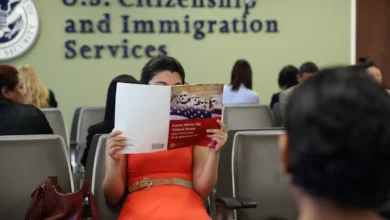
Federal Court Halts Trump Administration Rule Capping International Student Visas at Four Years

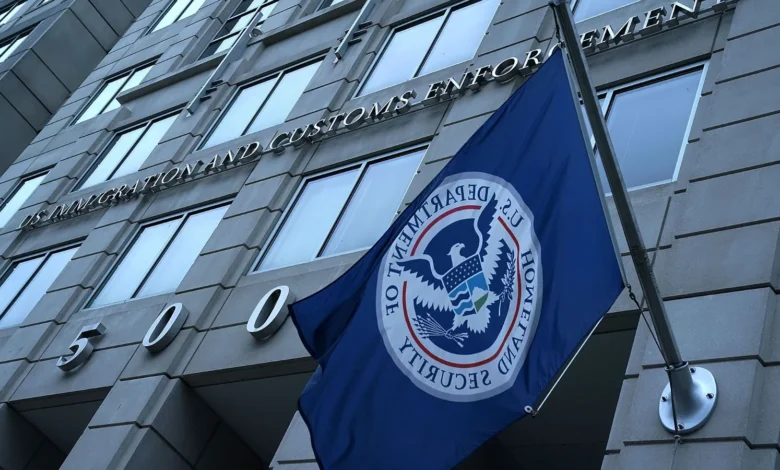
A federal judge has issued a preliminary injunction halting a controversial Department of Homeland Security rule that would have fundamentally restructured the United States international student visa system by imposing a strict four-year cap on stays. The ruling represents a significant legal defeat for the federal government and provides immediate relief to institutions of higher education, international scholars, and advocacy groups that had argued the policy was arbitrary, punitive, and legally flawed.
The injunction, handed down on Monday, addresses a policy initially published by the Department of Homeland Security (DHS) in July. Historically, the United States student visa program operated under the "duration of status" framework, allowing foreign nationals holding F, J, or I visas to remain in the country for the entire duration of their academic programs, provided they maintained good standing. The July rule sought to replace this longstanding practice by limiting the maximum stay for most international students and exchange visitors to four years, with a shorter two-year limit applied to citizens of certain countries deemed by the government to have high rates of visa overstays or state sponsorship of terrorism.
Under the blocked framework, any international student or academic researcher needing more than four years to complete a degree program—such as those pursuing doctoral degrees, joint undergraduate and graduate programs, or medical residencies—would have been forced to navigate a formal extension process through U.S. Citizenship and Immigration Services. The court’s decision prevents this policy from taking effect while the broader lawsuit proceeds through the judicial system.
Legal Grounds and Violations of the Administrative Procedure Act
The legal challenge was brought forward in August by a coalition of higher education organizations and labor unions, including the American Federation of Teachers (AFT), NAFSA: Association of International Educators, and the Presidents’ Alliance on Higher Education and Immigration. The plaintiffs argued that DHS violated both statutory authority and regulatory procedures when enacting the rule.
In granting the preliminary injunction, the presiding judge detailed numerous violations of the Administrative Procedure Act (APA), the federal statute governing how agencies propose and establish regulations. The judge found that the Trump administration failed to meet several fundamental requirements of the APA, beginning with the obligation to provide a reasonable and empirically supported justification for a major policy shift.
Federal agencies must demonstrate that a proposed rule addresses a genuine, systemic problem. In this case, DHS justified the four-year cap as a necessary measure to uphold national security, prevent visa fraud, and protect the integrity of the nation’s borders. However, the court found that these justifications crumbled under judicial scrutiny. Rather than presenting concrete data demonstrating a widespread or systemic threat posed by international students remaining under the duration-of-status system, the agency relied primarily on isolated, anecdotal incidents. Furthermore, the judge noted that the cited incidents would not have been prevented or mitigated by the implementation of a student visa cap.
The disconnect between the stated goals and the actual mechanics of the rule led the court to question the administration’s underlying motives. The judge observed that this lack of empirical grounding raised legitimate questions regarding whether the policy was genuinely designed to safeguard national security or whether it aimed to achieve undisclosed objectives, such as asserting greater federal oversight and control over academic institutions and international scholarly exchange.
Flaws in the Public Comment Process and Economic Analysis
Beyond the lack of substantive justification, the court identified procedural failures regarding public engagement. The APA mandates that federal agencies provide adequate opportunity for public notice and comment on substantial regulatory proposals, and that they genuinely engage with and consider the feedback received from stakeholders.
Although DHS held a public comment period, the judge characterized it as "exceptionally short, and barely legal," lasting a mere 32 days. Despite this compressed timeline, the agency received approximately 22,000 public comments, with an overwhelming majority expressing opposition to the proposed cap. The court noted that the final rule bore few substantive differences from the initial proposal, indicating that DHS failed to meaningfully address or incorporate the significant concerns raised by universities, educators, and legal experts.
Additionally, the judge highlighted that the agency neglected to evaluate less burdensome regulatory alternatives that could have achieved administrative goals without disrupting the academic journeys of hundreds of thousands of students. Furthermore, DHS failed to conduct a reasoned cost-benefit analysis. Implementing a mandatory extension application process for all students exceeding the four-year threshold would have imposed substantial financial and administrative burdens on both academic institutions and individual scholars, yet the agency did not adequately quantify or account for these impacts.
The court also addressed the government’s attempt to shield the rule from rigorous judicial review by invoking broad national security interests. The judge wrote that the administration’s contention that the rule was indispensable for national security borders on the absurd, emphasizing that invoking security cannot serve as a blanket exemption from compliance with federal administrative law.
Vague Extension Criteria and Arbitrary Discretion
A central point of concern highlighted by the court involved the mechanics of the proposed extension process. Under the blocked rule, international students and academics requiring additional time to complete their studies would have been subjected to an application process overseen by individual DHS officials.
The judge sharply criticized the lack of objective criteria and transparent standards governing this process, warning that it vested sweeping, unchecked discretion in individual bureaucrats. According to the court’s analysis, the framework lacked meaningful avenues for appeal, meaning a government official could potentially terminate a non-U.S. citizen’s academic, research, or teaching activities based on vague criteria, or seemingly for any reason at all. Legal scholars and university administrators had previously warned that such unpredictability would severely damage the global reputation of the United States as a welcoming destination for top-tier international talent.
Chronology of Events Leading to the Injunction
The legal battle over the four-year student visa cap unfolds against a broader backdrop of shifting immigration policies affecting higher education:
- July: The Department of Homeland Security officially publishes the final rule eliminating the "duration of status" framework for F, J, and I visa holders, replacing it with a maximum four-year cap.
- August: A robust coalition of higher education institutions, labor unions, and advocacy groups—including the American Federation of Teachers, NAFSA: Association of International Educators, and the Presidents’ Alliance on Higher Education and Immigration—files a formal lawsuit in federal court challenging the rule.
- September: Following legal arguments from both sides, the federal judge issues a preliminary injunction blocking the DHS rule from taking effect, citing multiple violations of the Administrative Procedure Act.
- October 2: The next scheduled hearing in the ongoing legal proceedings.
Reactions from Higher Education and Advocacy Coalitions
The higher education community responded to the preliminary injunction with widespread relief and strong endorsements, framing the decision as a vital victory for academic freedom, institutional autonomy, and international cooperation.
Randi Weingarten, president of the American Federation of Teachers, issued a statement praising the ruling. "This preliminary injunction is proof positive that the Trump administration’s proposed limits on how long international scholars have to complete their studies is arbitrary and hostile," Weingarten said, emphasizing the essential contributions that international students and educators make to the American educational ecosystem.
Fanta Aw, CEO of NAFSA: Association of International Educators, echoed those sentiments, describing the court order as a crucial milestone. Aw called the decision "an important step toward preserving a fair and predictable system for international students and scholars and the institutions that welcome them."
Representatives from the Presidents’ Alliance on Higher Education and Immigration similarly emphasized that international students contribute billions of dollars to the U.S. economy and drive vital research and innovation across scientific, technological, and humanities disciplines. Creating unnecessary bureaucratic hurdles, they argued, would only encourage top global talent to pursue educational opportunities in competing countries such as Canada, the United Kingdom, Australia, and Germany.
Broader Implications and Future Outlook
While the preliminary injunction successfully halts the enforcement of the four-year visa cap for the time being, the legal battle is far from over. The ruling represents a temporary halt rather than a permanent invalidation, meaning the policy could potentially be revived or modified depending on future court rulings, appellate decisions, or subsequent administrative actions.
The next pivotal date in the litigation is scheduled for October 2, when the court will hold its next hearing to determine the subsequent steps in the case. Legal experts anticipate that the federal government may appeal the preliminary injunction, setting up a high-stakes legal battle in the appellate courts over the limits of executive authority in immigration enforcement and its intersection with academic institutions.
For universities and colleges across the United States, the ruling provides immediate stability as they prepare for upcoming academic terms. International student enrollment is a critical component of institutional finance and diversity, and university administrators continue to monitor the litigation closely to ensure that the U.S. remains a competitive and predictable destination for scholars worldwide.
Related posts: