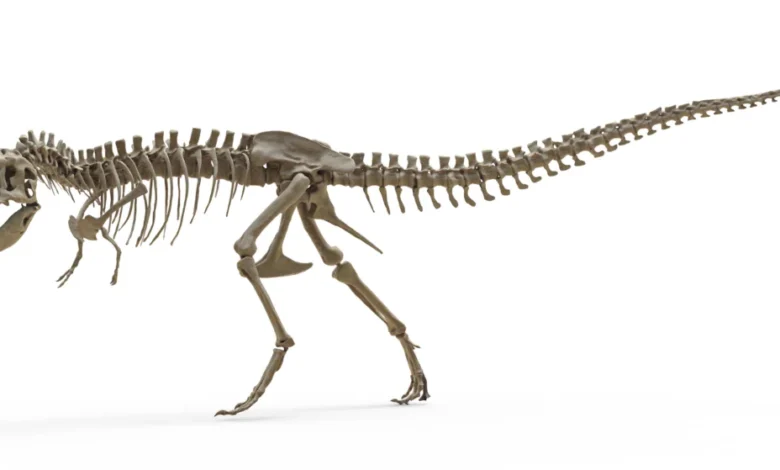
For over a century, the popular image of the Tyrannosaurus rex underwent a radical transformation. Once depicted as a lethargic, cold-blooded scavenger that dragged its tail across the landscape like a giant lizard, the iconic predator was eventually reimagined as an agile, high-metabolism hunter, a shift popularized by cinematic representations like Jurassic Park. Yet, beneath the debate over its posture and speed lay a fundamental physiological question: Was the T. rex truly warm-blooded, or did it rely on environmental factors to regulate its internal temperature? New research, led by geochemists Randon J. Flores and Robert A. Eagle at the University of California, Los Angeles, suggests the answer is firmly in the former camp. By applying advanced isotope analysis to fossilized teeth, the team has determined that these Cretaceous giants maintained a stable, elevated body temperature comparable to that of a modern African elephant.
The Evolution of Dinosaur Thermal Science
The history of paleontology is marked by a long-standing impasse regarding the metabolism of extinct archosaurs. For decades, researchers relied on indirect markers to infer physiological traits. These included the study of bone microstructure, which reveals growth rates, and the analysis of geographic distribution, which attempts to determine if dinosaurs were limited to tropical climates. Some paleontologists argued that dinosaurs were endotherms—creatures capable of generating their own internal body heat—while others proposed that they occupied a middle ground, perhaps possessing a unique thermal strategy that varied by lineage.
Previous attempts to quantify dinosaur body temperature were frequently undermined by the limitations of oxygen isotope analysis. This traditional method relies on the ratios of oxygen isotopes in fossilized bone and enamel, but these ratios are inherently tied to the isotopic composition of the water available to the animal during its life. Because the hydration history of an extinct species is impossible to reconstruct with total certainty, the resulting temperature estimates remained imprecise and subject to significant scientific skepticism.
Clumped Isotope Thermometry: A Breakthrough Method
To circumvent the inaccuracies of earlier studies, the UCLA-led team utilized a sophisticated technique known as clumped isotope thermometry. Pioneered in the context of dinosaur research by Robert A. Eagle over a decade ago, this method focuses on the behavior of rare, heavy isotopes within carbonate minerals.
When minerals like calcium carbonate form within an animal’s body—such as in the development of tooth enamel—carbon and oxygen atoms bond together. The frequency at which heavy isotopes, specifically carbon-13 and oxygen-18, bond to one another—or "clump"—is strictly dictated by the temperature at which the mineral crystallized. Because tooth enamel forms within the living environment of the animal, these clumped bonds serve as a biological thermometer, recording the precise body temperature at the time of formation. Crucially, this measurement is independent of the isotopic composition of the water the animal consumed, providing a much more reliable and direct data point than previous methodologies.
Analytical Rigor and Fossil Preservation
The research team analyzed three distinct Tyrannosaurus rex teeth, all sourced from the Hell Creek Formation in Montana. This geological site is a critical resource for paleontologists, as it preserves the final biological record of the Cretaceous period immediately preceding the Chicxulub asteroid impact 66 million years ago. Two of the specimens belonged to a juvenile T. rex, estimated to have weighed upwards of three tons, while the third was a partial tooth from a separate, mature individual.
To validate their findings, the researchers first performed rigorous checks to ensure the chemical integrity of the fossils had not been compromised during the millions of years of burial. They prioritized tooth enamel, a substance significantly more resistant to diagenetic alteration—the chemical and physical changes that occur during fossilization—than dentin or porous bone. Infrared spectroscopy confirmed that the fossilized enamel retained a composition similar to that of modern alligator enamel. Furthermore, the researchers observed distinct isotopic signatures between the enamel and the dentin, a differentiation that would have been erased had the teeth been chemically contaminated by the surrounding environment.
Comparative Physiology and Results
The results of the analysis provided a clear window into the T. rex’s thermal state. The juvenile teeth yielded temperatures of 35.9°C and 37.3°C, while the third tooth indicated a temperature of 34.7°C. When averaged, these figures suggest a mean body temperature of approximately 36.3°C, with a margin of error of ±2.5°C.
For context, this temperature is remarkably close to that of modern African and Indian elephants, which maintain an average body temperature of about 36°C. It is also consistent with the thermal ranges of large, flightless birds such as ostriches and emus. In contrast, the team analyzed five crocodilian teeth from the same riverine environments. Those specimens returned an average temperature of 30.9°C, aligning perfectly with the known physiological requirements of modern crocodiles, which maintain their body temperature by oscillating between water and sun-drenched riverbanks. The disparity between the T. rex and the contemporaneous crocodilians mirrors the thermal gap observed today between large mammals and cold-blooded reptiles.
Assessing Inertial Homeothermy
A common counter-argument to the claim that dinosaurs were endotherms is the theory of "gigantothermy" or inertial homeothermy. This hypothesis suggests that very large animals can maintain a stable, warm body temperature simply through their sheer mass, which allows them to lose heat slowly in a manner that mimics endothermy.
However, the UCLA study suggests that the T. rex’s temperature was higher than what would be predicted by standard body-size scaling models for a cold-blooded animal. To test if the T. rex was simply reflecting its environment, the researchers analyzed clumped isotopes in fossilized freshwater mussels found in the same strata. These mussels, which serve as a proxy for summer water temperatures, suggested an average ambient temperature of 26°C. Furthermore, high-resolution climate modeling of the late Cretaceous suggested that even during the warmest summer months, the mean annual temperatures in the Hell Creek region likely hovered around 21°C, with peaks rarely exceeding 33°C. Because the T. rex maintained a temperature consistently higher than its surroundings, the researchers argue that the predator was likely a homeothermic endotherm.

Geographic and Ecological Implications
The implications of a warm-blooded T. rex are significant for our understanding of dinosaur ecology. By creating a "virtual species" model, the researchers integrated their thermal data with climate simulations of the Western Interior Seaway—the vast, shallow sea that bisected North America during the Cretaceous.
By mapping the thermal tolerance of modern birds and mammals against the projected seasonal rainfall and temperature data of the era, the model indicated that the T. rex possessed the physiological flexibility to thrive across nearly the entire North American continent. The study posits that the current distribution of known T. rex fossil sites likely represents a bias in preservation and discovery rather than an actual limitation of the animal’s range. This aligns with recent paleontological evidence, including the discovery of tyrannosaurid remains in Alaska and potentially the Trans-Pecos region of Texas, suggesting the species was highly adaptable to varying latitudes.
Limitations and Future Research
Despite the robustness of the data, the researchers are careful to acknowledge the limitations of their study. Because the sampling process required minimal disruption to the fossilized teeth, the researchers were only able to analyze small portions of the enamel. This raises the possibility of a seasonal bias, where the recorded temperatures might reflect only a specific period of the animal’s growth cycle.
Nonetheless, the study provides a compelling case for the endothermic nature of the Tyrannosaurus rex. The ability to maintain an elevated, steady body temperature would have provided a distinct evolutionary advantage, allowing these predators to remain active in diverse environments and pursue prey with the endurance expected of an apex predator. As future research utilizes this clumped isotope technique on a broader array of dinosaur species, the scientific community may finally reach a definitive consensus on the thermal physiology that fueled the reign of the dinosaurs. The full findings of this study have been published in the journal Science Advances.