The Rapid Orbital Decay and Mysterious Disappearance of Exoplanet TOI-2535b Challenges Current Planetary Formation Models

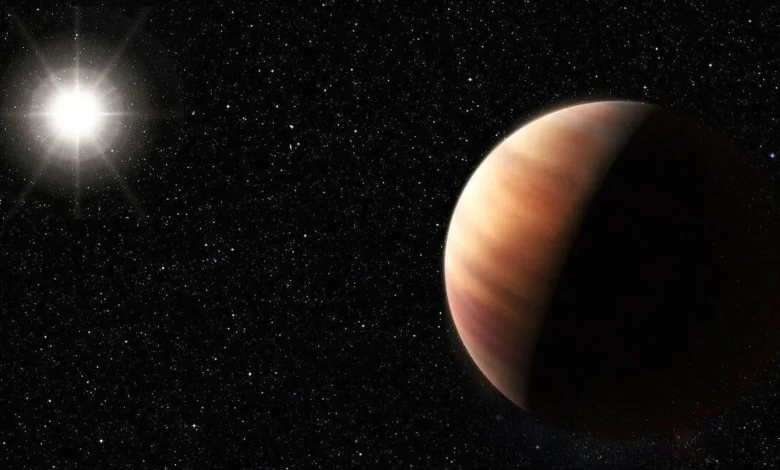
The astronomical community is currently grappling with a profound enigma surrounding the gas giant TOI-2535b, a world that has effectively vanished from the view of ground-based and space-borne transit surveys. Recent observational data indicate that this Jupiter-sized exoplanet, which once reliably crossed the face of its host star, TOI-2535, has ceased its transit activity entirely. This phenomenon is not merely a matter of mechanical failure in observational equipment; it represents a genuine orbital shift occurring at a rate that defies conventional astrophysical models. Researchers investigating this anomaly have concluded that the planet’s transit duration grew progressively shorter over recent years, suggesting a migration from an equatorial path across the host star to a trajectory near one of the stellar poles, before ultimately drifting out of the line of sight from Earth.
Chronology of the Disappearance
The timeline of TOI-2535b’s observational life is brief but remarkably informative. Upon its initial detection via the Transiting Exoplanet Survey Satellite (TESS), TOI-2535b exhibited the classic "dip" in starlight associated with a transiting planet. For a period, astronomers could predict with high precision when the planet would cross the stellar disk. However, as longitudinal data accumulated, a discernible pattern emerged: each subsequent transit lasted for a shorter duration than the last.
This trend is a definitive indicator of nodal precession—a change in the orientation of the planet’s orbital plane relative to the observer. As the orbit tilted, the path of the planet across the star migrated from the center (where the chord is longest) toward the limb (where the chord is shortest). Eventually, the tilt became sufficiently pronounced that the planet no longer intercepted the stellar disk from the perspective of our solar system. By the most recent observation cycles, the transit signal had reached a logical, if puzzling, endpoint: complete silence. The planet remains bound to its star, but its transit-based detection window has closed, likely for the foreseeable future.
Gravitational Dynamics and the Hidden Interloper
The speed at which this orbital inclination change has occurred is unprecedented. In the context of planetary science, a Jupiter-sized object possesses significant angular momentum, making it resistant to rapid orbital shifts. For TOI-2535b to change its inclination so dramatically, it would require a massive gravitational catalyst. The scientific team studying the system has posited that an unseen companion—a second, as-yet-undetected planet—must be exerting the necessary tidal forces to drive this migration.
This hypothesis rests on the concept of Kozai-Lidov cycles, a mechanism by which a distant, massive body can induce long-term oscillations in the eccentricity and inclination of a closer planet. However, for such an effect to manifest as rapidly as it has in the TOI-2535 system, the unseen partner would need to be either exceptionally massive or locked into a highly eccentric orbit that brings it periodically close to the system’s center of mass. The researchers characterize the rate of inclination change observed here as the fastest ever recorded for an exoplanet orbiting a single star, placing this system in a class of its own regarding orbital instability.
Computational Modeling of 300,000 Scenarios
To quantify the likelihood of various gravitational configurations, the research team utilized high-performance computing to run 300,000 distinct orbital simulations. The objective was to determine which gravitational parameters could account for the observed decay without leading to the total destruction of the planetary system.
Initial simulations indicated that systems featuring orbital resonance—where the orbital periods of two planets form a simple integer ratio—provided a temporary buffer against total chaos. To stress-test these findings, the team isolated the 100 most stable configurations and projected them forward in a one-million-year timeline. The results were sobering: approximately two-thirds of these systems descended into total instability within the simulation window, leading to either planet-planet collisions or the ejection of one of the worlds from the system entirely.
The surviving third of the simulations revealed two essential requirements for the unseen companion:
- The unseen planet must possess significant mass, at minimum comparable to Saturn.
- The mutual inclination between the two planetary orbits must be relatively low. If the initial angle between the orbital planes were too large, the resulting gravitational interaction would trigger a feedback loop of increasing eccentricity, eventually leading to a close encounter and systemic collapse.
Broader Scientific Implications
The case of TOI-2535b serves as a cautionary tale regarding the limitations of transit photometry. For decades, the transit method has been the workhorse of exoplanetary science, allowing for the discovery of thousands of worlds. However, this method relies heavily on the "lucky" alignment of orbits. As TOI-2535b demonstrates, this alignment is not a permanent state. The universe is dynamic, and planetary orbits are subject to the long-term gravitational tug-of-war that characterizes multi-body systems.
This discovery also highlights the "survivor bias" inherent in current exoplanet catalogs. If planets can drift out of transit alignment relatively quickly, there may be a much larger population of massive, short-period planets than current census data suggests. Astronomers are now tasked with re-evaluating whether other "missing" planets in archival data have actually disappeared or if they, too, have undergone rapid orbital migration.
Official Responses and Future Observations
While no formal statement has been issued by the primary mission operators of TESS or the James Webb Space Telescope regarding a targeted follow-up, the astronomical community is responding with increased interest in radial velocity surveys. Because the transit method has failed, researchers are now looking to measure the "wobble" of the host star to detect the gravitational signature of the unseen companion.
Dr. Helena Vance, a theoretical astrophysicist not involved in the original study, remarked, "What we are seeing in TOI-2535 is a rare window into the ‘messy’ side of orbital evolution. We often treat planetary systems as static clocks, but this system reminds us that they are fluid, chaotic, and often short-lived configurations. If this planet is indeed being nudged by a Saturn-mass sibling, we are likely witnessing the early stages of a planetary reorganization that could end in the expulsion of one of these worlds."
The Future of Orbital Dynamics Research
The implications for exoplanetary science are significant. First, it underscores the necessity of long-baseline observational data. A single year of data might show a stable transit, but a decade of data is required to identify the subtle precessions that herald impending orbital shifts. Second, it encourages the integration of transit data with radial velocity and direct imaging. By combining these methods, scientists can build a more comprehensive view of the gravitational landscape, moving beyond the simple "transit-or-no-transit" binary.
Furthermore, this study provides a template for analyzing similar systems where transits appear to be "flickering" or inconsistent. Researchers are already cross-referencing this data with other stars known to have irregular transit timings, searching for commonalities in stellar age, metallicity, and distance from the galactic plane. If the TOI-2535 scenario is common, it suggests that the architecture of planetary systems—even those that appear mature—remains highly susceptible to late-stage gravitational rearrangements.
Conclusion
The vanishing of TOI-2535b is not the end of the story for this system, but rather the beginning of a new phase of inquiry. As computer models continue to refine our understanding of how such massive bodies interact, the scientific community expects to gain a better grasp of the stability of our own solar system. While Earth’s orbit has remained remarkably stable over the last four billion years, the TOI-2535 system reminds us that the delicate balance of planetary motions is a privilege of specific gravitational conditions—conditions that can, and do, evolve. For now, the hunt for the "hidden" massive companion remains the primary objective, as astronomers hope to confirm whether the invisible architect of this disappearance can be caught in the act.