An AI Filmmaker’s Bold Vision: "Odysseus: The Fall" Sparks Debate on the Future of Cinema

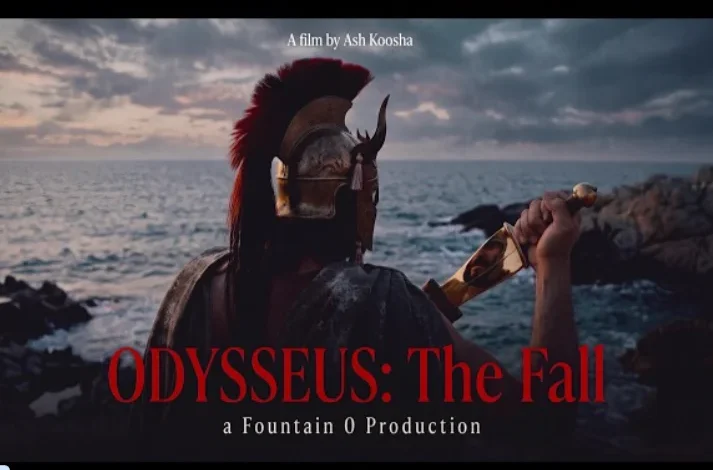
The announcement sent ripples of surprise and consternation through the film industry and beyond. Ash Koosha, an Iran-born, England-raised engineer, revealed his creation: a 135-minute AI-generated film titled Odysseus: The Fall. Inspired by Homer’s epic The Odyssey, a work in the public domain, the project has ignited a fierce debate, particularly as it emerges in the same year that acclaimed director Christopher Nolan is reportedly working on his own grand-scale adaptation of the same myth. Koosha’s endeavor, reportedly costing a fraction of a traditional Hollywood production and eschewing human actors entirely, has been met with a mix of fascination and fierce criticism, raising fundamental questions about authorship, creativity, and the very definition of filmmaking in the digital age.
Koosha stated his intention to hold the release of Odysseus: The Fall for several more weeks, a move that did little to quell the immediate backlash. The central question swirling around this provocative project is the intent of its creator. Why embark on a cinematic reimagining of a story already slated for a massive $250 million theatrical release by a titan of the industry, and do so with cutting-edge AI technology for a nominal cost? This stark contrast in approach has led many to view Koosha’s project as a direct challenge, or even a dismissive gesture, towards traditional filmmaking practices.
The timing of Koosha’s announcement is particularly noteworthy. It coincided with a public discussion between Christopher Nolan and actor Matt Damon regarding the future of large-scale, analogue filmmaking. Damon expressed a sense of finality, remarking, "I knew that this was the last chance I was going to have to do something like this." Nolan, however, countered, labeling Damon’s sentiment as "defeatist." Koosha’s AI-driven Odyssey, then, can be interpreted by some as a tangible manifestation of the very future Nolan appears to be resisting, a future that might indeed signal an "end-of-cinema" moment for analogue productions, as predicted by Damon.
To gain clarity on his motivations and the underlying philosophy driving this ambitious project, The Hollywood Reporter engaged in an in-depth conversation with Ash Koosha, his brother and collaborator Pooya Koosha, and their producer, Tom Rogers. Rogers, founder of CNBC, has partnered with the Koosha brothers to establish Fountain 0, a new banner dedicated to AI-centric film production. Together, they articulated a vision for cinema that is both coherent and, for many, undeniably provocative and even infuriating.
A New Frontier in Storytelling: Addressing the Backlash
The initial days following the announcement have been, as Ash Koosha described, "a little intense," marked by "a lot of excitement, and a lot of questions, and a lot of confusion." He was quick to clarify that his intention is not to antagonish Christopher Nolan. "He’s doing what he’s doing in the old world of cinema. And he does it brilliantly. But there’s room for something in the new world," Koosha explained. His personal connection to The Odyssey runs deep, stemming from his childhood. He learned about Nolan’s forthcoming film through a Reddit community focused on Homer, highlighting his immersion in the source material and a desire to engage with its intricacies, from "Agamemnon’s outfits and everything else."
"My goal is not to make a movie that is the same as his," Koosha emphasized. "It’s to use the tools to make my own version of the story." This distinction is crucial for Koosha and his team, who see their work as an evolution rather than a direct competition.
From Humanitarian Urgency to Existential Questions
The industry’s reception of Koosha’s previous work, Dreams of Violet, offered a contrasting perspective. That AI-generated film, which debuted at Tribeca, addressed the recent Iranian democracy protests. Its creation was framed by the practical impossibility of safely filming on location in Tehran and the urgent humanitarian nature of its subject matter. This context garnered significant sympathy and understanding.
Odysseus: The Fall, however, lacks the same immediate humanitarian imperative. This has led many to question the ethical and artistic justification for its creation. Koosha, however, views the two projects as interconnected. "Dreams of Violet raised questions and this raises deeper questions," he stated. "Questions that are important for the industry. ‘Can we have stories at the speed of news?’ ‘Can other people paint with tools besides people like Christopher Nolan?’ ‘What can be created if they can?’"
He refutes the notion that Odysseus: The Fall is merely a derivative work, akin to the "knockoff direct-to-video movies" that have become commonplace in the blockbuster era. Instead, he positions it as a component of a larger cultural conversation. "Before these AI tools if I had a theory about Odysseus I could write a Substack about him. And some people would read it but how many? Now I can put my take into a film. I can paint my opinion with images and sound and light. And a lot more people can see it."
Tangential Filmmaking: A New Cinematic Paradigm?
This perspective leads Koosha to describe his approach as "tangential filmmaking." He elaborates, "It’s other stories that can exist with the main one in cinemas." Producer Tom Rogers further clarifies this concept, acknowledging the undeniable superiority of Nolan’s approach to physical filmmaking. "Christopher Nolan is the ultimate in physical filmmaking and what we’re trying to do is be the ultimate in AI filmmaking," Rogers stated. "You can’t judge them on the same terms. They’re at 125 years and we’re in our infancy. So of course there are going to be bumps in the road. But it’s what you can achieve by trying. To me the risk is low and the reward is high: a whole new kind of cinema."
Rogers also highlighted the potential for AI filmmaking to transcend budgetary constraints. "We’re just trying to show what’s possible when you don’t have to worry about budgets. We want people to see it’s not all slop." This suggests a future where creative vision is not limited by financial considerations, potentially democratizing filmmaking on an unprecedented scale.
Reinterpreting Odysseus: A Personal and Cultural Connection
When pressed on his specific interpretation of Odysseus that his film aims to illuminate, Ash Koosha revealed a deeply personal connection. "I don’t think he’s well-understood," he said. "I don’t want to say too much but I think as someone who came from Iran and moved to the West as a child I can understand something about his story, about what it means to be far from home. How it wasn’t just about ego motivating him." This suggests a nuanced portrayal of Odysseus, moving beyond the traditional heroic archetype to explore themes of displacement and identity, resonating with Koosha’s own life experiences.
A Deliberate Release Strategy and the Democratization of Cinema
The question of when audiences will actually witness Odysseus: The Fall is met with a deliberate strategy. Pooya Koosha indicated a preference for a release "at least until late summer." He explained the rationale: "We don’t want people to feel overloaded and confused. That’s important to us." Tom Rogers echoed this sentiment, emphasizing their commitment to transparency. "We could have released it now but we’re not trying to trick people. We want them to be able to clearly compare." This suggests a desire for their work to be understood within its own context, allowing for a distinct evaluation rather than immediate comparison or dismissal.
The concept of "tangential filmmaking" is further explored, drawing parallels to the early days of the internet. "It’s a novel view and almost calls to mind the early days of the Web, when everyone started blogging and people said ‘but why would you want to read anything that isn’t from these big media outlets.’ And of course we did, and they co-exist," Ash Koosha articulated. He believes that Hollywood and filmmaking are now at a similar inflection point, where AI will catalyze an "explosion of bottom-up cinematic content that Internet distribution enabled for media."
This democratization of filmmaking is a core tenet of Koosha’s vision. "There is room for all kinds of cinema and AI finally makes that possible," he stated. "We’ve had so many years when making cinema was dependent on having enough money, and unless you’re Christopher Nolan you couldn’t make a movie of a certain scale, and even he couldn’t sometimes. The concentration of revenue became a barrier to entry. All of that is going to go away. That’s what we’re trying to bring about." Pooya Koosha added, "We hope a lot of other people come in and do this. This is about something very broad and democratic."
The Future of Actors in an AI-Driven Cinematic Landscape
A significant implication of this emerging form of filmmaking is its impact on human actors. If "tangential filmmaking" proliferates, a substantial portion of future cinematic content may not feature them. Tom Rogers offered a counterpoint to this potential displacement. "I think this will make actors more valuable, whether it’s in an old-world movie or live theater," he posited. "People will want to see them too, maybe even more than they do now."
This suggests a future where different forms of cinema coexist and even complement each other. Traditional shoots, characterized by the presence of actors and physical sets, might thrive in one realm, while AI-generated projects offer a new avenue for visual storytelling, free from the constraints of human performance. Ash Koosha concluded, "That’s all we’re trying to do. To show you can make great films in the manner that Christopher Nolan does. But you can make gorgeous films using AI models too." This vision of coexistence, where traditional and AI-driven filmmaking flourish side-by-side, represents a profound shift in the landscape of cinematic creation and consumption. The debate sparked by Odysseus: The Fall is not merely about one film, but about the fundamental redefinition of what it means to create and experience cinema in the 21st century.