The Mathematical Foundation of Democracy: Why Civic Quantitative Literacy Is Essential for the Future of Governance

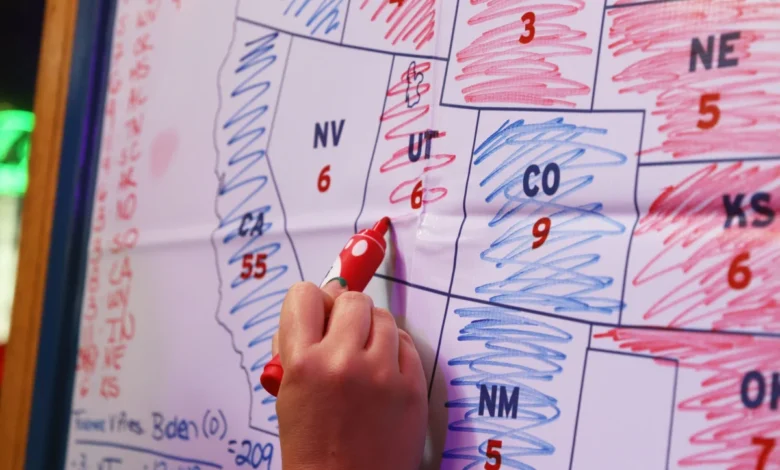
Democracy relies on more than just the abstract ideals of representation and freedom; it functions on the cold, hard logic of mathematics. From the granular tallying of individual ballots to the complex, often contentious process of drawing legislative district maps, mathematical choices dictate political outcomes. As the nation grapples with heightened polarization and a crisis of institutional trust, experts are increasingly arguing that the solution lies not just in civics education as it is traditionally understood, but in the integration of mathematics and democratic theory. By shifting the focus from partisan ideology to the structural mechanics of governance—such as voting methods, proportional representation, and statistical analysis—educators hope to cultivate a more resilient, informed, and critical generation of citizens.
The False Dichotomy of Core Curricula
For decades, American K-12 education has operated under a rigid, siloed structure. School boards and administrators frequently treat the allocation of classroom time as a zero-sum game. The prevailing logic suggests that if a school district prioritizes science, technology, engineering, and mathematics (STEM), it must necessarily sacrifice the depth of its social studies and civics programs. This binary view—forcing a choice between quantitative rigor and civic engagement—has resulted in a fragmented educational experience where students rarely see the connective tissue between the functions of an equation and the functions of a government.
Educational reformers and researchers, however, are pushing back against this paradigm. They contend that the intersection of math and civics is not merely a theoretical exercise but a practical necessity. By teaching students how to analyze political data, understand the mathematical consequences of gerrymandering, or evaluate the impact of the Electoral College, schools can satisfy both math and social studies standards simultaneously. This interdisciplinary approach transforms abstract math into a tool for understanding real-world power dynamics, while simultaneously grounding civics in empirical, objective evidence.
Chronology of the Movement
The push to bridge this pedagogical gap has gained momentum over the last decade, driven by a series of high-profile debates regarding election integrity and structural reform.
- 2010s (Early Efforts): The rise of big data in political campaigning prompted individual educators to begin introducing data literacy into high school statistics courses.
- 2019: A seminal shift occurred as major educational publications began highlighting the intersection of math and civics, framing it as "the most powerful civics lesson you’ve never had."
- 2023-2024: Researchers from the University of Southern California (USC) and Wellesley College launched a comprehensive study, interviewing 123 educators across California, Florida, Illinois, Massachusetts, New York, and Texas to document current barriers and opportunities for integrated instruction.
- 2025-2026: Proponents began lobbying state boards of education to include "Civic Quantitative Literacy" within formal K-12 learning frameworks, aiming to move beyond elective-only models toward a systemic, standardized curriculum.
Data and Educational Landscape
The research conducted by the USC and Wellesley team reveals a striking consensus: while teachers are enthusiastic about the potential for these lessons, the implementation is almost entirely sporadic. Currently, the majority of "math-civics" education is tied to election cycles or dependent on the individual initiative of a passionate teacher rather than a district-wide mandate.
Data suggests that students who engage with this curriculum show improved proficiency in critical thinking. For instance, when students analyze voter turnout metrics—broken down by race, age, and socioeconomic status—they are forced to engage with statistics and data visualization. This process moves the conversation from vague claims of "disenfranchisement" to an evidence-based discussion of why turnout is uneven and how institutional rules (such as registration deadlines or polling station placement) influence those outcomes. Furthermore, comparing election results across different tallying methods—such as First-Past-The-Post versus Ranked-Choice Voting—provides a concrete, relatable application for functions and ratios.
Perspectives from the Field
Educators involved in the study noted that the "When am I ever going to use this?" question, which haunts many mathematics departments, disappears when the math is applied to the student’s own future as a voter.

"Teachers in elementary settings have a unique advantage," notes the study’s findings, "because they teach across subjects and can naturally weave these concepts into daily work." Conversely, high school educators in subjects like AP Statistics or Government have the opportunity to create capstone units that demand students analyze current legislative maps or economic policy.
However, administrators have highlighted significant systemic barriers. Standardized testing pressures often force teachers to stick strictly to the scripted curriculum to ensure high marks on state assessments. Without these interdisciplinary topics being formally included in state standards, teachers fear they lack the "permission" to divert from their current lesson plans.
The Implications of Quantitative Illiteracy
The absence of math-civics literacy has profound implications for the health of a democracy. When citizens lack the tools to evaluate the mathematical fairness of their systems, they become susceptible to misinformation and manipulation.
For example, the public discourse surrounding gerrymandering is often highly charged and emotional. However, when students are taught the "efficiency gap"—a mathematical metric used to measure partisan bias in district maps—they gain an objective framework for evaluating reform proposals. Without this literacy, the electorate is forced to rely on the rhetoric of pundits rather than their own ability to analyze the underlying structures of representation.
Moreover, as debates over the Electoral College and the merits of proportional representation intensify, the need for a numerically literate public grows. A citizenry that understands the mathematical consequences of these systems is better equipped to advocate for transparency and hold public officials accountable. If education for citizenship remains purely historical or ideological, it leaves students only partially prepared for the complexities of 21st-century participation.
Strategic Roadmap for Reform
To move from the current ad-hoc model to a systemic integration of math and civics, researchers are advocating for a three-pronged strategy:
- State Standard Alignment: Engaging state departments of education to formalize math-civics concepts within core learning standards. This ensures that districts across the state are required to include these topics in their curricula.
- Framework Development: Collaborating with national bodies—such as the National Assessment Governing Board—to integrate quantitative civic literacy into national frameworks, ensuring that these topics are treated as essential learning outcomes.
- Pedagogical Support: Partnering with core math and social studies curriculum providers to develop "plug-and-play" modules. By creating resources that are easy for teachers to integrate without significant additional planning time, proponents hope to overcome the inertia currently hindering classroom adoption.
Conclusion: A Prerequisite for Democracy
Civic quantitative literacy is no longer a luxury in an era defined by data-driven political outcomes. It is a fundamental requirement for a self-governing people. By merging the precision of mathematics with the importance of civics, the education system can provide students with a "reality check" on their democratic institutions.
As Anna Saavedra of the USC Schaeffer Institute and Ismar Volić of Wellesley College have argued, the goal is to create a curriculum where the mechanics of democracy are as transparent as the arithmetic used to measure them. If the ultimate purpose of public education is to prepare students to function in a free society, then the mathematics of that society must be at the core of the curriculum. The path forward requires a shift in how we value interdisciplinary learning—moving away from the idea that math and civics are separate domains, and toward a unified approach that acknowledges that a healthy democracy requires both a principled heart and a calculating mind. Through this synthesis, the next generation of voters will be better positioned to understand, question, and ultimately improve the democratic structures that define their lives.