Chiwetel Ejiofor Reflects on a Storied Career at the Torino Film Festival After Receiving the Prestigious Stella della Mole Award

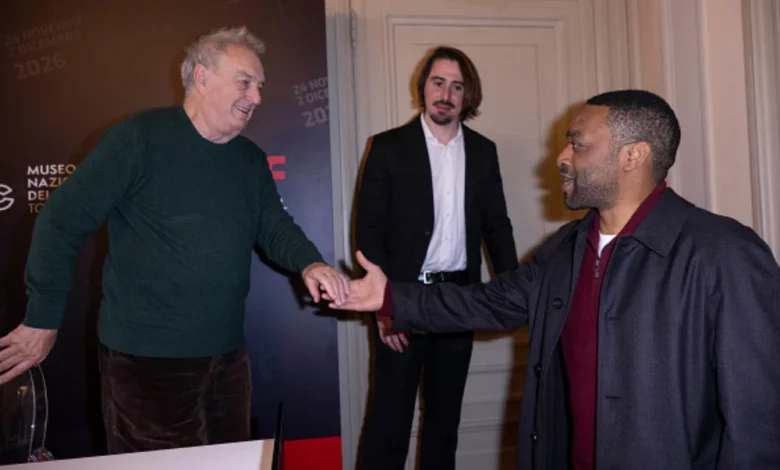
The 42nd Torino Film Festival became the backdrop for a profound retrospective on modern cinema as acclaimed British actor, writer, and director Chiwetel Ejiofor took center stage. Visited by international cinephiles, industry professionals, and enthusiastic fans, the historic Italian festival honored Ejiofor’s illustrious multi-decade career by bestowing upon him the prestigious Stella della Mole award for lifetime achievement. The accolade places Ejiofor alongside a distinguished group of international artists who have left an indelible mark on the global film landscape.
During his time at the festival, Ejiofor participated in extensive masterclasses and audience Q&A sessions. He reflected candidly on the anxieties of his early days in the industry, the surprising trajectory of his filmography, his deep-rooted foundational training in British theater, and his transition into a globally recognized cinematic powerhouse. The retrospective screenings of two pivotal films in his career—Stephen Frears’ gritty urban thriller Dirty Pretty Things and Steve McQueen’s sweeping, Academy Award-winning historical drama 12 Years a Slave—provided a thematic anchor for discussions surrounding his artistic evolution, cultural impact, and unwavering dedication to complex, emotionally resonant storytelling.
From Amistad to An Unpredictable Industry: Navigating Early Success and Longevity
For many aspiring actors, landing a role in a major Hollywood production directed by a cinematic titan like Steven Spielberg represents the ultimate career-defining breakthrough. For a young Chiwetel Ejiofor, however, that exact scenario provoked a distinct sense of existential dread. Making his feature film debut in Spielberg’s historical drama Amistad (1997) at a tender age, Ejiofor found himself wrestling with the psychological weight of reaching what many would consider the absolute peak of the profession right out of the gate.
Addressing the audience at the Torino Film Festival, Ejiofor recalled the trepidation that accompanied his initial steps into the film industry. He admitted that he was genuinely worried about peaking too soon. At the onset of an artistic journey, young performers often conceptualize their development through a linear lens—envisioning a neat, predictable hierarchy of stepping stones leading from minor television spots to indie features, and eventually to major studio blockbusters. Yet, landing a prominent role in a Spielberg-helmed epic immediately shattered any illusions of a straightforward career path.
Realizing very early on that the entertainment industry operates on a deeply unpredictable axis, Ejiofor understood that he had two choices: he could succumb to perpetual anxiety and disquiet regarding the sporadic nature of auditions and casting calls, or he could surrender to the unpredictable rhythm of the profession. Embracing the latter philosophy allowed him to weather the inherent instability of the trade. He noted that career-defining opportunities frequently emerge from unexpected angles, places, and mediums that an artist could never meticulously pre-plan. Consequently, the ultimate challenge—and the most thrilling aspect of being a working actor—lies in cultivating the resilience and flexibility to roll with the unpredictable currents, trusting the journey and discovering where artistic curiosity ultimately leads.
Roots in the West End: The Evolution from Stage to Screen
Despite his early baptism by fire in Hollywood, Ejiofor spent a significant portion of his formative years viewing himself strictly as a theater actor rather than a cinematic leading man. His professional foundation was built on the rigorous boards of British theater institutions, performing with the prestigious National Theatre, gracing the historic stages of the West End, and collaborating with numerous adventurous off-West End theater companies.
His theatrical pedigree is anchored by some of the most demanding and celebrated roles in classical and contemporary drama. Notably, his powerful portrayal of the title character in a 2008 production of Shakespeare’s Othello at the Donmar Warehouse earned him the prestigious Laurence Olivier Award for Best Actor. For years, the stage served as his primary creative home, a space where he felt most connected to the craft of storytelling through live performance.
The paradigm shift in Ejiofor’s career occurred when he crossed paths with renowned British filmmaker Stephen Frears. The gritty 2002 thriller Dirty Pretty Things, which screened at the Torino Film Festival alongside a lifetime achievement tribute to Frears himself, proved to be the catalyst that fundamentally altered Ejiofor’s self-perception. In the film, Ejiofor delivered a mesmerizing performance as Okwe, an undocumented Nigerian immigrant working as a night desk clerk in a London hotel who stumbles upon a sinister underground organ-trafficking ring.
It was during the production of Dirty Pretty Things that Ejiofor experienced a profound shift in his artistic identity. Working alongside Frears and legendary cinematographer Chris Menges, Ejiofor began to fall deeply in love with the specific rhythm, poetry, and intimacy of cinema. The experience transformed film acting from an intimidating unknown into a medium he actively chose to pursue. For a considerable period, he successfully balanced both worlds, dividing his energies seamlessly between high-caliber theater productions and complex independent and studio films.
However, as his career matured, a new artistic dimension emerged. Ejiofor’s expanding interest in writing and directing began to consume the time he historically dedicated to stage work. Rather than appearing as an actor in theatrical productions, he began channeling his narrative impulses into crafting and helming his own cinematic projects. To date, Ejiofor has directed two notable feature films: the acclaimed biographical drama The Boy Who Harnessed the Wind (2019) and the biographical drama Rob Peace (2024).
Despite his successful foray behind the camera and his established prominence on screen, Ejiofor’s passion for live theater remains undiminished. Acknowledging the logistical challenges of carving out extended blocks of time for stage rehearsals and runs while managing a busy film and television schedule, he revealed that a return to the theater is imminent. Ejiofor is currently in active conversations regarding potential theatrical engagements, with hopes of treading the boards once again by late next year.
Mastering the Human Condition: The Profound Impact of 12 Years a Slave
While Ejiofor’s filmography boasts a rich array of diverse roles—ranging from science-fiction blockbusters like The Martian and Doctor Strange to grounded political dramas like Children of Men—his performance as Solomon Northup in Steve McQueen’s 2013 cinematic masterpiece 12 Years a Slave remains a defining pinnacle of modern cinema. The film, which also received a special screening during the Torino Film Festival, swept the global box office and critical landscape, ultimately securing the Academy Award for Best Picture.
Reflecting on the project before the festival screening, Ejiofor shared the visceral impact the script had on him upon first reading. Prior to receiving the material, he was entirely unfamiliar with the harrowing true story of Solomon Northup, a free African American man living in Saratoga Springs, New York, who was kidnapped in 1841 and sold into slavery in the bayou of Louisiana, enduring twelve years of unimaginable brutality before finally regaining his freedom.
Deeply moved and profoundly shocked by the narrative, Ejiofor immediately sought out Northup’s original 1853 memoir. He described the source material as an extraordinary and vital historical document that captures a deeply tragic period characterized by a complete absence of humanity. Bringing such a heavy, emotionally demanding narrative to life required immense psychological stamina and artistic rigor.
Ejiofor reserved high praise for director Steve McQueen, describing him as a phenomenal filmmaker whose creative process is defined by intense passion, meticulous attention to detail, thorough historical research, and a profound cinematic heart. The global reception of 12 Years a Slave, alongside its historic recognition by the Academy of Motion Picture Arts and Sciences, was profoundly gratifying for the actor, validating the grueling emotional work poured into the production. Above all, Ejiofor emphasized that regardless of the harrowing historical atrocities depicted on screen, the core message of 12 Years a Slave has always been, and will always be, a universal testament to human resilience, mutual respect, and foundational human dignity.
Broader Implications and Future Outlook
The retrospective at the Torino Film Festival and the presentation of the Stella della Mole award arrive at a fascinating juncture in Ejiofor’s professional trajectory. By honoring an artist who defies easy categorization—seamlessly transitioning between big-budget Hollywood franchises, gritty European independent cinema, classical stage acting, and auteur-driven filmmaking—the festival celebrated the modern archetype of the versatile, multi-hyphenate creator.
As Ejiofor prepares to step back onto the theatrical stage and continues to develop his voice as a director, the trajectory of his career serves as a masterclass in artistic endurance. In an industry notoriously prone to typecasting and rapid shifts in public taste, Ejiofor’s ability to embrace unpredictability has not only insulated him against the anxieties of early success but has continually reinvented his creative output. Whether he is standing before a festival audience in Italy accepting a lifetime achievement award, directing a poignant biographical drama, or commanding a classical theater stage, Chiwetel Ejiofor remains one of contemporary cinema’s most thoughtful, dedicated, and enduring cultural architects.