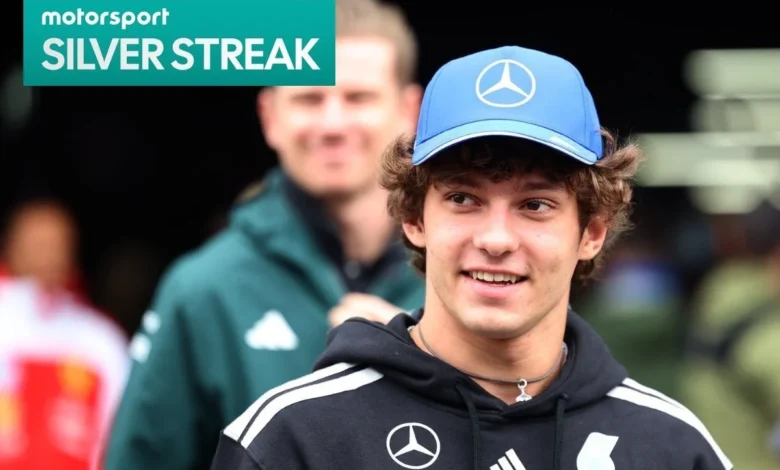
The 2026 Formula 1 season will be remembered as the year of the prodigy. At just 20 years old, Mercedes driver Andrea Kimi Antonelli ascended to the pinnacle of motorsport, clinching the World Drivers’ Championship at the Mexican Grand Prix. In only his second season in the top tier of open-wheel racing, the Italian phenomenon has dismantled the records of his predecessors, securing nine Grand Prix victories and demonstrating a level of technical maturity rarely seen in drivers with fewer than 50 race starts. While his raw speed is evident, the architecture of his success lies in a sophisticated, aggressive approach to car management that has redefined the standards for modern F1 pilotage.
The Technical Edge: Brake Migration and Differential Manipulation
Mercedes Technical Director James Allison, a veteran architect of multiple championship-winning cars, recently provided an illuminating look into the cockpit of the 2026 title-winner. Speaking on the NU Silver Arrows Radio Show, Allison highlighted that Antonelli’s primary advantage is not merely his reflex speed, but his "very, very agile" application of brake migration and differential settings.
In the current generation of F1 machinery, brake migration allows a driver to shift the balance of braking force between the front and rear axles in real-time. Similarly, the differential settings dictate how power is delivered to the wheels during cornering. Most drivers utilize these tools to stabilize the car, but Allison describes Antonelli’s methodology as "adventurous."
"He is very, very adventurous: if he has a car that’s understeering in a way that he doesn’t like, he will free it up with the diff and the brake migration to allow it to turn even if it doesn’t particularly want to," Allison explained. "And the contrary, when it feels too lively, he will close it down so that it is less so. Now, everyone does this, but Kimi is very adventurous with it. He’s willing to go to quite extreme settings on it and do it under his own steam, trusting that he will have the control to keep the car pointed nicely to the apex."
This dynamic manipulation allows Antonelli to extract pace from the Mercedes W17 that might otherwise remain locked away due to balance limitations. By constantly adjusting the car’s handling characteristics mid-corner, he creates a fluid, adaptable driving style that remains effective across changing track temperatures and fuel loads.
Chronology of a Record-Breaking Season
The 2026 season began with significant pressure on the young Italian, who stepped into a full-time seat at Mercedes following a highly publicized junior career. The following timeline outlines the key milestones of his championship campaign:
- Pre-Season: Antonelli enters his second season with a reinforced engineering team, signaling Mercedes’ intent to build the car around his specific feedback requirements.
- Early Rounds (March-April): After a steady start in the Middle East, Antonelli secures his first win of the season in Saudi Arabia, proving that his debut season was no fluke.
- Mid-Season Surge (June-August): The "Summer of Antonelli" sees a string of podium finishes. His ability to maintain pace during the high-degradation races at Silverstone and Spa-Francorchamps highlights his growing mastery of tyre management.
- The Mexican Grand Prix (October): With a commanding lead in the standings, Antonelli delivers a flawless performance in Mexico City. By crossing the finish line first, he mathematically secures the World Championship, becoming the youngest title-holder in the history of the sport.
- Post-Title Consolidation: Following his championship coronation, Antonelli continues to push, adding to his win tally in subsequent flyaway rounds.
The Science of Tyre Longevity
One of the most persistent challenges in the 2026 technical regulations is the sensitivity of the Pirelli rubber. Excessive wheel spin or aggressive entry into corners can lead to thermal degradation, forcing drivers to pit earlier than planned. Antonelli’s technical adjustments on the steering wheel have provided a unique solution to this problem.
"From the moment he hits the brakes to the apex is mostly where he is taking the lap time, and he does all that with a minimum of fuss," Allison noted. "It makes him very flexible with the car from condition to condition, and it’s been really impressive to watch."
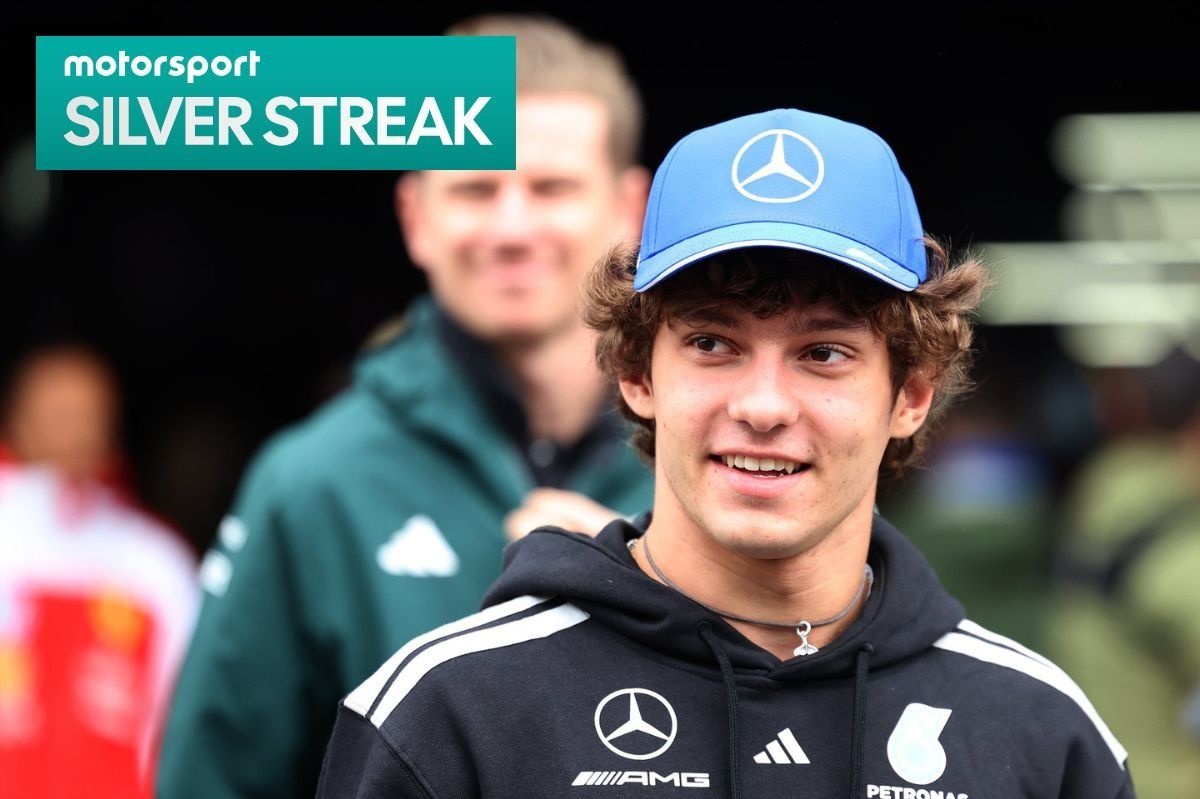
This precision on corner entry preserves the rear tyres, a feat that is often the difference between a one-stop and two-stop strategy. Allison pointed to the late-stint performance as the hallmark of Antonelli’s brilliance: "If you want to see the standout performances of Kimi this year, it’s 20 laps in when everyone else has peeled into the pits and his lap times just go level. He does it over and over and over, and he just does not damage the rear tyres because of all the work he’s doing on the entry."
Engineering Synergy: The Antonelli-Bonnington Partnership
The transition of Peter ‘Bono’ Bonnington from the era of Lewis Hamilton to the era of Kimi Antonelli has been a focal point of discussion within the Mercedes garage. According to Allison, the relationship between driver and engineer has reached a level of mutual trust that is rare in the high-stress environment of Formula 1.
The communication loop between the two is remarkably efficient. Antonelli often defers to the strategic expertise of his engineer, focusing his own cognitive bandwidth on the physical act of driving. "Well, I trust you. You do what you think is right, and I’ll try and work with what I get," is a sentiment Allison reports hearing from the champion. This "leave it to the professionals" attitude allows the Mercedes pit wall to execute complex strategic maneuvers without the need for constant, distracting negotiation over the radio.
"Bono would probably tell you that it’s been one of the most pleasurable seasons he’s had," Allison concluded, underscoring that the synergy between the driver’s cockpit management and the pit wall’s strategic oversight has been a cornerstone of the 2026 title defense.
Broader Implications for Formula 1
Antonelli’s championship has profound implications for the sport. Firstly, it validates the "fast-track" development programs now favored by top-tier teams. Mercedes’ decision to invest heavily in his progression from karting through to F1 has yielded the highest possible return on investment.
Secondly, his technical approach sets a new benchmark for the "modern" driver. While the F1 drivers of the 1990s and 2000s relied heavily on mechanical feel and seat-of-the-pants feedback, the 2026 champion acts almost as an extension of the car’s onboard computer. His ability to synthesize complex telemetry-based tools with intuitive track positioning suggests that the next generation of drivers will need to be as comfortable with software interfaces as they are with high-speed cornering.
Finally, the success of the Mercedes-Antonelli pairing shifts the momentum of the sport. With the regulation cycle nearing its maturity, teams are already looking toward the 2027 and 2028 seasons. Rivals will undoubtedly spend the upcoming winter break analyzing the onboard footage of Antonelli’s steering wheel inputs, attempting to replicate the "adventurous" brake migration profiles that have become his signature.
As the 2026 season draws to a close, the narrative is clear: Formula 1 has entered a new era. In Andrea Kimi Antonelli, the sport has found a talent who not only possesses the speed to dominate the grid but the technical intellect to manipulate the machinery in ways that were previously thought to be counter-productive. By marrying raw pace with a sophisticated, data-driven understanding of vehicle dynamics, the 20-year-old Italian has established a template for success that will be studied and emulated for years to come. The era of the "technical pilot" has arrived, and if the 2026 season is any indication, the rest of the field has a long, difficult road ahead if they hope to catch him.