Beyond the Textbook: How Loudoun County Public Schools Transformed Learning Through Project-Based Education


Project-based learning (PBL) has long promised to bridge the gap between abstract academic concepts and real-world application. Across the United States, educators are increasingly recognizing that traditional rote memorization often fails to deeply engage students. In response, a growing number of school districts are turning to experiential educational models that require students to investigate authentic problems, collaborate with peers, and present tangible solutions to public audiences.
A prominent example of this pedagogical shift can be found in Virginia’s Loudoun County Public Schools (LCPS). Over the past decade, the district has systematically integrated project-based learning into its instructional framework, evolving from a localized initiative into a district-wide culture of student empowerment. By partnering with external organizations, fostering educator leadership, and implementing dedicated innovation periods, LCPS has demonstrated how experiential learning can become a permanent, everyday fixture of public education.
The Evolution of Experiential Learning in Loudoun County
The foundation of the current PBL initiative in Loudoun County was laid approximately ten years ago. Recognizing a need to align district instruction with modern workforce realities and civic demands, LCPS leadership initiated a partnership with PBLWorks, a national nonprofit organization specializing in project-based learning professional development.
Rather than relying on outside consultants to drive the change directly, the district adopted a "train the trainer" model. This approach focused on equipping educators and school administrators with the skills and pedagogical frameworks necessary to sustain PBL independently. Approximately 100 schools participated in the initial rollout, which included targeted leadership training designed to restructure school environments to support inquiry-based instruction.
Ashley Ellis, chief academic officer for Loudoun County Public Schools, noted that the integration of project-based learning was a direct reflection of the district’s core mission. The district sought to empower students to make meaningful contributions to the world, viewing PBL as a natural bridge between classroom theory and real-world impact.
Despite the scope of the training, LCPS opted against heavy-handed mandates. The district does not explicitly require project-based learning, nor does it enforce mandatory annual training hours or a strict quota of projects per classroom. Instead, participation has been driven by organic educator buy-in and administrative leadership at the school level. In institutions where principals and teachers fully embraced the model, PBL evolved from an occasional classroom activity into a foundational component of daily instruction.
Grassroots Implementation: Emerick Elementary and the Genius Hour
At Emerick Elementary School, one of the institutions within the Loudoun County district, the project-based learning model found an enthusiastic champion in Principal Dawn Haddock. Recognizing the educational value of student agency, Haddock moved quickly to integrate the philosophy into the school’s operational rhythm.
Haddock emphasized that providing children with voice and choice—allowing them to identify, investigate, and solve problems—was a necessary direction for modern education. Over the past decade, that vision has materialized into daily classroom practices that culminate in regular public exhibitions.
A cornerstone of the approach at Emerick Elementary is the implementation of a dedicated "genius hour." By repurposing 30 minutes from the school library schedule and 30 minutes from standard classroom instruction, the school carved out space for students to pursue self-directed inquiries. Haddock noted that concerns regarding lost instructional time are mitigated by the fact that the projects inherently demand rigorous reading, writing, and critical thinking.
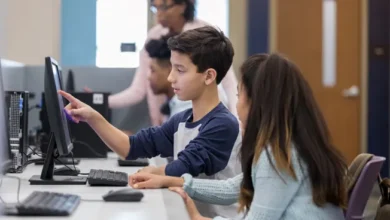
During these sessions, students explore topics ranging from astrophysics, such as black holes, to hands-on artisanal creations, building literacy and research skills along the way. The cycle of inquiry concludes every six weeks with formal presentations to classmates, helping students develop public speaking and communication skills at an early age.
This sustained focus on inquiry builds toward a comprehensive end-of-year showcase. Initiated in March, the final projects require students to synthesize their learning and maintain momentum through the final week of the academic year. Presentations are strictly timed—seven minutes for the presentation followed by two minutes of audience questions—fostering conciseness and composure under pressure. The process concludes with formal self-reflections, drawing administrators and district supervisors into the schools to evaluate student progress.
The Mechanics of Project-Based Learning Across Disciplines
The pedagogical shift toward project-based learning changes the fundamental dynamic of the classroom. Rather than absorbing pre-packaged information from a lecture, students engage directly with complex, open-ended scenarios designed to mirror real-world challenges.
In science curricula, for instance, project-based models frequently challenge students to explore resource management. Learners might investigate municipal water conservation techniques, balancing the financial costs of implementation with the ecological necessity of natural resource stewardship.
In mathematics classrooms, students might tackle logistical and spatial problems, such as determining the optimal placement of security cameras in a community setting. This requires learners to balance capital expenditure constraints against geometric coverage angles, ensuring that security objectives are met efficiently within a defined budget.
These interdisciplinary challenges require students to apply academic knowledge to practical scenarios, transforming passive learners into active problem-solvers. According to educators like Haddock, the academic concepts taught through these projects leave a lasting impression because students develop a personal stake in the outcomes.
As an illustration of this transfer of knowledge, Haddock recalled an incident during an end-of-school-year field day. When staff members used garden hoses to cool students down, a young student approached the principal to voice concern. Drawing directly on lessons learned during a water conservation project, the student remarked that the water should be turned off to preserve natural resources, demonstrating that the academic exercise had successfully altered the child’s real-world awareness and behavior.
Showcasing Student Work: From Elementary Classrooms to Community Symposia
A critical component of the project-based learning model is the public showcase. Educators argue that authentic audiences validate student effort and elevate the quality of academic work. However, the execution of these showcases varies significantly across educational tiers, adapting to the developmental stages of the students and the structural realities of different school environments.
At the elementary school level, showcases are typically integrated directly into the standard school day. Family engagement is traditionally high among younger demographics, with parents frequently visiting classrooms to observe student presentations and interact with the school community. Principals find it relatively straightforward to coordinate daytime events that bring families and educators together.
At the middle and high school levels, the logistics shift to accommodate more complex projects and older students’ schedules. Secondary institutions in Loudoun County frequently host evening or weekend symposiums. These events draw wider circles of stakeholders, including community members, local business leaders, and school board officials. District administrators point to the active participation of the Loudoun County community as a vital asset that elevates the visibility and impact of student research.
Broader Implications and Educational Trends
The sustained integration of project-based learning in a large district like Loudoun County offers broader insights into the current landscape of American public education. As school districts nationwide grapple with post-pandemic learning recovery, student disengagement, and the demand for 21st-century workforce skills, experiential learning models are receiving renewed scrutiny.
Proponents of PBL argue that the model directly addresses several persistent criticisms of traditional schooling. By emphasizing critical thinking, collaboration, communication, and creativity—often referred to as the "four Cs" of 21st-century education—project-based programs prepare students for dynamic economic environments where rote tasks are increasingly automated.
Data from educational research organizations suggest that when implemented with fidelity, project-based learning can improve long-term retention of academic content and boost student motivation. Furthermore, authentic assessment methods, such as public presentations and performance-based evaluations, provide a more holistic view of student capability than standardized testing alone.
However, scaling these programs presents notable administrative challenges. Effective PBL requires significant investments in professional development, flexible scheduling, and collaborative planning time for teachers. The success in Loudoun County underscores the importance of a phased, long-term commitment supported by institutional partnerships and distributed leadership, rather than short-lived top-down mandates.
As school districts continue to evaluate instructional strategies that resonate with modern students, models like the one cultivated in Loudoun County provide a blueprint for systemic educational reform. By treating students as capable contributors to their communities, programs that blend rigorous academic standards with authentic problem-solving are reshaping the modern classroom experience.