
Birthright Citizenship Supreme Court Injunctions
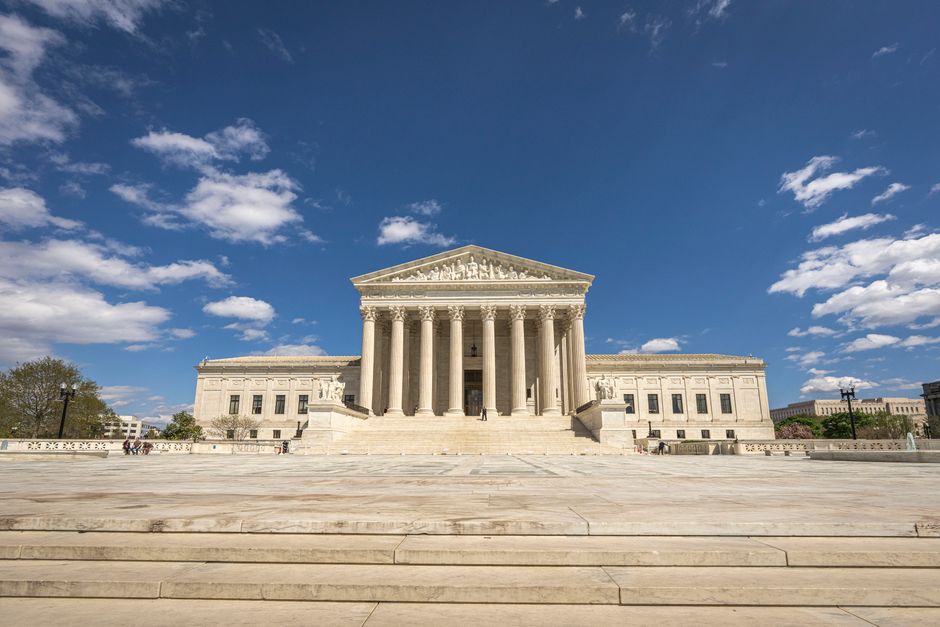
Birthright Citizenship Supreme Court Injunctions: Navigating Legal Precedents and Challenges
The concept of birthright citizenship, often referred to as jus soli (right of soil), grants automatic citizenship to individuals born within the territorial boundaries of a nation. In the United States, this principle is enshrined in the 14th Amendment, stating that "All persons born or naturalized in the United States, and subject to the jurisdiction thereof, are citizens of the United States and of the State wherein they reside." While seemingly straightforward, the interpretation and application of birthright citizenship have been subject to intense legal scrutiny and, at times, attempts to circumvent its established precedent. This article delves into the role of Supreme Court injunctions in relation to birthright citizenship, examining the legal landscape, historical context, and potential future challenges.
The Supreme Court, as the ultimate arbiter of constitutional law in the United States, plays a critical role in upholding or modifying fundamental rights. While the Supreme Court itself does not typically issue injunctions directly to governmental bodies in the same way a lower court does, its decisions can have the effect of an injunction by affirming or overturning laws and policies that impact birthright citizenship. Furthermore, lower federal courts, operating under the purview of Supreme Court precedent, can and do issue injunctions that halt the implementation of policies challenging birthright citizenship. These injunctions, often granted at the preliminary stages of litigation, serve as crucial mechanisms to preserve the status quo while a case is heard and decided. The power of the Supreme Court lies not in issuing the injunction itself but in its ability to review and rule on the legality of the underlying actions that an injunction seeks to address.
The 14th Amendment’s Citizenship Clause has been the bedrock of birthright citizenship since its ratification in 1868. Its primary purpose was to ensure that formerly enslaved individuals and their descendants were recognized as citizens, thereby preventing states from denying them fundamental rights. The Supreme Court’s interpretation of this clause has consistently affirmed its broad application, including to children born to undocumented immigrants within the United States. Landmark cases such as United States v. Wong Kim Ark (1898) solidified this understanding. In Wong Kim Ark, the Court held that a person born in the United States to parents of Chinese descent, who were themselves ineligible for naturalization, was nevertheless a citizen by birth. The Court meticulously examined the text and history of the 14th Amendment, concluding that the phrase "subject to the jurisdiction thereof" was not intended to exclude individuals born to aliens residing in the U.S. This decision has remained the prevailing interpretation for over a century.
However, the issue of birthright citizenship, particularly as it pertains to children of undocumented immigrants, has resurfaced as a contentious political and legal debate. Proposals and executive actions aimed at altering or limiting birthright citizenship have periodically emerged. When such actions are taken by the executive branch or legislative bodies, they are often met with legal challenges that seek to enjoin their implementation. These challenges typically argue that the proposed changes violate the 14th Amendment.
The process by which a legal challenge to a policy affecting birthright citizenship unfolds often begins in lower federal courts. Plaintiffs, typically immigrant advocacy groups, civil liberties organizations, or affected individuals, file lawsuits. A crucial initial step in these lawsuits is the request for a preliminary injunction. A preliminary injunction is an extraordinary remedy granted by a court before a full trial on the merits. To obtain one, the moving party must typically demonstrate: (1) a substantial likelihood of success on the merits of their case; (2) that they will suffer irreparable harm if the injunction is not granted; (3) that the balance of hardships tips in their favor; and (4) that the injunction is in the public interest.
In the context of birthright citizenship, a request for a preliminary injunction would likely focus on the argument that a challenged policy directly contravenes the 14th Amendment’s Citizenship Clause as interpreted by the Supreme Court. For instance, if an executive order were issued to deny citizenship to children born to parents deemed to be in the U.S. unlawfully, a lawsuit would be filed, and the plaintiffs would seek an injunction to prevent the order from taking effect. The irreparable harm would be the denial of citizenship and its attendant rights to thousands of children, a harm that could not be adequately remedied by monetary damages later. The balance of hardships would likely favor the plaintiffs, as halting the policy would prevent immediate harm to a vulnerable population, while the government’s hardship might be argued as stemming from the temporary suspension of a policy it deemed lawful. The public interest would likely be framed around the importance of upholding constitutional rights and the potential for widespread societal disruption if birthright citizenship were arbitrarily curtailed.
Should a lower federal court grant a preliminary injunction, the government challenging the injunction would typically have the option to appeal to a higher court, ultimately including the Supreme Court. The Supreme Court, however, does not typically review every decision of a lower court. It grants certiorari (agrees to hear a case) in only a small fraction of the petitions it receives. Therefore, the Supreme Court’s involvement in birthright citizenship injunctions is more likely to occur when a circuit court of appeals makes a significant ruling on a preliminary injunction, or when the Supreme Court decides to review the merits of a case that has gone through the full litigation process and resulted in a final judgment.
The historical absence of direct Supreme Court issuance of injunctions regarding birthright citizenship does not diminish the Court’s ultimate authority. Instead, its power manifests through its review of lower court decisions and its pronouncements on constitutional interpretation. If a case challenging birthright citizenship were to reach the Supreme Court and the Court were to uphold the lower court’s injunction, that decision would serve as a powerful precedent, effectively barring similar policies from being implemented. Conversely, if the Supreme Court were to overturn a lower court’s injunction, it would signal its agreement with the policy that the injunction sought to block.
The legal debate surrounding birthright citizenship often hinges on the interpretation of the phrase "subject to the jurisdiction thereof" in the 14th Amendment. Opponents of birthright citizenship for children of undocumented immigrants often argue that these individuals, or rather their parents, are not fully "subject to the jurisdiction" of the United States because their presence is unauthorized. They posit that "jurisdiction" implies lawful presence and adherence to U.S. laws. However, the Supreme Court in Wong Kim Ark interpreted this phrase broadly, encompassing all persons within the territorial limits of the U.S., regardless of their parents’ immigration status, as long as they are not subject to the jurisdiction of a foreign sovereign (e.g., children of foreign diplomats). This interpretation has been the cornerstone of birthright citizenship for over a century, and any significant departure would require a monumental shift in constitutional jurisprudence.
The possibility of a Supreme Court injunction, or more accurately, a Supreme Court ruling that has the effect of an injunction by affirming or denying the legality of challenged policies, remains a potent force in shaping the future of birthright citizenship. Future challenges could arise from new legislative attempts to restrict birthright citizenship or from executive actions that seek to redefine its scope. In such scenarios, the established precedent of Wong Kim Ark and the consistent application of the 14th Amendment would be central to any legal arguments.
The judicial process, including the potential for preliminary injunctions in lower courts and the ultimate review by the Supreme Court, acts as a critical safeguard against abrupt and potentially unconstitutional changes to fundamental rights. While the Supreme Court itself may not be issuing the initial injunctions, its role in upholding or overturning the legal underpinnings of these injunctions is paramount. The stability of birthright citizenship in the United States has largely been a product of sustained judicial interpretation, and any attempts to alter it would invariably involve extensive legal battles, where injunctions, both preliminary and through final appellate review, would play a decisive role in determining the outcome. The complex interplay between constitutional law, executive action, and judicial review ensures that significant shifts in birthright citizenship would be subject to rigorous legal scrutiny, with the Supreme Court’s ultimate pronouncements serving as the final word on its constitutionality. The power of injunctions, emanating from lower courts but ultimately shaped and validated by Supreme Court precedent, is a crucial element in this ongoing legal dynamic.
