The Odyssey: Christopher Nolan Confirms Minimum Three-Year Wait for Next Cinematic Endeavor

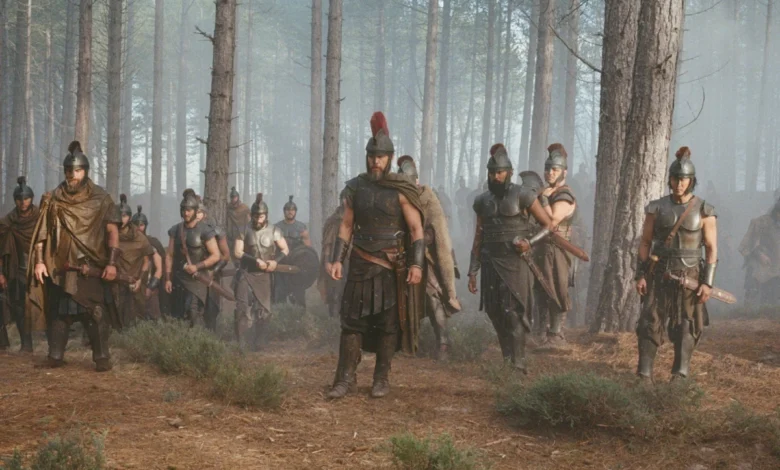
Christopher Nolan, the visionary director behind cinematic epics such as Inception, Interstellar, and the Oscar-winning Oppenheimer, has definitively stated that his next directorial project will not grace the silver screen for "at least" three years. This announcement follows the highly anticipated release of his ambitious adaptation of Homer’s ancient Greek poem, The Odyssey, which premiered on Friday, July 17th, and has since garnered widespread critical acclaim, solidifying its position as Nolan’s best-reviewed film to date.
The epic narrative, brought to life with a star-studded cast, features Matt Damon in the monumental role of Odysseus, the king of Ithaca. The film chronicles Odysseus’s arduous and perilous ten-year journey home following the devastating Trojan War, a quest fraught with mythical creatures, divine intervention, and profound personal trials. Supporting Damon is a formidable ensemble cast, including Tom Holland as Odysseus’s devoted son, Telemachus, and Anne Hathaway as his steadfast wife, Penelope. The expansive cast also boasts the talents of Zendaya, Robert Pattinson, Lupita Nyong’o, Charlize Theron, Jon Bernthal, Benny Safdie, John Leguizamo, Elliot Page, Himesh Patel, Samantha Morton, and Mia Goth, each contributing to the rich tapestry of Nolan’s interpretation.
Nolan, appearing on the Today show, detailed the immense challenges and the two-decade conceptualization period that preceded the realization of The Odyssey. He articulated how his evolving career and established reputation have enabled him to undertake projects previously deemed too unconventional for mainstream cinema. "Now, I can get something made that I couldn’t otherwise get made," Nolan remarked. "For me to take on Greek mythology on a big modern cinematic canvas is something that hasn’t been done." This statement underscores his consistent drive to push the boundaries of filmmaking and explore narratives that resonate with profound human experiences, albeit through his distinctively grand and often complex cinematic lens.
The release of The Odyssey marks Nolan’s first cinematic offering since the unexpected and monumental success of Oppenheimer. That biographical drama, chronicling the life of J. Robert Oppenheimer and the development of the atomic bomb, not only became a global box office phenomenon but also secured Nolan his first Academy Award for Best Director, alongside a total of seven Oscars for the film. The significant three-year interval between Oppenheimer and The Odyssey has led to speculation about Nolan’s production cadence. When directly asked if the pattern of a three-year gap would persist for his next project, Nolan’s response was unequivocal: "Oh, at least." This suggests a deliberate and perhaps necessary period of recuperation and creative incubation for the director and his production teams, acknowledging the sheer scale and intensity involved in bringing his cinematic visions to life.
The Rigors of Mythological Storytelling
Nolan candidly spoke about the demanding nature of bringing such an epic narrative to the screen, admitting that the production pushed the limits of his own and his team’s stamina. "I definitely hit the limits of my own stamina and everybody’s stamina, I think," he stated. "I mean, it’s The Odyssey, of course it should be difficult. We’re not doing the job right making a film of ‘The Odyssey’ if it doesn’t seem difficult." This sentiment reflects a commitment to authenticity in portraying the struggles inherent in Odysseus’s legendary journey, suggesting that the filmmaking process itself mirrored the arduous quest at the heart of the story.
He recounted a specific conversation with star Matt Damon, warning him of the filming’s challenges. Nolan confessed that he suspected Damon "didn’t really understand until we got on the boat." The director elaborated on the immersive difficulties, describing scenarios such as "hiking up a goat’s path to cyclops’ cave," which led to a "slow creeping realization" for Damon that the production "was not going to be easy." This anecdotal evidence highlights Nolan’s dedication to practical filmmaking and his penchant for putting his actors in demanding situations to enhance the realism and visceral impact of the on-screen experience. The near three-hour runtime of The Odyssey further attests to the depth and scope of the narrative Nolan sought to explore.
Critical Acclaim and Cinematic Triumph
The critical reception of The Odyssey has been overwhelmingly positive. Paul Bradshaw of NME, in a five-star review, lauded the film as a potential zenith of cinematic achievement, proclaiming, "Cinema may have peaked with Christopher Nolan’s blockbuster epic." Bradshaw’s review emphasized the necessity of experiencing the film on the grandest scale possible, stating, "this mind-boggling adventure should be seen on the big screen." Such endorsements highlight the film’s immersive qualities and Nolan’s mastery in crafting visually stunning and thematically rich cinematic experiences that demand theatrical exhibition. The film’s success is also reflected in its box office performance, though specific figures are still emerging, early indicators suggest a strong commercial reception aligning with its critical accolades.

Addressing Casting Controversies
In parallel with the film’s release and critical discussion, Nolan has also addressed recent controversies surrounding some of the casting choices for The Odyssey. He described the backlash as "irrelevant," a firm stance taken in response to online criticism regarding the casting of Lupita Nyong’o as Helen of Troy and Clytemnestra, a point that drew particular ire from figures like Elon Musk. Further criticisms were directed at the casting of Travis Scott as a bard and Elliot Page as the Greek soldier Sinon. Nolan’s dismissal of these critiques suggests a focus on artistic integrity and narrative cohesion over perceived adherence to historical or conventional casting norms.
Lupita Nyong’o herself has previously responded to the criticism, emphasizing the mythological nature of the story being adapted. This perspective aligns with Nolan’s apparent approach, which prioritizes performance and thematic resonance within the context of a fantastical narrative, rather than strict literalism. The director’s willingness to cast actors in roles that may challenge audience expectations is a hallmark of his career, often leading to compelling and unexpected character interpretations.
Artistic Philosophy: Modern Dialogue and Performance
Nolan also recently elaborated on his decision to employ modern English dialogue in The Odyssey. He explained that his intention was to foster a connection with the audience through language that possesses "emotional not intellectual meaning to people." By opting for contemporary accents and dialogue over a more archaic or theatrical style, Nolan aimed to make the ancient narrative more accessible and emotionally resonant for a modern viewer, bridging the temporal gap between the epic’s origins and its contemporary retelling. This stylistic choice underscores his commitment to making classical stories feel immediate and relevant.
Furthermore, Nolan drew a powerful parallel between Samantha Morton’s performance as the goddess Circe and Heath Ledger’s iconic portrayal of the Joker in The Dark Knight. He revealed that Morton’s performance elicited an on-set ovation so impactful that it reminded him of the profound reaction to Ledger’s groundbreaking work. This comparison speaks volumes about the caliber of performance Nolan sought and achieved in The Odyssey, highlighting the transformative power of acting when guided by his directorial vision. Such anecdotes offer a glimpse into the creative environment on set and the profound impact of the actors’ contributions.
The Long Road Ahead: A Nolan Filmography Context
The announcement of a minimum three-year wait for Nolan’s next film is not unprecedented in his career. His projects are known for their intricate planning, extensive pre-production, demanding shooting schedules, and meticulous post-production processes. The three-year gap between Oppenheimer and The Odyssey reflects this commitment to quality and artistic vision. Nolan’s filmography demonstrates a consistent pattern of delivering ambitious, large-scale productions that often redefine cinematic possibilities.
For instance, the gap between Interstellar (2014) and Dunkirk (2017) was also three years, and the interval between Dunkirk and Tenet (2020) was three years. The production and release cycle for a Christopher Nolan film is a marathon, not a sprint, characterized by a deep investment in every facet of filmmaking. This deliberate pacing allows him to conceive, develop, and execute projects that are not only artistically significant but also technically groundbreaking.
The implications of this extended hiatus extend beyond merely satisfying audience anticipation. It suggests that Nolan is likely in the early stages of conceptualizing a new narrative, perhaps exploring new thematic territories or pushing the boundaries of cinematic technology even further. His past endeavors have often been characterized by a deep dive into complex scientific concepts, philosophical inquiries, or historical events, reimagined through a distinctive visual and narrative framework. The extended development period ensures that whatever comes next will likely be a meticulously crafted and thought-provoking cinematic event, built upon the solid foundation of his directorial experience and critically acclaimed recent work. Fans and critics alike will undoubtedly be watching with keen interest as Nolan embarks on his next creative journey, confident that the wait will yield another indelible contribution to the landscape of modern cinema.