COP31 climate talks in Antalya conclude in stalemate as nations fail to ratify the Antalya Pact and key negotiations stall on finance and fossil fuels

The UN climate summit in Antalya, Turkey, has drawn to a close following nearly 50 hours of overtime negotiations, ending in an atmosphere of frustration and diplomatic gridlock. The proposed "Antalya Pact," which served as the primary vehicle for the summit’s final cover decision, was formally rejected by a coalition including the European Union, the United Kingdom, and various climate-vulnerable nations. The collapse of the agreement marks a significant setback for international climate diplomacy, as the text failed to secure a consensus on critical issues, most notably the exclusion of explicit references to fossil fuel phase-outs and the absence of substantive, concrete climate-finance targets for developing nations.
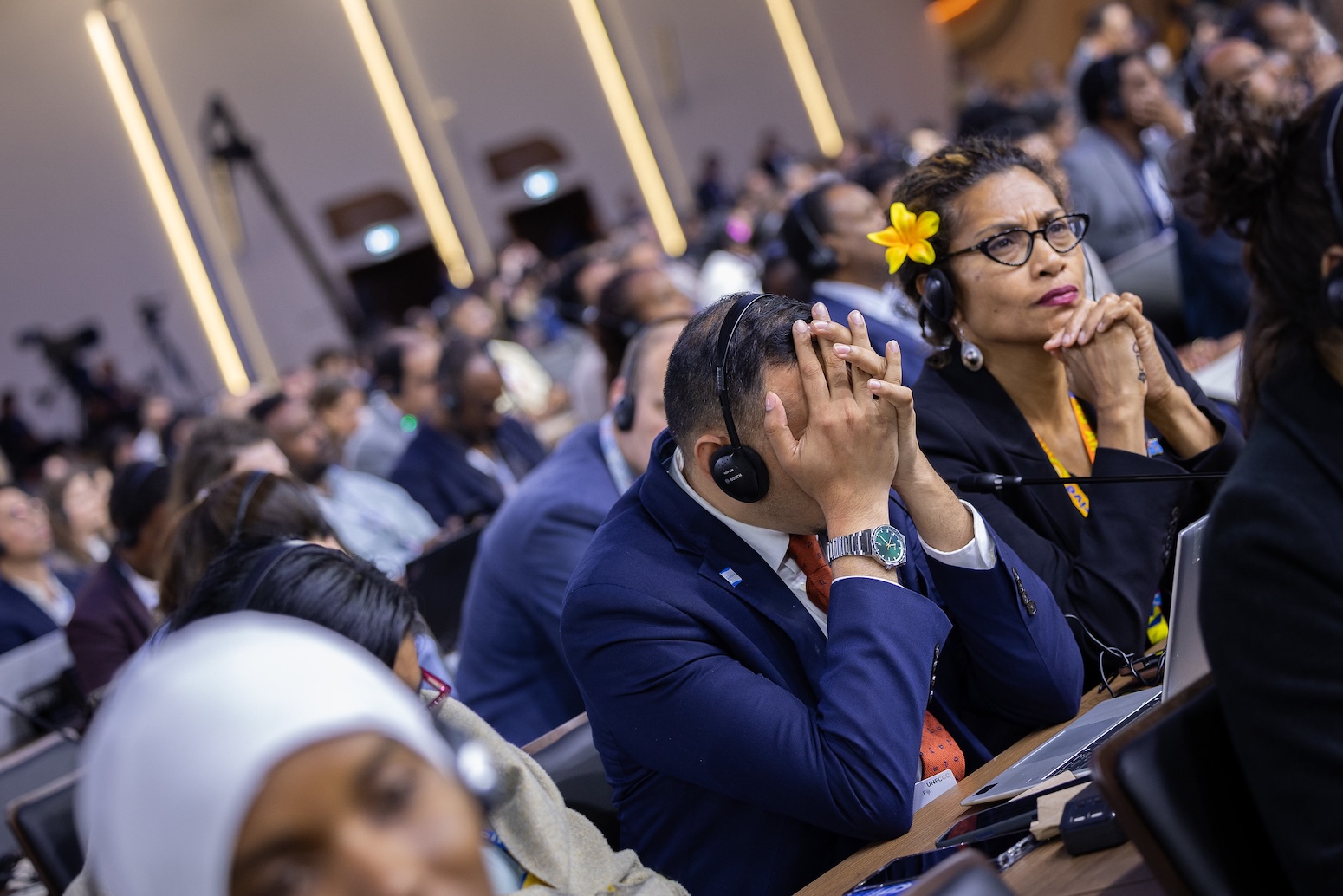
For two weeks, negotiators navigated a complex agenda that sought to balance the urgent demands of climate-vulnerable states with the competing economic interests of major emitters. The rejection of the final draft leaves the global climate community without a unified directive for the coming year, forcing many of the most contentious issues to be deferred to the UN climate conference in Ethiopia (COP32) scheduled for 2027.
Chronology of the Negotiations and the Path to Impasse
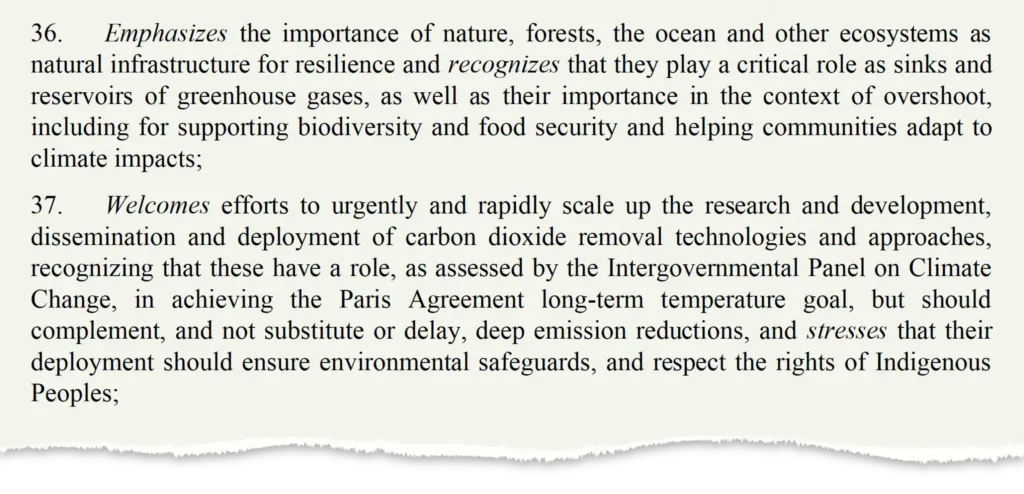
The trajectory of COP31 was marked by increasing friction from the outset. Early sessions were dominated by procedural disagreements, particularly concerning the scope of the cover decision. By 16 November, the publication of the first draft of the cover decision revealed 21 references to the ocean, signaling a potential victory for ocean conservationists. However, as the negotiations progressed into the second week, these references were gradually diluted. By 19 November, subsequent iterations of the text had removed key provisions regarding post-2028 ocean work and a proposed high-level ministerial ocean dialogue.
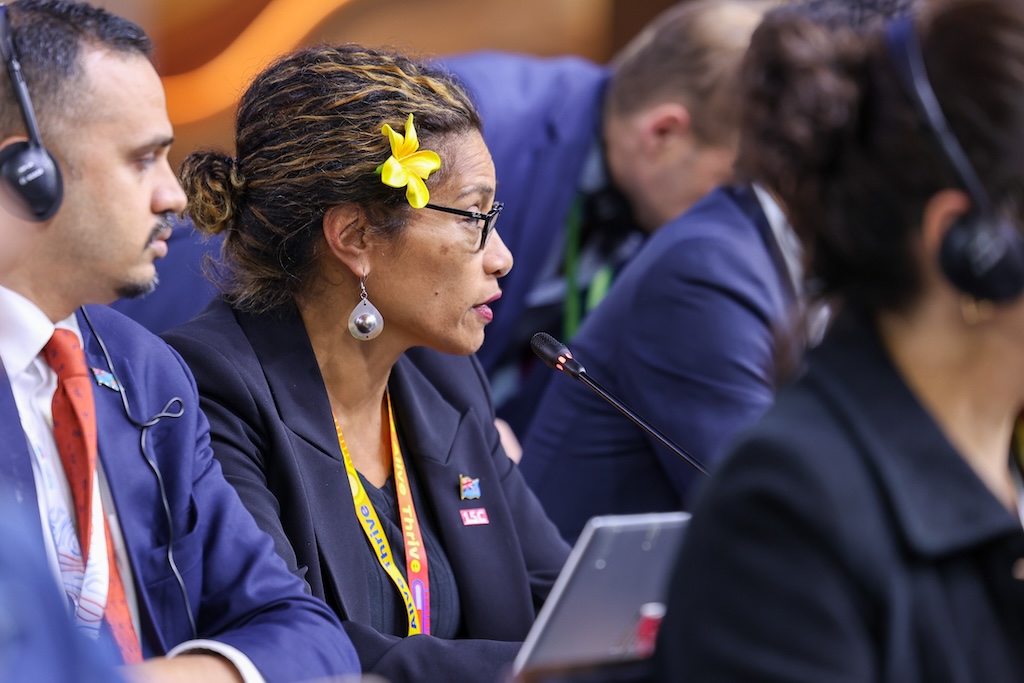
The tension reached a breaking point during the closing plenary. Delegations from the EU, the UK, and several Pacific island states, including Fiji, voiced their strong opposition to the draft. The rejection was not merely a protest against the absence of specific language on fossil fuels, but a reaction to a perceived lack of transparency and the exclusion of commitments to climate-vulnerable populations. This chaotic end mirrored the systemic challenges that have plagued recent summits, where the proliferation of side deals and fragmented agendas has often obscured the central goal of keeping global temperature rise below 1.5C.

Agriculture and the Food Security Deadlock
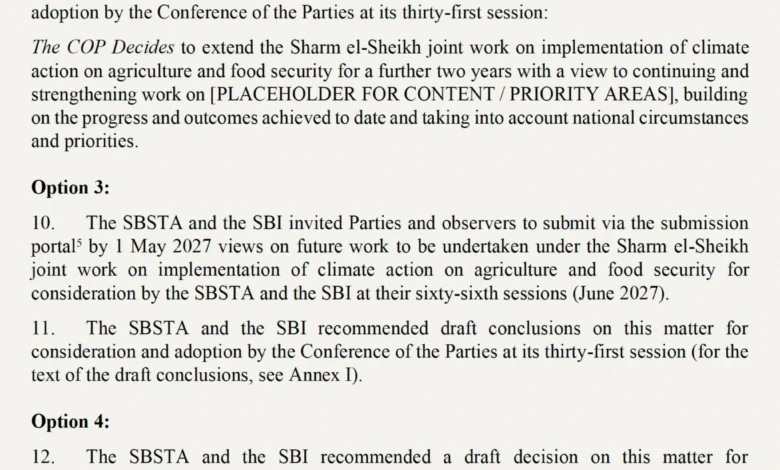
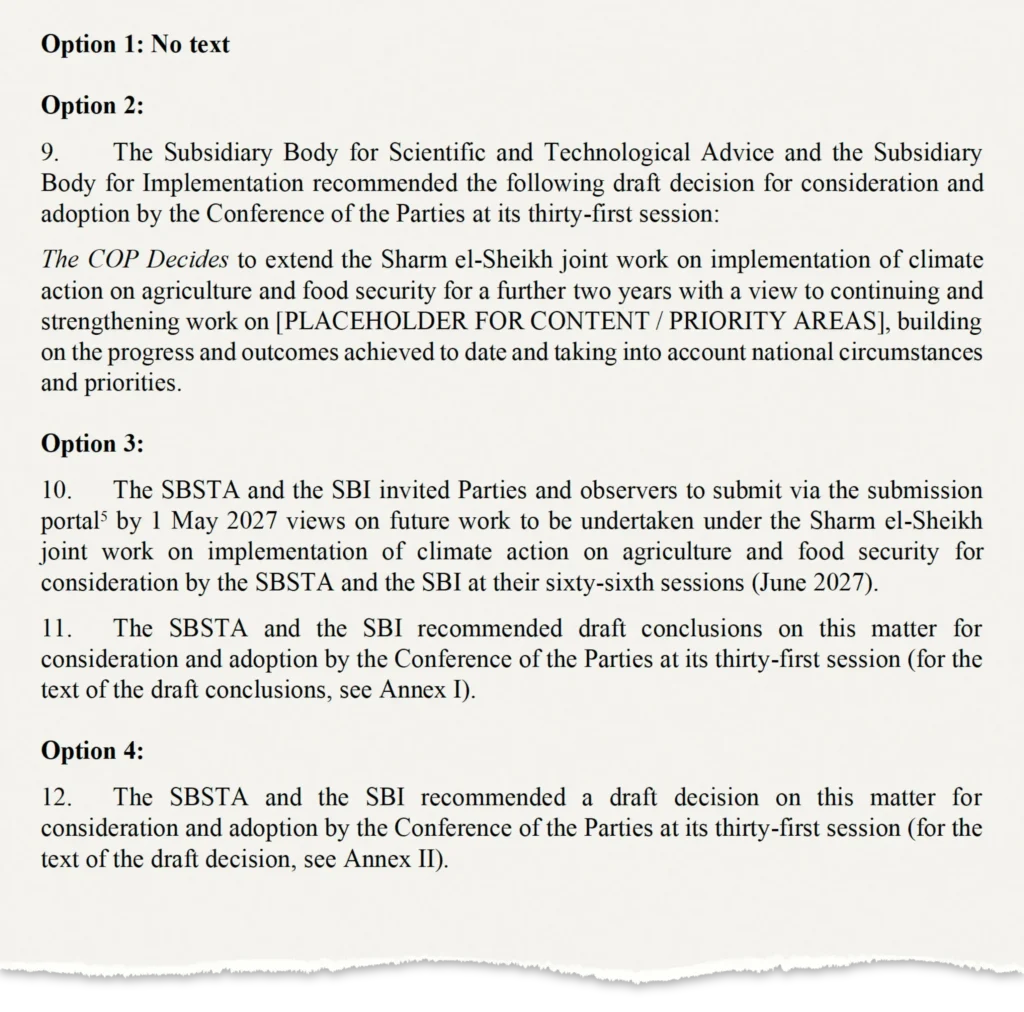
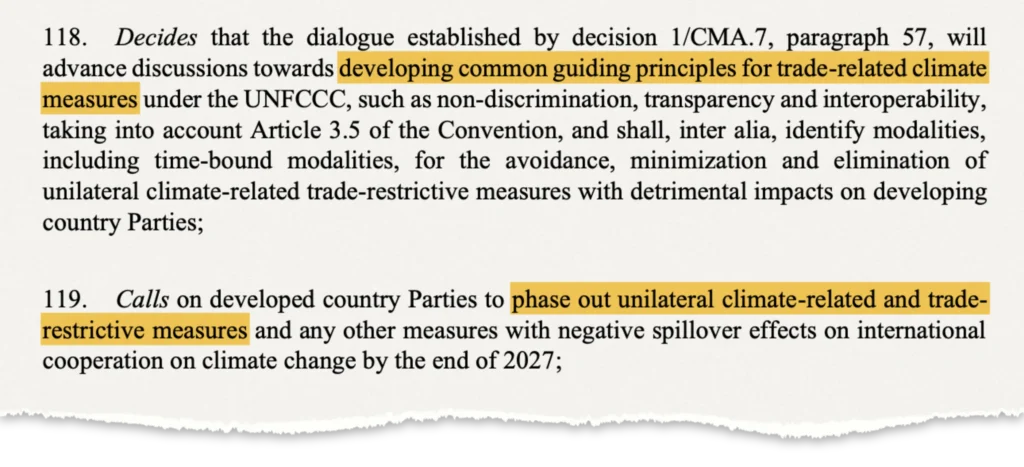
For the second consecutive year, formal negotiations on the Sharm el-Sheikh joint work on agriculture (SJWA) collapsed. This workstream, which is essential for synthesizing information on climate-resilient farming and food systems, faced a "curveball" early in the summit when the Arab group insisted that the impact of the EU’s Carbon Border Adjustment Mechanism (CBAM) on fertilizer exports be included in the agriculture discussions.
Observers described this inclusion as a tactical move to disrupt the momentum surrounding agroecology. By linking agricultural sustainability to complex trade measures, negotiations became mired in political debates that the SJWA was not equipped to resolve. Despite calls from the EU and Canada to focus on areas of common ground, the G77 and China insisted that all points of contention be addressed. Consequently, the mandate for the SJWA—which was set to expire at this summit—has been effectively kicked down the road, with substantive discussions deferred to the mid-year intersessional meetings in Bonn.
Article 6 and the Carbon Market Controversy
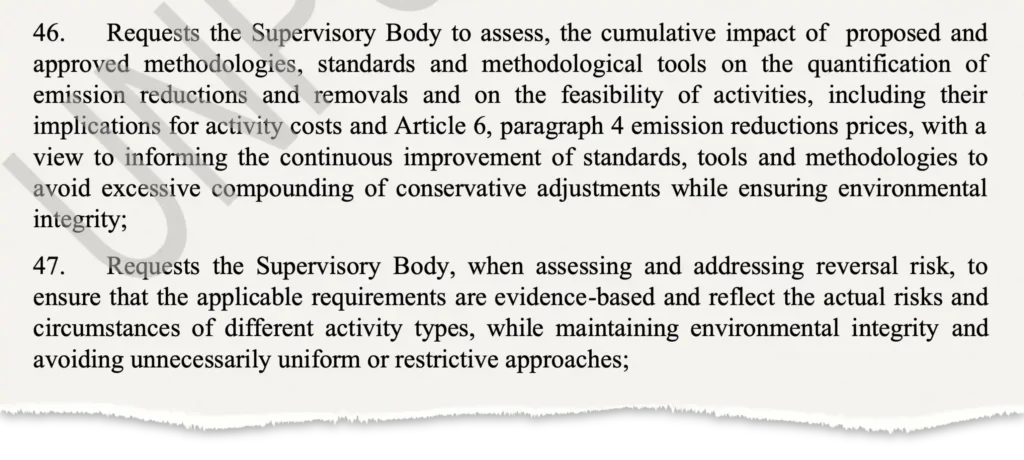
The negotiations surrounding Article 6 of the Paris Agreement, which governs international carbon markets, also proved to be a flashpoint for disagreement. Proponents of carbon markets, including various project developers and industry groups, sought a "course correction" to ease what they characterized as overly conservative regulations. They argued that current standards for methodology and verification are hindering investment.
Conversely, environmental advocacy groups such as Carbon Market Watch warned against any weakening of these standards, arguing that the goal of Article 6 should be to incentivize genuine emissions reductions rather than to facilitate the trading of questionable credits. While an agreement was eventually reached, it was stripped of previous clauses that would have requested a formal assessment of the "cumulative impact" of rules on environmental integrity. The final text remains a compromise that satisfies neither the industry’s desire for rapid scaling nor the campaigners’ demand for stringent, science-based oversight.
The Just Transition Work Programme and Finance
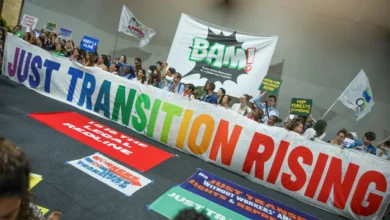
The development of a new just transition mechanism (JTM), intended to support workers and communities affected by the shift to a low-carbon economy, also faced significant delays. While initial discussions regarding a two-tier structure for the mechanism were constructive, the resulting draft was widely criticized by civil society for being "hollow."
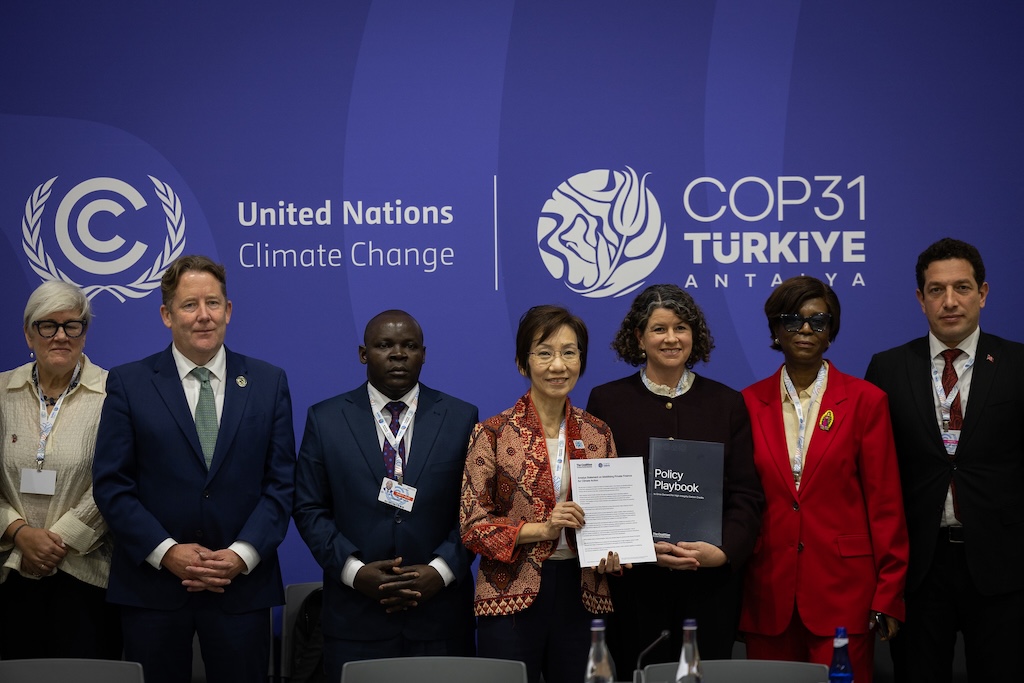
Financing remained the underlying issue throughout the summit. Despite the goal set at COP30 to triple adaptation finance, negotiators were unable to secure a specific target—such as the proposed $120bn by 2035—in the final documentation. This failure to solidify financial pledges undermines the confidence of developing nations, many of whom argue that the "climate debt" owed by industrialized nations remains unpaid. Without clear, actionable financial pathways, the transition to sustainable food, energy, and land-use systems remains largely aspirational.
Analysis of the Wider Implications

The failure of COP31 to produce a robust, unified outcome has broader implications for the global climate regime. The "Antalya Pact" was meant to be a signal of collective intent; its rejection highlights a deepening divide between nations over the nature of climate action.
The increased presence of corporate lobbyists—particularly from the fossil fuel, biofuels, and industrial agriculture sectors—has drawn renewed scrutiny. According to analysis by groups such as Kick Big Polluters Out, the influx of industry-aligned delegates complicates the negotiation environment, often pushing for technological fixes, such as carbon capture, rather than the systemic transformation required to meet the Paris Agreement targets.
Furthermore, the lack of synergy between the three Rio conventions—climate, biodiversity, and desertification—was a major point of contention. The inability of parties to coordinate political action across these interconnected crises demonstrates that domestic political constraints continue to take precedence over the global environmental imperative.
Looking Ahead: The Road to COP32
As the dust settles in Antalya, the focus shifts to the 2027 climate summit in Ethiopia. The challenges that stalled progress in Turkey—specifically the lack of clarity on climate finance, the role of carbon markets, and the integration of trade policies—will remain at the forefront of the international agenda.
The "action agenda," which involves non-state actors, businesses, and cities, provided some signs of optimism during COP31. With 136 climate plans now tracked by the UNFCCC, there is evidence that practical, real-world implementation is occurring independently of the formal UN negotiating rooms. However, experts warn that this bottom-up progress cannot serve as a substitute for top-down policy, binding targets, and the significant financial commitments that only national governments can provide.

The outcome of COP31 serves as a stark reminder of the limits of international consensus in an era of geopolitical fragmentation. For the international community, the path forward requires not only a renewed commitment to the principles of the Paris Agreement but also a fundamental restructuring of how climate negotiations address the socio-economic realities of a world in transition. Whether the next summit in Ethiopia can bridge these divides or whether the current impasse will persist remains the defining question for the future of global climate diplomacy.