Empowering the Future: New NASBE Report Outlines State Policy Blueprints for Transforming American High Schools

The landscape of American secondary education is undergoing a quiet yet profound revolution as educators, policymakers, and communities grapple with declining student engagement and a shifting modern economy. In response to these mounting pressures, the National Association of State Boards of Education (NASBE) released a comprehensive report outlining actionable policy recommendations designed to help state education agencies remove systemic barriers and actively foster high school transformation. Drawing on two years of collaborative research, stakeholder consultations, and insights from the High School Transformation State Network, the report emphasizes that true educational reform cannot be mandated from the top down. Rather, state governments must function as enablers, establishing the regulatory and financial conditions that empower local communities to redesign the high school experience for the twenty-first century.
The urgency driving this initiative is rooted in a growing disconnect between traditional schooling models and the realities facing modern adolescents. For decades, the standard American high school has operated on a rigid assembly-line model—organizing learning around Carnegie units, seat time, and standardized testing in core subjects like mathematics, reading, and science. While this framework served an industrial-era workforce, education experts argue it is ill-equipped to prepare students for a dynamic, technology-driven global economy. Disengagement among high school students has reached alarming levels, a trend repeatedly highlighted by student advisory councils and youth representatives serving on state boards of education. When students fail to see the direct connection between their daily classroom assignments and their future career pathways, motivation plummets, leading to lower academic performance, higher chronic absenteeism, and a diminished sense of purpose.
Recognizing these challenges, NASBE launched its High School Transformation State Network two years ago, bringing together a dedicated cohort of states committed to reimagining secondary education. Supported by a network advisory council comprising national experts in high school redesign, the science of learning and development, and systemic change, the initiative culminated in Tuesday’s policy release. The core philosophy underpinning the report is that transformed high schools must cultivate vibrant, meaningful learning experiences that allow students to discover their individual paths in life, recognize their unique strengths, and acquire the agency needed to act on them. However, achieving this vision requires sustained collaboration among school districts, state agencies, higher education institutions, and community partners—a complex undertaking that demands a fundamental shift in mindset regarding the purpose of public education.
To operationalize this vision, the NASBE report establishes five critical policy pillars for state education agencies looking to spearhead meaningful reform.
Setting a Strong Vision for School Transformation
The first recommendation centers on establishing a clear, unified vision for student success by operationalizing "Portrait of a Graduate" competencies. A Portrait of a Graduate is a community-informed statement outlining the specific knowledge, skills, and character traits students should possess by the time they finish high school, extending far beyond traditional academic metrics to encompass critical thinking, communication, collaboration, and civic responsibility. According to the report, approximately 23 states have already adopted Portrait of a Graduate frameworks or similar policy guidelines.
California serves as a prominent example of this trend. Earlier this year, the California State Board of Education formally adopted a Portrait of a Learner framework, offering districts an optional roadmap to align their instructional goals with modern competencies. The framework integrates critical thinking, communication, multilingual learning, collaboration, and character development into the educational experience. To maximize the impact of such initiatives, the NASBE report stresses that these portraits must not remain abstract policy statements; they must be tightly aligned with statewide competency frameworks, ensuring that classroom instruction, curricular materials, and professional development programs directly reinforce these overarching ambitions.
Allowing Space for Innovation and Flexibility
The second pillar addresses the rigid regulatory structures that frequently stifle educational creativity. States must provide schools with the flexibility to experiment with alternative approaches, such as pilot programs, competency-based credit structures, and innovative school calendars. Jon Alfuth, co-author of the report and senior director of policy development at KnowledgeWorks, noted that numerous states and districts are successfully implementing credit-earning learning experiences that occur outside the traditional four classroom walls.
Achieving this flexibility requires states to broaden their legal definitions of when and where learning can take place. For instance, Pennsylvania has granted schools the autonomy to design their academic calendars around instructional hours rather than traditional days, accommodating diverse community needs and deeper project-based learning initiatives. Similarly, New Hampshire has pioneered competency-based graduation requirements, defining high school credits around demonstrated mastery of specific skills rather than the amount of time a student spends seated in a classroom. These regulatory adjustments give local educators the freedom to tailor learning schedules to the actual pace of student understanding.
Prioritizing Relevant and Engaging Learning Experiences
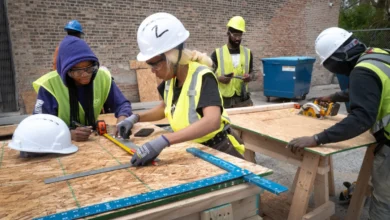
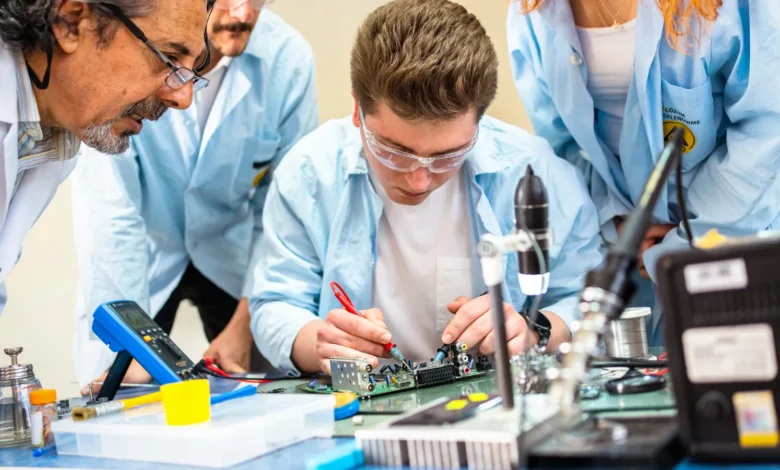
Addressing widespread student disengagement forms the third core recommendation of the report. To help students draw a direct line between their secondary education and future economic mobility, states are urged to prioritize dual enrollment programs, work-based learning, structured apprenticeships, and rigorous career and technical education (CTE) pathways.
Celina Pierrottet, associate program director at NASBE and co-author of the report, emphasized that building these multi-tiered partnerships takes considerable time, effort, and institutional alignment. To ensure these pathways lead to genuine opportunities, states must invest in robust longitudinal data systems that link K-12 education data with higher education institutions and the workforce. By tracking employment trends and postsecondary outcomes, states can identify which programs successfully prepare students for high-demand, living-wage careers while phasing out educational tracks that no longer serve local economic needs. In the District of Columbia, the Office of Education Through Employment Pathways exemplifies this approach by coordinating education and workforce programs designed to accelerate youth and adult economic mobility.
Rethinking Assessments and Accountability
Perhaps the most complex challenge facing education reformers lies in the domain of assessments and accountability. While states are eager to embrace holistic visions of college and career readiness, they remain bound by federal and state accountability systems anchored in traditional math, reading, and science testing. Alfuth acknowledged that this area of reform has proven exceptionally difficult to implement at scale. "At the end of the day, schools are still held accountable for a very traditional math, reading and science assessment approach," Alfuth remarked. "No one’s quite figured that out all the way to the end yet, but there are a lot of states that are starting to dig into that."
Despite these hurdles, pioneering states are carving out paths forward. The New York State Department of Education has implemented the Performance-Based Learning and Assessment Networks (PLAN) program. This initiative permits pilot schools to utilize multiple performance-based measures—such as capstone projects, oral defenses, and authentic portfolios—to evaluate student learning, building upon years of localized experimentation with performance-based pedagogy. These experiments offer valuable empirical data on how accountability systems might evolve to reflect broader competencies without sacrificing academic rigor.
Expanding Educator Capacity and Professional Support
The final recommendation focuses on the educators tasked with bringing these reforms to life. Teachers, administrators, and school staff cannot be expected to implement student-centered, innovative pedagogies without targeted professional support and preparation. States must examine how educator preparation programs ready prospective teachers for the realities of transformed, modern schools.
Furthermore, state agencies can adopt updated licensing standards and professional development initiatives that emphasize student-centered, competency-based instruction while fostering professional learning communities where educators can share best practices and lessons learned. A notable model is the South Carolina Department of Education’s PersonalizeSC program, which provides educators with specialized training to deepen their understanding of personalized instruction and competency-based learning models.
Broader Implications and the Path Forward
The release of the NASBE report arrives at a critical juncture for American public education. As federal pandemic-relief funding winds down and districts face difficult budgetary decisions, state education agencies are increasingly pressured to demonstrate the long-term value and relevance of the high school diploma. The report serves as a timely reminder that systemic reform is not a solitary school district endeavor, but a coordinated ecosystem-wide responsibility.
By providing clear visions, relaxing restrictive seat-time rules, embedding relevant career pathways, rethinking narrow accountability metrics, and investing heavily in teacher capacity, states can establish the enabling conditions necessary for community-led transformation. As Indiana’s multi-year stakeholder engagement process demonstrates—culminating in newly revised graduation requirements that feature readiness seals for academic skills, work-based learning, and public service for the class of 2029—redefining high school requires patience, persistence, and unwavering collaboration. Ultimately, the success of these reform efforts will be measured not by standardized test scores alone, but by the ability of the American high school to prepare every student to navigate an uncertain future with confidence, competence, and purpose.