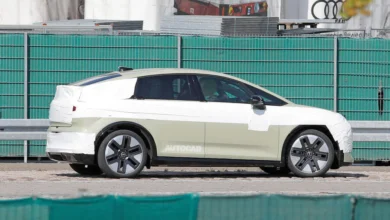
Geely EX2 Electric Hatchback Debuts with Rear-Wheel Drive Dynamics and Compact Versatility to Challenge European B-Segment Rivals

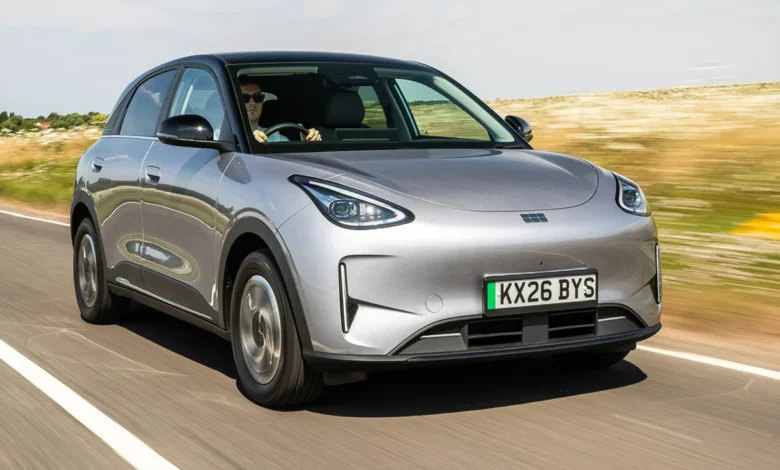
The Geely EX2 has officially entered the competitive electric vehicle landscape, positioning itself as a strategic bridge between the traditional B-segment hatchback and the more spacious C-segment category. As the global automotive industry shifts toward electrification, Geely—the Chinese conglomerate behind brands such as Volvo, Polestar, and Lotus—is leveraging its extensive engineering resources to deliver a vehicle that prioritizes urban maneuverability and interior packaging. The EX2, measuring 4,135mm in length, enters a market currently defined by the resurgence of compact, stylish EVs like the Renault 5, the Mini Cooper Electric, and the Fiat Grande Panda. However, Geely’s latest offering distinguishes itself through a mechanical layout rarely seen in the budget-conscious small car sector: a rear-wheel-drive configuration designed to enhance driving dynamics and optimize cabin space.
Strategic Positioning and Dimensional Analysis
Geely’s marketing narrative for the EX2 describes the vehicle as a B-segment hatchback that offers the utility and internal volume of a C-segment car. This "straddling" of segments is a deliberate attempt to capture consumers who find traditional superminis too cramped but find mid-sized electric crossovers too cumbersome or expensive for city life. At 4,135mm, the EX2 is notably longer than its primary European rivals. For comparison, the new Renault 5 measures approximately 3.92 meters, and the Fiat Grande Panda sits at roughly 3.99 meters.
While the EX2 is larger than these urban-centric models, it stops short of the dimensions found in the "compact" class, such as the Cupra Born or the Renault Megane E-Tech, both of which hover around the 4.2 to 4.3-meter mark. Industry analysts suggest the EX2’s closest mechanical and philosophical peer is the MG 4 EV, specifically the "Urban" trim levels. By targeting this middle ground, Geely aims to offer a "Goldilocks" solution—providing enough wheelbase for family duties while maintaining a footprint small enough for tight metropolitan parking.
Engineering and the Rear-Wheel Drive Advantage
Perhaps the most surprising technical detail of the Geely EX2 is its rear-wheel-drive (RWD) architecture. In the world of small, affordable hatchbacks, front-wheel drive (FWD) has long been the industry standard due to its lower production costs and predictable handling. However, Geely has opted to place the electric motor on the rear axle, a move the company claims was motivated by a desire to satisfy European consumers’ preferences for "premium" driving dynamics.
The transition to RWD offers several tangible benefits beyond simple steering feel. By removing the motor and its associated drive shafts from the front of the vehicle, Geely engineers have freed up significant space under the hood. This has allowed for the inclusion of a "frunk" (front trunk), a feature often missing in small EVs but highly valued for storing charging cables and small groceries.
Furthermore, the absence of drive shafts at the front allows the wheels to turn at much more acute angles. Geely has leveraged this to give the EX2 a turning circle that rivals the LEVC TX—the world-famous London black cab. This comparison is no coincidence; Geely is the parent company of the London EV Company (LEVC), and the cross-pollination of urban mobility technology is evident in the EX2’s agility. For city dwellers, a tight turning radius is often a more significant luxury than high-speed acceleration, making the EX2 a highly practical tool for navigating narrow European streets.
Powertrain Specifications and Battery Options
The Geely EX2 launches with a two-tier battery and motor strategy designed to hit specific price points, though some critics argue the specifications may struggle against the latest long-range competitors.
- Entry-Level Variant: This model features a 35.4kWh lithium-ion battery paired with an 81bhp electric motor. It offers a range of approximately 157 miles (WLTP estimated). This specification places it in direct competition with the entry-level Renault Twingo or the base-spec Fiat 500e, though the EX2 offers a much larger body for a similar price.
- Mid-Range Variant: The more robust option utilizes a 47.1kWh battery and a 114bhp motor, extending the range to 214 miles. This version is more aligned with the mainstream versions of the Fiat Grande Panda and the short-range iterations of the Renault 5 and Mini Cooper.
While these figures are respectable for urban commuting, the lack of a "Long Range" option (typically 60kWh or higher) suggests that Geely views the EX2 primarily as a secondary household car or a dedicated city vehicle rather than a primary car for long-distance motorway travel.
Design Language: Function Over Flair
In terms of aesthetics, the Geely EX2 follows a design philosophy that many have described as "clean" but "generic." Following in the footsteps of the larger EX5 and the Starray, the EX2 avoids the radical, polarizing styling seen in some of Geely’s more premium brands like Zeekr. Instead, it adopts a smooth, aerodynamic silhouette with integrated lighting signatures that are modern but lack a distinct brand identity.
The vehicle sits on 16-inch wheels as standard. Even with relatively high-profile 205/60 tires designed to improve ride comfort over potholes, the car has been criticized for looking "under-wheeled"—a common trait in vehicles designed to maximize interior volume within a constrained exterior length.
To combat the "appliance-like" feel of the exterior, Geely is offering the EX2 in a palette of vibrant pastel colors. This move is clearly intended to appeal to a younger, lifestyle-oriented demographic. However, when parked alongside the retro-futuristic Renault 5 or the iconic Mini Cooper, the EX2’s styling appears conservative. It is a vehicle designed for those who value the efficiency of the "box" rather than the artistic merit of the "packaging."
The Global Context: Geely’s European Expansion
The release of the EX2 is a critical component of Geely’s broader 2024-2025 international expansion strategy. The company has spent the last decade acquiring European heritage brands to gain a foothold in Western markets, but it is now increasingly confident in launching its own Geely-branded vehicles.
Geely’s Chairman, Li Shufu, has frequently emphasized the importance of "global synergy." By using the same underlying platforms for Geely, Volvo, and Smart vehicles, the company achieves economies of scale that European manufacturers struggle to match. The EX2 is expected to benefit from the software and safety advancements developed for the Volvo EX30, albeit at a more accessible price point.
The timing of the EX2’s arrival is also significant. European regulators are currently navigating complex trade discussions regarding Chinese-made EVs. By focusing on the B-segment—a category where European manufacturers have traditionally excelled but are now struggling to produce affordable electric versions—Geely is positioning itself to fill a vacuum left by the discontinuation of popular internal combustion models like the Ford Fiesta.
Comparative Market Analysis
When evaluated against the current market, the EX2 faces a bifurcated competitive set:
- Against the Renault 5: The Renault 5 wins on emotional appeal, heritage, and interior design. However, the Geely EX2 offers more physical space and the practical benefits of a frunk and a superior turning circle.
- Against the MG 4 EV: The MG 4 is slightly larger and offers more powerful performance options. The EX2, however, is expected to undercut the MG on price in several markets, making it the more logical choice for "Urban" buyers who do not need the MG’s higher top speeds.
- Against the Fiat Grande Panda: Both cars share a similar philosophy of "rugged urbanism," but the Geely’s RWD layout provides a more sophisticated driving experience compared to the Fiat’s simpler FWD setup.
Broader Implications for the Automotive Industry
The arrival of the Geely EX2 highlights a growing trend in the EV industry: the democratization of high-end mechanical layouts. Historically, rear-wheel drive was reserved for luxury sedans and sports cars. In the electric era, the simplicity of motor placement allows brands like Geely to offer RWD as a standard feature, fundamentally changing how entry-level cars handle.
Furthermore, the EX2’s focus on "space efficiency" over "range maximalism" reflects a maturing EV market. Manufacturers are beginning to realize that not every car needs a 300-mile range; instead, urban buyers are looking for cars that are easy to park, cheap to charge, and large enough to carry a week’s worth of groceries or a foldable stroller.
However, Geely faces the challenge of brand recognition. While Volvo and Polestar carry significant weight in Europe, the "Geely" name remains unfamiliar to the average consumer. The success of the EX2 will likely depend on whether its "premium" driving dynamics and practical interior can overcome its relatively bland styling and the brand’s newcomer status.
Conclusion and Future Outlook
The Geely EX2 is a calculated, pragmatic entry into the electric hatchback segment. It does not attempt to reinvent the wheel in terms of aesthetics, but it does offer a compelling engineering package that prioritizes the needs of city drivers. With its RWD layout, class-leading turning circle, and clever packaging, it provides a functional alternative to the more style-focused European incumbents.
As Geely continues to roll out its EX lineup, the EX2 serves as a foundational model that proves the company can produce a competent, versatile EV for the masses. Whether it can steal significant market share from the likes of Renault and Fiat remains to be seen, but its arrival is a clear signal that the competition in the small EV segment is only just beginning to heat up. For the consumer, the EX2 represents another step toward a market where electric mobility is defined not just by battery size, but by how well a car fits into the constraints of modern urban life.