Global Hunger Declines Overall but Continues to Surge Across Africa and Western Asia According to New UN Report

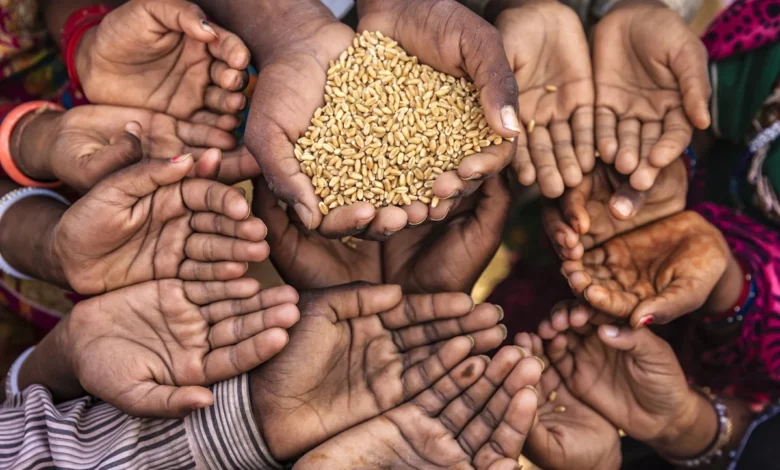
The State of Food Security and Nutrition in the World (SOFI) 2025 report, a definitive annual study published by five specialized United Nations agencies, reveals a global landscape defined by a stark and widening divide in food security. Released by the Food and Agriculture Organization of the United Nations (FAO), the report indicates that while the total number of people suffering from hunger worldwide has seen a modest decline, the progress is far from uniform. In regions such as Africa and Western Asia, the crisis is intensifying, driven by a volatile mix of conflict, climate change, and economic instability. According to the data, approximately 8.2 percent of the global population—roughly 673 million people—suffered from hunger in 2024. This figure represents a slight improvement from the 8.7 percent recorded in 2022 and the 8.5 percent in 2023, yet it underscores a persistent humanitarian challenge that remains significantly higher than pre-pandemic levels.
The report, co-authored by the FAO, the International Fund for Agricultural Development (IFAD), the United Nations Children’s Fund (UNICEF), the World Food Programme (WFP), and the World Health Organization (WHO), provides a comprehensive analysis of the factors hindering the global "Zero Hunger" target, part of the 2030 Sustainable Development Goals (SDGs). The findings suggest that while the world has moved past the peak of the hunger crisis triggered by the COVID-19 pandemic, the recovery is fragile and deeply unequal.
A Tale of Two Realities: Regional Divergence in Hunger Trends
The 2025 SOFI report highlights a significant shift in the geography of malnutrition. In Asia, long a focal point for food security efforts, the proportion of the population facing undernourishment fell to 6.7 percent in 2024, a notable drop from the 7.9 percent recorded just two years earlier. Similarly, Latin America and the Caribbean have shown resilience; undernourishment in these regions decreased to 5.1 percent, affecting approximately 34 million people. This is a significant recovery from the 2020 peak of 6.1 percent, suggesting that social safety nets and agricultural investments in these regions are yielding results.
However, these gains are overshadowed by the deteriorating situation in Africa and parts of Western Asia. In Africa, the hunger rate has surpassed 20 percent, meaning one in five people on the continent—totaling 307 million individuals—lacks sufficient food. This upward trajectory is particularly concerning in Sub-Saharan Africa, where prolonged droughts and internal conflicts have devastated local food systems. In Western Asia, the situation is similarly dire, with an estimated 12.7 percent of the population, or more than 39 million people, facing hunger in 2024. Many of these nations are currently grappling with active conflicts or the lingering aftereffects of economic collapse, which have made food both scarce and unaffordable.
FAO Director-General QU Dongyu emphasized the gravity of this regional disparity during the report’s launch. "While it is encouraging to see a decrease in the global hunger rate, we must recognize that progress is uneven," he stated. "SOFI 2025 serves as a critical reminder that we need to intensify efforts to ensure that everyone has access to sufficient, safe, and nutritious food. To achieve this, we must work collaboratively and innovatively with governments, organizations, and communities to address the specific challenges faced by vulnerable populations."
The Economic Barrier: Food Price Inflation and Affordability
A primary driver of continued food insecurity is the lingering impact of global food price inflation, which spiked between 2021 and 2023. The report traces this surge to a "polycrisis" involving the global policy response to the COVID-19 pandemic, the disruptions caused by Russia’s invasion of Ukraine, and a series of extreme weather events that decimated harvests in key exporting nations.
While median global food price inflation rose from 2.3 percent in late 2020 to a peak of 13.6 percent in early 2023, the impact was felt most acutely in low-income countries. In these nations, food price inflation peaked at a staggering 30 percent in May 2023. These price hikes have outpaced wage growth, leaving millions of families unable to afford basic staples. The report notes that in low-income countries, the number of people unable to afford a healthy diet rose to 545 million in 2024, up from 464 million five years ago.
Despite these challenges, there was a slight improvement in the global ability to afford healthy diets. The number of people unable to afford such a diet fell to 2.6 billion last year, down from 2.76 billion in 2019. This improvement, however, was largely concentrated in middle-income countries, particularly India. Excluding India, the number of people in lower-middle-income nations who could not afford a healthy diet actually increased from 791 million to 869 million over the same period.

IFAD President Alvaro Lario pointed to the need for structural change in rural economies to combat these economic pressures. "In times of rising food prices and disrupted global value chains, we must step up our investments in rural and agricultural transformation," Lario said. "These investments are not only essential for ensuring food and nutrition security—they are also critical for global stability."
The Impact on Vulnerable Populations and Child Nutrition
The report also sheds light on the devastating long-term consequences of malnutrition on children. While there has been global progress in reducing stunting (being too short for one’s age) and increasing rates of exclusive breastfeeding, the absolute numbers of children suffering from undernutrition remain high. Over 190 million children under the age of five are currently affected by some form of undernutrition, which can lead to irreversible physical and cognitive impairments.
UNICEF Executive Director Catherine Russell highlighted the moral imperative of addressing child hunger. "Every child deserves the chance to grow and thrive," Russell said. "Undernutrition robs them of the chance to live to their fullest potential. We must work in collaboration with governments and the private sector to ensure that vulnerable families have access to affordable, nutritious food. That includes strengthening social protection programs and teaching parents about the importance of breastfeeding and locally produced nutritious foods."
Moderate or severe food insecurity—a measure of those who experience constraints on adequate food access for part of the year—affected 28 percent of the global population in 2024, or approximately 2.3 billion people. While this is a slight decrease from 28.4 percent in 2023, it illustrates that nearly one-third of the world’s population still lives in a state of precarious food access.
Chronology of a Crisis: From Stability to Volatility
To understand the current state of global hunger, the SOFI 2025 report provides a timeline of the events that have shaped food security over the last decade:
- 2015–2019: Global hunger remained relatively stable, though progress toward the "Zero Hunger" goal was slower than anticipated.
- 2020: The COVID-19 pandemic triggered a massive spike in hunger due to lockdowns, supply chain collapses, and widespread job losses.
- 2021–2022: As the world began to recover from the pandemic, Russia’s invasion of Ukraine—a major exporter of wheat, maize, and fertilizer—sent global commodity prices to record highs.
- 2023: Extreme weather events, including El Niño-related droughts in Africa and floods in Asia, further strained food supplies, while inflation reached its peak in low-income nations.
- 2024: Global hunger rates began to stabilize or decline in some regions, but conflict and economic debt in Africa and Western Asia prevented a broader recovery.
Looking ahead, the projections are sobering. It is estimated that 512 million people will experience chronic undernourishment by 2030 if current trends continue. Nearly 60 percent of these individuals will be located in Africa. This projection suggests that the world is significantly off-track to meet the Sustainable Development Goal of ending hunger by the end of the decade.
Policy Recommendations and the Path Forward
The UN agencies outlined several strategic recommendations to address the persistent hunger crisis. These include:
- Transparent Monetary Policies: Governments must implement credible policies to contain inflationary pressures and stabilize local currencies.
- Targeted Fiscal Measures: Social protection programs, such as cash transfers and school feeding initiatives, should be time-bound and targeted to shield the most vulnerable households from price shocks.
- Agrifood R&D: Increased investment in agricultural research and development is needed to boost productivity and resilience, particularly in the face of climate change.
- Infrastructure Development: Improving transportation and production infrastructure in rural areas can reduce food waste and lower the cost of getting food to market.
- Conflict Resolution: As conflict remains a primary driver of hunger in Africa and Western Asia, international diplomatic efforts must prioritize food security as a component of peacebuilding.
WHO Director-General Dr. Tedros Adhanom Ghebreyesus noted that while technical solutions exist, political will is the missing ingredient. "In recent years, the world has made good progress in reducing stunting and supporting exclusive breastfeeding, but there is still much to be done to relieve millions of people from the burdens of food insecurity and malnutrition," he said.
The SOFI 2025 report serves as both a scorecard and a warning. While the global decline in hunger offers a glimmer of hope, the deepening crisis in Africa and Western Asia serves as a reminder that food security is not a guaranteed outcome of global economic growth. Without a concerted, localized effort to address the specific drivers of hunger in these regions—conflict, climate vulnerability, and economic inequality—the goal of a world without hunger will remain an elusive aspiration rather than a reality.